
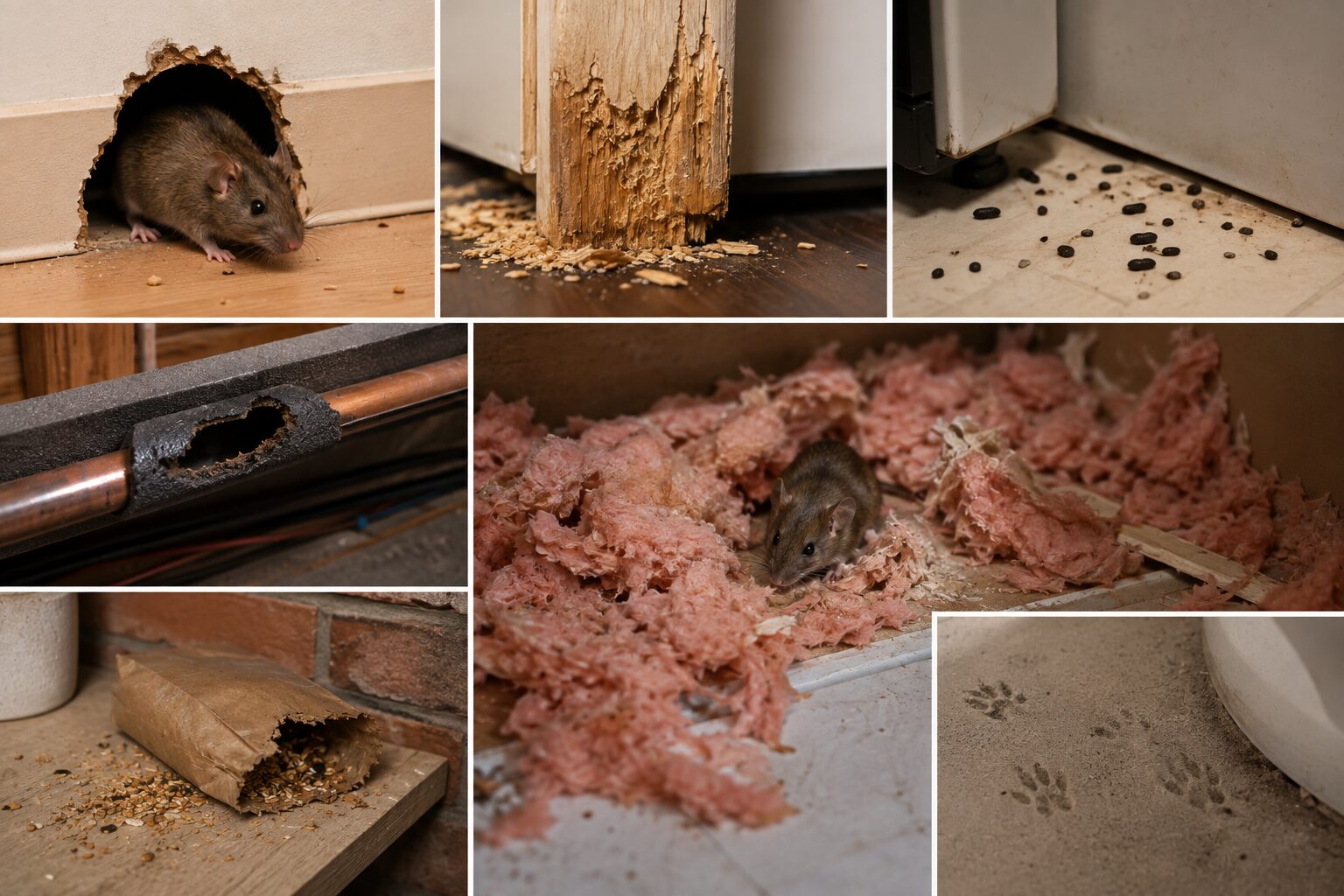
Rodents are among the most common household and commercial pests, capable of causing significant property damage and posing health risks. Mice and rats are excellent at hiding, which means an infestation can grow unnoticed until it becomes a serious problem. Understanding What are the signs of rodents? can help you identify an issue early and take prompt action before it worsens.
Table of Contents
ToggleWhy Rodents are a Serious Problem?
Rodents constantly search for food, water, and shelter. When they find a suitable environment, they reproduce quickly and spreads throughout a property in a short period.
- House mice
- Norway rats
- Roof rats
- Field mice
These pests can chew through wood, plastic, insulation, electrical wiring, cardboard, and even soft metals.
What are the Signs of Rodents?
One of the most frequently asked questions by many of you is What are the signs of rodents? Recognizing these indicators early can prevent a minor problem from becoming a major infestation.
Rodent Droppings
Small, dark droppings are the earliest and most obvious signs of rodent activity.
- Inside kitchen cabinets
- Under sinks
- Behind appliances
- Near food storage
- Along walls
- Inside garages
However, fresh droppings are dark and moist, while older droppings become dry and brittle.
Gnaw Marks
Rodents have continuously growing teeth, so they constantly chew to keep them trimmed. Fresh gnaw marks often appear lighter in color than older ones.
- Furniture
- Wooden cabinets
- Plastic containers
- Electrical wires
- Cardboard boxes
- Food packaging
Scratching Sounds
Rodents are most active during the night. If you hear scratching, squeaking, or scampering noises coming from:
- Walls
- Ceilings
- Attics
- Crawl spaces
- Under floors
there is a good chance rodents are present.
Nesting Materials
Rodents build nests using soft materials.
- Paper
- Cardboard
- Fabric
- Insulation
- Cotton
- Dry leaves
Finding shredded materials gathered in hidden corners may indicate nesting activity.
Unpleasant Odors
A strong, musky smell often develops when rodents occupy an area for an extended period. Dead rodents hidden inside walls or ceilings can also produce persistent foul odors.
Grease Marks
As rodents repeatedly travel along walls, they leave dark grease marks from the oils in their fur. These marks are commonly found around entry points and travel routes.
Footprints and Tail Marks
In dusty areas, you may notice:
- Small footprints
- Tail drag marks
- Smudges along baseboards
These signs often appear in basements, storage rooms, and attics.
Damaged Food Packaging
Rodents frequently chew through food containers in search of food.
- Cereal boxes
- Rice bags
- Flour containers
- Pet food packaging
- Snack packets
Damaged packaging is often one of the first visible indicators of an infestation.
Which are the Places Rodents Hide?
Rodents prefer quiet, undisturbed places where they can safely nest.
- Attics
- Basements
- Garages
- Wall voids
- Crawl spaces
- Kitchen cabinets
- Utility rooms
- Storage closets
Regular inspections of these areas help to detect rodent activity early.
What are the Symptoms of a Rodent Infection?
Many of you also ask, What are the symptoms of a rodent infection? While “rodent infection” is not a medical diagnosis, the presence of rodents leads to contamination and increases exposure to harmful bacteria and aallergenrisk.
- Sneezing or allergic reactions
- Persistent coughing
- Eye irritation
- Skin irritation after contact with contaminated surfaces
- Fever (in some rodent-borne illnesses)
- Muscle aches
- Headache
- Fatigue
- Nausea
These symptoms can have many causes, but if you suspect exposure to rodents or rodent droppings, it is important to clean contaminated areas safely and seek medical advice if symptoms develop or worsen.
Which Disease Is Caused by Rodents?
Another common question is Which disease is caused by rodents? Rodents can carry or spread several diseases, either directly through their urine, droppings, saliva, or indirectly through fleas and ticks that feed on them.
Leptospirosis
This bacterial disease spreads through contact with water or surfaces contaminated with infected rodent urine. Thus, symptoms might include fever, headache, muscle pain, and vomiting.
Hantavirus Infection
In rare cases, you can become infected by inhaling particles from rodent urine, droppings, or nesting materials. It is essential to have proper cleanup procedures when handling contaminated areas.
Salmonellosis
Rodents contaminates food preparation surfaces and stored food with bacteria that may lead to foodborne illness.
Rat-Bite Fever
Although uncommon, this bacterial infection may occur after a bite from an infected rodent or by contact with contaminated food.
Plague
Certain rodents can carry fleas that may transmit plague in specific parts of the world. While rare, public health authorities continue to monitor such risks.
Why Immediate Rodent Control Is Important?
However, you must ignore early warning signs, which allow rodents to multiply rapidly. A small infestation may become much larger within a few months.
- Protect food supplies
- Prevent structural damage
- Reduce contamination
- Eliminate nesting sites
- Improve indoor hygiene
- Prevent recurring infestations
Early intervention is more effective and less costly than dealing with a widespread infestation.
How to Prevent Rodent Infestations?
Keeping rodents out of your property starts with good prevention practices. These steps make your home or business less attractive to rodents.
- Seal cracks and gaps near doors, windows, and utility lines.
- Store food in airtight containers.
- Dispose of garbage regularly.
- Keep kitchens clean and free of crumbs.
- Repair leaking pipes and eliminate standing water.
- Trim vegetation away from buildings.
- To reduce hiding places, declutter storage areas.
Frequently Asked Questions
What are the signs of rodents?
Signs of rodents include droppings, gnaw marks, or food packaging, scratching noises, nesting materials, grease marks, unpleasant odors, and damaged electrical wires or insulation.
What are the symptoms of a rodent infection?
Exposure to areas contaminated by rodents may lead to symptom, like fever, headache, muscle aches, nausea, coughing, allergic reactions, or breathing difficulties, depending on the specific illness.
Which disease is caused by rodents?
Rodents are associated with several diseases, including leptospirosis, hantavirus infection, salmonellosis, rat-bite fever, and plague. Our pest control and sanitation help reduce the risk of these diseases.
How can I prevent rodents from entering my home?
You can help prevent rodents by sealing cracks and gaps, storing food in airtight containers, keeping your home clean, disposing of garbage regularly, fixing water leaks, and scheduling routine pest inspections.
When should I call a professional rodent control service?
You should contact a professional pest control service when you notice signs of rodent activity, like droppings, chewing damage, nesting materials, or unusual noises.