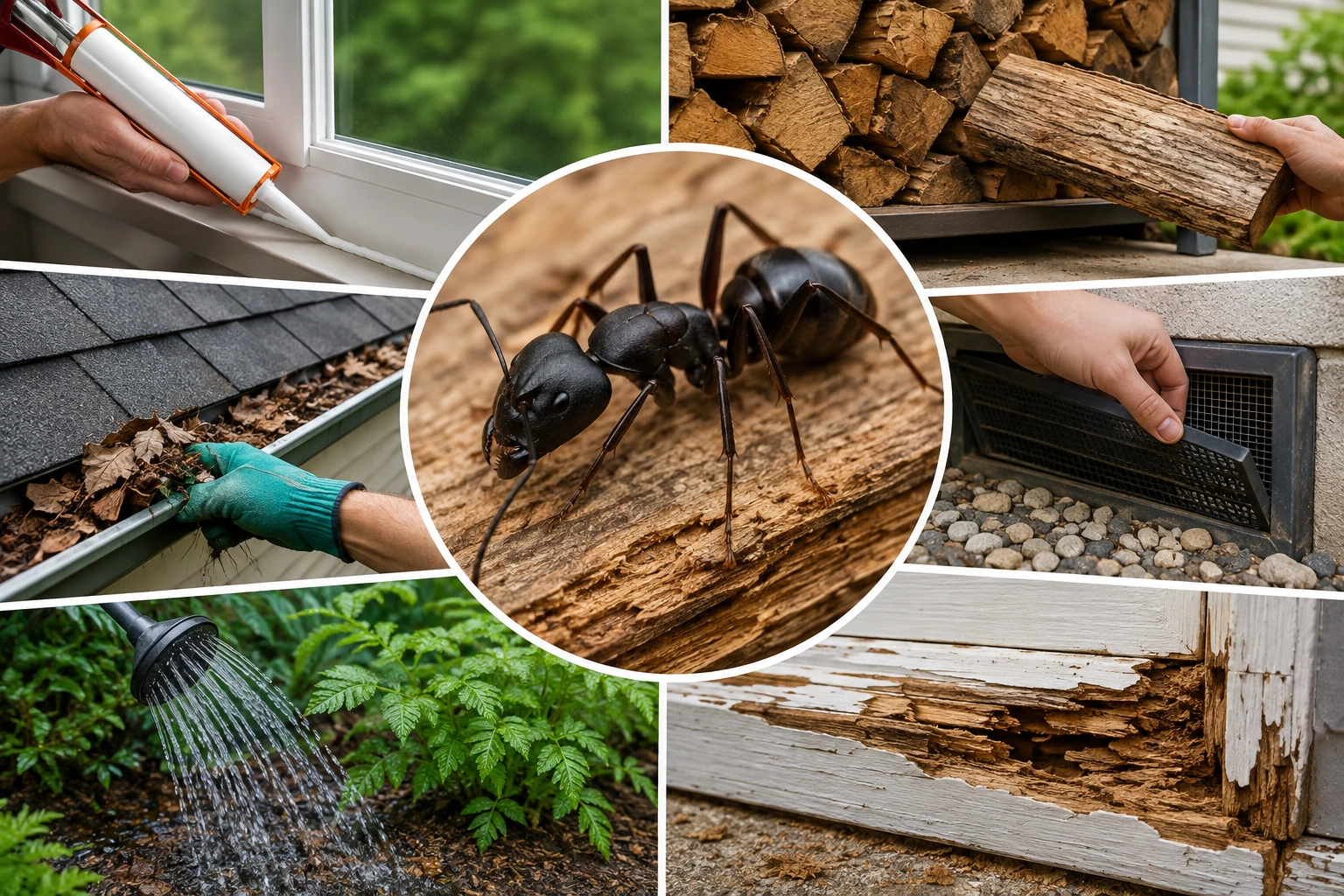
Carpenter ants are the most destructive household pests because they can weaken wooden structures over time. Carpenter ants do not eat wood. Instead, they excavate it to create smooth tunnels and nesting galleries, which can compromise your home’s structural integrity if left untreated. It is essential to understand carpenter ant prevention tips to keep these pests away and avoid expensive repairs.
Table of Contents
ToggleWhy Carpenter Ants Invade Homes?
Carpenter ants are attracted to environments that provide certain aspects.
- Moist or decaying wood
- Easy access to food
- Water sources
- Protected nesting locations
Homes with leaking roofs, damaged siding, damp crawl spaces, or water-damaged wood are especially vulnerable. Once carpenter ants establish a colony, they may expand into walls, ceilings, decks, and wooden framing.
Which are the Carpenter Ant Prevention Tips for Homeowners?
Following practical Carpenter Ant Prevention Tips can significantly reduce the risk of an infestation.
Eliminate Moisture Problems
Moisture is one of the biggest attractants for carpenter ants.
- Leaking pipes
- Roof leaks
- Overflowing gutters
- Damp basements
- Poor drainage
- Condensation around windows
You can repair moisture issues to help make your home less appealing to nesting ants.
Replace Damaged Wood
Soft, rotting wood provides ideal nesting conditions. You must replace damaged wood early to prevent carpenter ants from establishing colonies.
- Window frames
- Decks
- Wooden fences
- Roof fascia
- Door frames
- Porch supports
Seal Entry Points
Carpenter ants would enter through surprisingly small openings. You must reduce entry points for the simplest Carpenter Ant Prevention Tips homeowners can follow.
- Foundation cracks
- Utility pipe gaps
- Window frames
- Door thresholds
- Exterior wall openings
- Roof penetrations
Keep Trees and Shrubs Trimmed
Tree branches touching your roof or siding create convenient pathways for carpenter ants. Trim vegetation away from the structure and remove dead tree limbs that may already contain ant colonies.
Store Firewood Properly
Firewood should never be stacked directly against your home.
- Store it off the ground.
- Keep it several feet from the house.
- Inspect wood before bringing it indoors.
Firewood often serves as a nesting site for carpenter ants.
Which Signs Show a Carpenter Ant Infestation?
Early detection helps prevent serious structural damage. Moreover, if these signs appear, professional inspection is recommended.
- Large black ants indoors
- Small piles of wood shavings
- Rustling sounds inside walls
- Winged ants during spring
- Hollow-sounding wood
- Smooth tunnels inside wooden structures
Carpenter Ant vs Termites
Many of you confuse carpenter ants with termites, but understanding Carpenter Ant vs Termites helps ensure the correct treatment is used.
Carpenter Ants
- Larger body size
- Narrow waist
- Bent antennae
- Excavate wood for nesting
- Leave behind wood shavings
- Prefer damp or damaged wood
Termites
- Straight antennae
- Thick waist
- Eat cellulose in wood
- Cause hidden structural damage
- Produce mud tubes
- Often remain unnoticed for long periods
Recognizing the differences between Carpenter Ant vs Termites allows pest control professionals to recommend the most effective treatment plan.
Why DIY Treatments Often Fail?
Many of you attempt to eliminate carpenter ants using over-the-counter sprays. While these products may kill visible ants, they rarely eliminate the hidden colony.
- Missing satellite nests
- Incomplete colony elimination
- Temporary results
- Incorrect species identification
- Hidden structural infestations
Our pest control targets the entire colony rather than only the ants you see.
What is Carpenter Ant Nest Removal?
Complete Carpenter Ant Nest Removal is essential for long-term control. Our pest control technicians begin by locating certain factors.
- Primary nests
- Satellite colonies
- Entry points
- Moisture sources
- Structural damage
Treatment may include:
- Targeted insecticide applications
- Dust treatments
- Bait systems
- Nest removal
- Wood repairs
- Preventive barrier treatments
Proper Carpenter Ant Nest Removal eliminates the colony while reducing the likelihood of future infestations.
What are the Areas Where Carpenter Ants Nest?
Carpenter ants often establish colonies in hidden locations. Our routine inspections help detect activity before serious structural damage occurs.
- Wall voids
- Attics
- Crawl spaces
- Roof structures
- Window frames
- Deck supports
- Wooden beams
- Tree stumps
- Fence posts
What are Best Carpenter Ant Exterminator?
Choosing the Best Carpenter Ant Exterminator provides you with effective, long-lasting protection against recurring infestations.
- Detailed property inspection
- Species identification
- Colony location
- Customized treatment plans
- Safe application methods
- Moisture assessment
- Preventive recommendations
- Follow-up inspections
It is essential to work with the Best Carpenter Ant Exterminator ensures the infestation is addressed at its source rather than providing only temporary relief.
What are the Long-Term Prevention Strategies?
Preventing future infestations requires ongoing maintenance, which helps keep carpenter ants from returning.
- Repair plumbing leaks promptly.
- Maintain proper attic ventilation.
- Keep gutters clean.
- Remove dead trees and stumps.
- Inspect wooden structures annually.
- Store firewood away from the home.
- Seal foundation cracks.
- Schedule regular pest inspections.
Why Professional Pest Control Matters?
Carpenter ants build multiple colonies, which makes complete elimination challenging without professional expertise. However, our treatment minimizes property damage while providing lasting peace of mind.
- Accurate inspections
- Advanced treatment methods
- Safe products
- Long-term monitoring
- Preventive recommendations
- Structural risk assessments
When to Call a Pest Control Professional?
You should schedule an inspection if you notice some of the issues which can prevent costly structural repairs.
- Large ants inside your home regularly
- Sawdust-like wood shavings
- Rustling noises in walls
- Repeated ant activity despite DIY treatments
- Visible damage to wooden structures
- Winged ants indoors
Frequently Asked Questions
What are the best Carpenter Ant Prevention Tips?
The best prevention methods include repairing moisture problems, replacing damaged wood, sealing cracks, trimming trees, storing firewood away from your home, and scheduling regular pest inspections.
Is there a difference between Carpenter Ant vs Termites?
Carpenter ants excavate wood to build nests but do not eat it, while termites consume wood for food. These leave behind wood shavings, whereas termites often create mud tubes and cause hidden structural damage.
How is Carpenter Ant Nest Removal performed?
Our carpenter ant nest removal includes locating the primary and satellite colonies, applying targeted treatments, eliminating nests, addressing moisture problems, and implementing preventive measures.
Why should I hire the Best Carpenter Ant Exterminator?
The best carpenter ant exterminator has the experience, equipment, and treatment methods needed to eliminate entire colonies, identify hidden nests, and help prevent future infestations.
Can carpenter ants damage my home?
However, they do not eat wood, carpenter ants tunnel through it to build nests. Extensive tunneling can weaken wooden structures and lead to costly repairs if left untreated.