Scorpions are unwanted pests that can occasionally enter homes, garages, sheds, and outdoor living areas in search of shelter, water, or food. While many scorpion species have stings that cause only localized pain, some species can cause more serious reactions, making prevention and prompt action important. Understanding What are the symptoms of a scorpion?, How to control a scorpion? and what is the best treatment for scorpion bites? It helps you respond appropriately and reduce the risk of future encounters.
Table of Contents
ToggleWhy Scorpions Enter Homes?
Scorpions are nocturnal creatures that seek cool, dark, and protected spaces during the day. They are attracted to properties where food sources such as insects are abundant.
- Cracks in walls or foundations
- Gaps around doors and windows
- Cluttered garages
- Wood piles
- Landscaping with rocks or dense vegetation
- Moist areas near plumbing
- Insect infestations that provide food
What Are the Symptoms of a Scorpion?
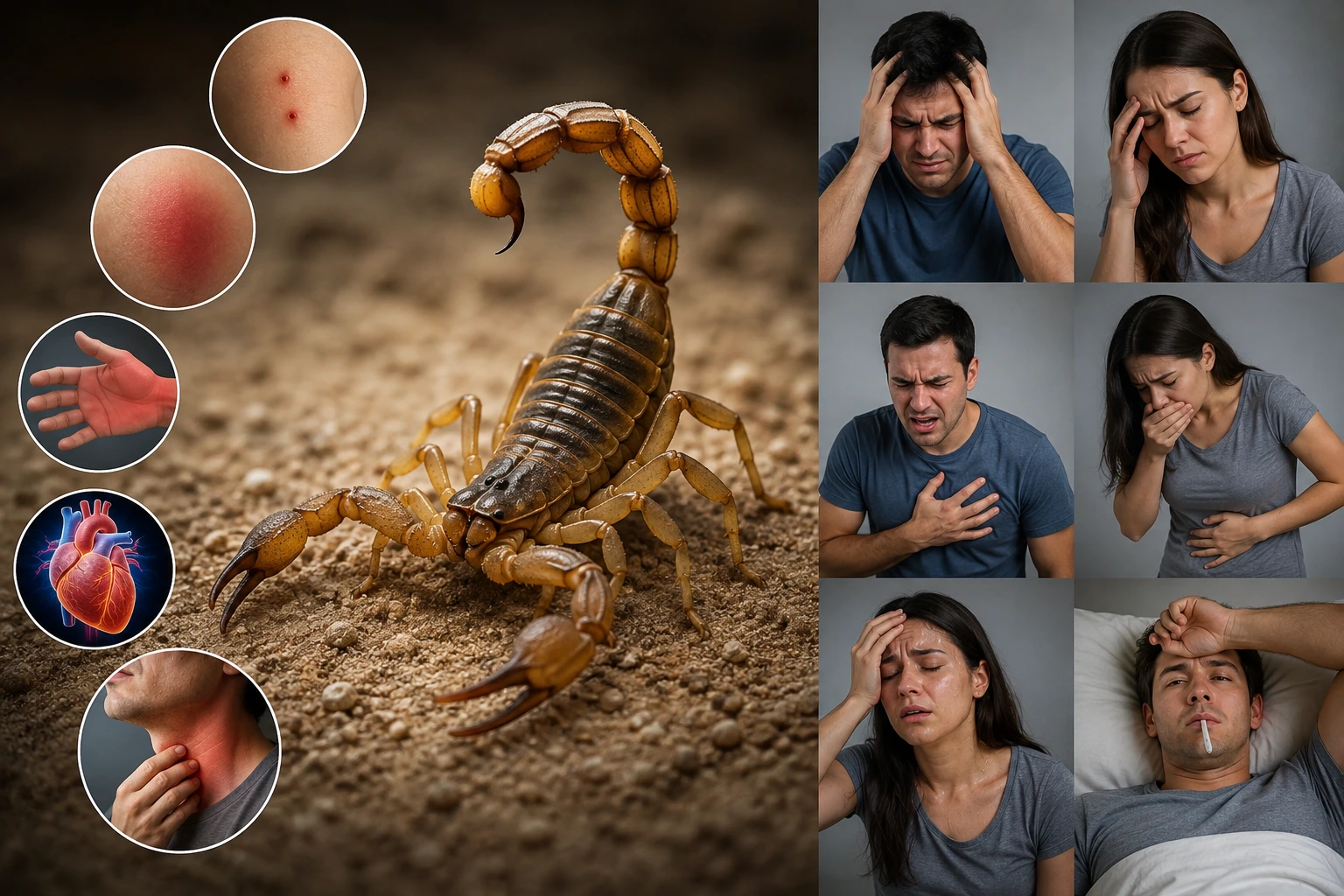
Many of you ask, What are the symptoms of a scorpion? It depends on the species of scorpion and the individual’s reaction to the sting. Moreover, most scorpion stings cause mild, localized symptoms, but some can produce more severe effects.
- The sting causes sharp, burning, or stinging pain at the affected area.
- The skin around the sting might become red, swollen, or tender.
- Some of you might experience numbness, tingling, or a pins-and-needles sensation that could spread beyond the sting site.
- Due to inflammation, the affected area might feel warm.
- Touching or moving the affected area may increase discomfort.
Severe symptoms are less common but may include muscle twitching, difficulty swallowing, abnormal eye movements, breathing difficulties, or widespread numbness.
How Long Do Scorpion Symptoms Last?
Another common concern is: How long do scorpion symptoms last? The duration varies depending on the type of scorpion, the sting severity, and your overall health.
- Pain may improve within several hours.
- Tingling or numbness can last from a few hours to a couple of days.
- Mild swelling and tenderness often resolve within one to three days.
For more significant envenomation, symptoms may persist longer and require medical treatment. Young children, older adults, and if you have underlying health conditions may be at greater risk of serious complications and should be evaluated promptly after a sting.
What is the Best Treatment for Scorpion Bites?
Many of you ask, What is the best treatment for scorpion bites? The treatment depends on the symptoms severity.
- Apply a cool compress wrapped in a cloth to help reduce pain and swelling.
- Keep the affected limb elevated if practical.
- Avoid cutting the wound or attempting to suck out venom.
- Monitor for worsening symptoms.
Over-the-counter pain relief would be appropriate for mild discomfort if suitable for you, but follow product instructions or medical advice.
Seek immediate emergency medical care if the person develops these issues.
- Difficulty breathing
- Trouble swallowing
- Severe muscle twitching
- Loss of consciousness
- Widespread numbness
- Persistent vomiting
- Severe pain that rapidly worsens
Children who are stung should be assessed promptly because they may develop more severe symptoms than adults.
How to Control a Scorpion?
Many of you frequently ask, How to control a scorpion? Effective scorpion control focuses on reducing hiding places, eliminating food sources, and preventing entry into the home.
Seal Entry Points
Inspect your property for cracks around:
- Doors
- Windows
- Utility pipes
- Foundation walls
- Garage doors
Seal openings with appropriate materials to reduce access.
Reduce Outdoor Clutter
Remove areas where scorpions like to hide, including:
- Firewood piles
- Rocks
- Construction debris
- Cardboard boxes
- Leaf piles
Keeping outdoor areas tidy makes your property less attractive to scorpions.
Eliminate Insects
Scorpions eat insects such as crickets, cockroaches, spiders, and other small pests. Controlling these insects also reduces the food supply for scorpions.
Keep the Yard Well Maintained
- Trim shrubs and bushes.
- Keep grass short.
- Remove fallen branches.
- Avoid overwatering landscaping.
Reduce Moisture
To eliminate water sources, repair leaking faucets, outdoor irrigation systems, and plumbing issues that attract pests.
What are the Places Where Scorpions Hide?
However, scorpions like dark, protected locations during daylight hours. With regular inspections you can detect activity before populations increase.
- Basements
- Garages
- Storage sheds
- Crawl spaces
- Under rocks
- Firewood stacks
- Closets
- Bathroom cabinets
- Laundry rooms
Why Choose Scorpion Control Is Important?
While DIY methods may reduce occasional sightings, our professional pest control services offer customized treatment plan which provides more reliable long-term protection.
- Property inspection
- Identification of hiding areas
- Treatment of entry points
- Targeted pest management
- Insect population reduction
- Preventive recommendations
- Follow-up inspections
How to Prevent Future Scorpion Problems?
Preventive maintenance is the most effective way to reduce future infestations.
- Seal cracks and gaps around the home.
- Store firewood away from the building.
- Keep storage areas organized.
- Shake out shoes, gloves, and outdoor clothing if they have been left in garages or sheds.
- Install weather stripping on exterior doors.
- Reduce outdoor lighting that attracts insects where practical.
- Schedule regular pest inspections.
These steps help create an environment that is less inviting to scorpions.
What are the Safety Tips for Families?
If you live in an area where scorpions are common, you must follow simple precautions which can reduce the risk of accidental stings.
- Wear gloves when gardening.
- Use caution when moving rocks or wood.
- Keep beds slightly away from walls if scorpions are common in your region.
- Teach children not to handle unfamiliar insects or arachnids.
- Inspect outdoor furniture before use.
Frequently Asked Questions
What are the symptoms of a scorpion?
Scorpion sting symptoms include immediate pain, burning, swelling, redness, tingling, numbness, and tenderness around the sting site.
How to control a scorpion?
You can control scorpions by following tips, like sealing cracks and gaps, removing outdoor clutter, reducing moisture, eliminating insect populations, keeping landscaping well-maintained, and scheduling regular pest control inspections.
How long do scorpion symptoms last?
For most mild stings, pain and discomfort improve within a few hours, while numbness or tingling may last from several hours to a couple of days. More severe stings may require medical treatment and can take longer to recover.
What is the best treatment for scorpion bites?
The best initial treatment includes washing the sting area with mild soap and water, apply a cool compress, keep the affected area elevated, and monitor for severe symptoms.
When to call a professional pest control service for scorpions?
You should contact a professional pest control service if you frequently see scorpions inside or around your property, discover hiding spots or nesting areas, or want a treatment plan.