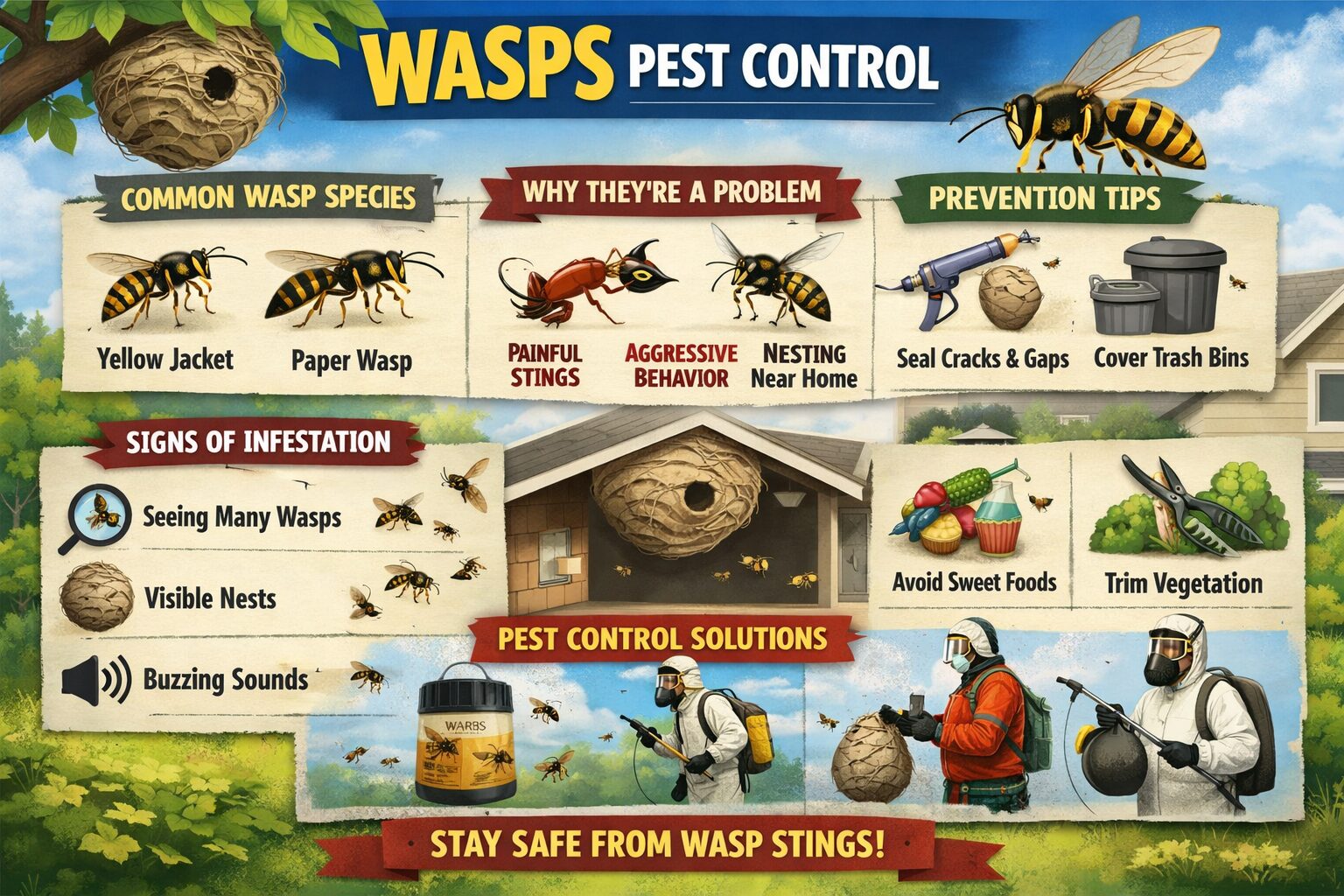
Wasp infestations can quickly turn a peaceful home or outdoor space into a stressful environment. Whether you’re dealing with aggressive stings, visible nests, or constant buzzing around your property, one question often comes to mind: Does pest control help with wasps? The answer is a strong yes, and our agents will explain to you exactly how professional pest control services can eliminate wasps, prevent future infestations, and keep your property safe.
Why Wasps Are a Concern?
Wasps are more than just a nuisance. Unlike bees, many species of wasps can sting multiple times and become highly aggressive when their nests are disturbed. This makes them particularly dangerous for families, pets, and anyone with allergies.
- Painful stings and allergic reactions
- Nesting in hard-to-reach areas like roofs, walls, and attics
- Increased aggression during late summer and early fall
- Interference with outdoor activities
Therefore, many of you start searching: Does pest control help with wasps?
Does Pest Control Help With Wasps Removal?
Pest control absolutely helps with wasps, and it is often the safest and most effective solution. Professional pest control services identify, treat, and eliminate wasp infestations while minimizing risk to homeowners.
1. Accurate Identification of Wasp Species
Different wasp species require different treatment methods. Our pest control professionals identify the type of wasp you’re dealing with and apply the right solution.
2. Safe Nest Removal
Wasp nests are often located in dangerous or hard-to-reach areas. Our professionals use protective gear and specialized tools to remove nests safely.
3. Effective Treatment Solutions
Pest control services use advanced insecticides and eco-friendly treatments that are far more effective than store-bought sprays.
4. Preventive Measures
Beyond removing the current infestation, pest control experts also help prevent future wasp problems.
So, if you are wondering again, does pest control help with wasps?—The answer is yes, and it’s often the best choice.
What Wasps Are in Delaware?
If you are living in Delaware, it is important to know the types of wasps commonly found in the region. Moreover, understanding this helps explain why professional pest control is so valuable.
Common Wasp Species in Delaware
Paper Wasps
- Build umbrella-shaped nests
- Often found under eaves and decks
- Moderately aggressive
Yellowjackets
- Highly aggressive and territorial
- Nest underground or in wall cavities
- Attracted to food and sugary drinks
Hornets (Including Bald-Faced Hornets)
- Large and intimidating
- Build aerial nests in trees or structures
- Extremely defensive
Mud Daubers
- Less aggressive
- Build tube-like nests from mud
- Rarely sting unless provoked
Understanding what wasps are in Delaware helps determine the right treatment approach. This is another reason why pest control services are essential: they tailor their methods to the species.
Which Signs Show You Have a Wasp Infestation?
Before calling pest control, you should know the warning signs of a wasp problem:
- Increased wasp activity around your home
- Visible nests on walls, roofs, or trees
- If buzzing sounds comes from the walls or ceilings
- Wasps entering and exiting small openings
- Aggressive behavior when you approach certain areas
If you notice these signs, it is time to ask: Does pest control help with wasps? You must act quickly to prevent the infestation from worsening.
Does a Wasp Killer Work Immediately?
A common DIY question is: Does a wasp killer work immediately?
The Short Answer
Some wasp sprays can kill on contact, but they do not always solve the problem completely.
The Reality
- Many sprays only kill visible wasps
- They fail to eliminate the entire nest
- Hidden colonies remain active
- Improper use can provoke aggressive swarming
So you may wonder: Does a wasp killer work immediately? The truth is that it offers only temporary relief. However, our professional pest control, on the other hand, targets the entire colony, which ensures long-term results.
Why DIY Wasp Control Often Fails?
Many of you attempt to remove the wasps themselves, but this can be risky and ineffective.
- Spraying nests during the day (when wasps are active)
- Using inadequate protective gear
- Failing to locate hidden nests
- Applying the wrong type of pesticide
These mistakes can lead to stings and incomplete removal. This reinforces the importance of asking: Does pest control help with wasps?
What is the Professional Wasp Removal Process?
When you hire a pest control service, the process is thorough and strategic. This systematic approach clearly answers the question: Does pest control help with wasps?
Inspection
Our technician will identify nest locations, species, and infestation severity.
Treatment Plan
We make a customized approach depending on your situation.
Application
Professional-grade insecticides are applied safely and effectively.
Nest Removal
The nest is removed carefully to prevent re-infestation.
Prevention
Entry points are sealed, and advice is provided to avoid future problems.
How to Prevent Future Wasp Infestations?
After removal, prevention is key. However, there are some expert tips that you must follow.
- Seal Entry Points: Try to close cracks and gaps in walls, roofs, and foundations.
- Keep Food Covered: Wasps get attracted to sweet, protein-rich foods.
- Maintain Clean Outdoor Areas: Remove trash, fallen fruit, and food scraps.
- Inspect Regularly: Check for early signs of nest building.
- Use Preventive Treatments: Our professional pest control can apply treatments to deter wasps.
These steps complement professional services and reduce the need to ask repeatedly, does pest control help with wasps?
When Is the Best Time to Treat Wasps?
Timing has a crucial role in effective wasp control.
Early Spring
- Best time for prevention
- Nests are small and easier to remove
Summer
- Active season
- Requires careful handling
Late Summer & Fall
- Wasps are most aggressive
- Professional help is highly recommended
What is the Cost of Wasp Pest Control Services?
The cost of pest control varies depending on:
- Size of the infestation
- Location of the nest
- Type of wasp
- Accessibility
While DIY methods may seem cheaper, they often lead to repeated expenses. Professional pest control provides better value in the long run.
Are Wasp Treatments Safe?
Modern pest control methods prioritize safety.
- Targeted insecticides
- Eco-friendly solutions
- Controlled application techniques
This ensures safety for
- Children
- Pets
- The environment
How Weather Conditions Affect Wasp Activity?
The weather has a significant role in how wasps behave and how severe an infestation can become. Moreover, you must understand these patterns to help you take timely action.
Warm Temperatures Increase Activity
Wasps thrive in warm weather, especially during late spring and summer. As temperatures rise, colonies expand rapidly, leading to more visible activity around your home. This is often when you start asking, ” Does pest control help with wasps?, because the problem becomes harder to ignore.
Rain and Storms Drive Wasps Indoors
Heavy rain or storms can force wasps to seek shelter inside walls, attics, or garages. Moreover, this makes infestations less visible but more dangerous, as nests might go unnoticed until they grow larger.
Seasonal Aggression in Late Summer
Toward the end of summer, wasps become more aggressive due to food scarcity. Their increased defensiveness makes professional intervention even more necessary.
What are the Areas Where Wasps Build Nests?
Wasps are highly adaptable and can build nests in a variety of locations around residential and commercial properties.
Roof Eaves and Gutters
These are some of the most common nesting spots. They provide shelter and protection from predators.
Wall Cavities
Some species prefer to hide inside walls, which makes detection and removal more complicated.
Trees and Shrubs
Aerial nests are often found hanging from tree branches or bushes in your yard.
Garages and Sheds
Quiet, undisturbed areas, such as sheds, are ideal for nest building.
Because nests can be hidden in difficult locations, many of you again wonder, does pest control help with wasps? Professional services ensure that no nesting area is overlooked.
How are Health Risks Associated with Wasps?
Wasp infestations are not just inconvenient—they can pose serious health risks.
Allergic Reactions
If you are highly allergic to wasp stings, it can lead to major reactions such as anaphylaxis. Immediate medical attention is required in such cases.
Multiple Stings
Wasps can sting several times, which increases the pain risk, swelling, and infection.
Psychological Stress
Constant exposure to wasps can create anxiety, especially for children and pets.
These risks highlight why you frequently ask, ” Does pest control help with wasps?, as professional help reduces these dangers significantly.
What are the Eco-Friendly Wasp Control Options?
Modern pest control services are increasingly focusing on environmentally responsible solutions.
Targeted Treatments
Despite spraying large areas, we apply treatments directly to nests and entry points, which helps in minimizing the environmental impact.
Natural Repellents
Our pest control services use plant-based solutions that deter wasps without harming beneficial insects.
Integrated Pest Management (IPM)
This is the combination of prevention, monitoring, and targeted treatment to control pests sustainably.
Eco-conscious homeowners can still benefit while asking, ” Does pest control help with wasps?, knowing that safe and green options are available.
How Quickly Can a Wasp Infestation Grow?
Wasp colonies can expand faster than many people realize.
Early Stage
In spring, a single queen begins building a nest and laying eggs.
Growth Phase
By mid-summer, the colony can contain hundreds of wasps.
Peak Population
Late summer is when colonies reach their maximum size and aggression level.
This rapid growth explains why delaying action can worsen the problem. It also reinforces the importance of early intervention when considering, does pest control help with wasps?
What are the Indoor and Outdoor Wasp Problems?
Not all wasp infestations are the same. We will inspect if your issue is indoors or outdoors which can affect the treatment approach.
Outdoor Infestations
- Easier to detect
- Common in gardens, roofs, and trees
- Typically less invasive
Indoor Infestations
- Harder to locate
- May involve wall voids or attics
- Can cause structural concerns
Indoor infestations often require specialized equipment and expertise, further proving that pest control does help with wasps. It is an important question with a clear answer—yes.
What is the Role of Regular Pest Inspections?
Routine inspections can prevent wasp infestations before they become severe.
- Early Detection: We can spot early signs of nest building that homeowners might miss.
- Customized Prevention Plans: Each property is different, and pest control experts create personalised strategies.
- Cost Savings: Preventing an infestation is often less expensive than dealing with a full-blown problem.
Regular inspections reduce the need for emergency treatments and reinforce why people trust pest control solutions.
Myths About Wasp Control
There are many misconceptions about dealing with wasps. These myths often lead to ineffective solutions, making you repeatedly ask, does pest control help with wasps?
Myth 1: Wasps Only Nest in Trees
In reality, they can nest in walls, roofs, and even underground.
Myth 2: Smoke Drives Wasps Away Permanently
Smoke may temporarily disperse them, but they often return.
Myth 3: All Wasps Are Aggressive
Some species are less aggressive, but all can sting if threatened.
Myth 4: DIY Methods Are Always Enough
Mostly DIY methods fail to address the entire colony.
Why Hire Professional Pest Control?
- Our professionals use protective equipment and safe methods.
- Unlike DIY solutions, pest control eliminates the root cause.
- You do not have to spend hours researching and attempting removal.
- Knowing your home is wasp-free is invaluable.
Frequently Asked Questions
How do pest control professionals locate hidden wasp nests?
Pest control experts use thorough inspections, observing wasp flight patterns and checking common nesting areas like walls, attics, and rooflines to accurately locate hidden nests.
Will wasps return after a nest is removed?
Wasps might return if preventive measures are not taken. However, professional pest control treatments usually include deterrents to reduce the chances of reinfestation.
Are pest control treatments safe for my pets and children?
Our modern pest control treatments are designed to be safe when applied correctly. Our professionals use controlled methods and provide safety instructions to minimize any risk.
When should I schedule pest control for wasps?
The pest control for wasps depends on your location and infestation history, but many of you benefit from seasonal inspections and preventive treatments, especially during spring and summer.
What should I do before pest control arrives for a wasp problem?
You should avoid disturbing the nest, keep a safe distance, and inform the technician about all areas where wasp activity has been noticed to ensure effective treatment.