
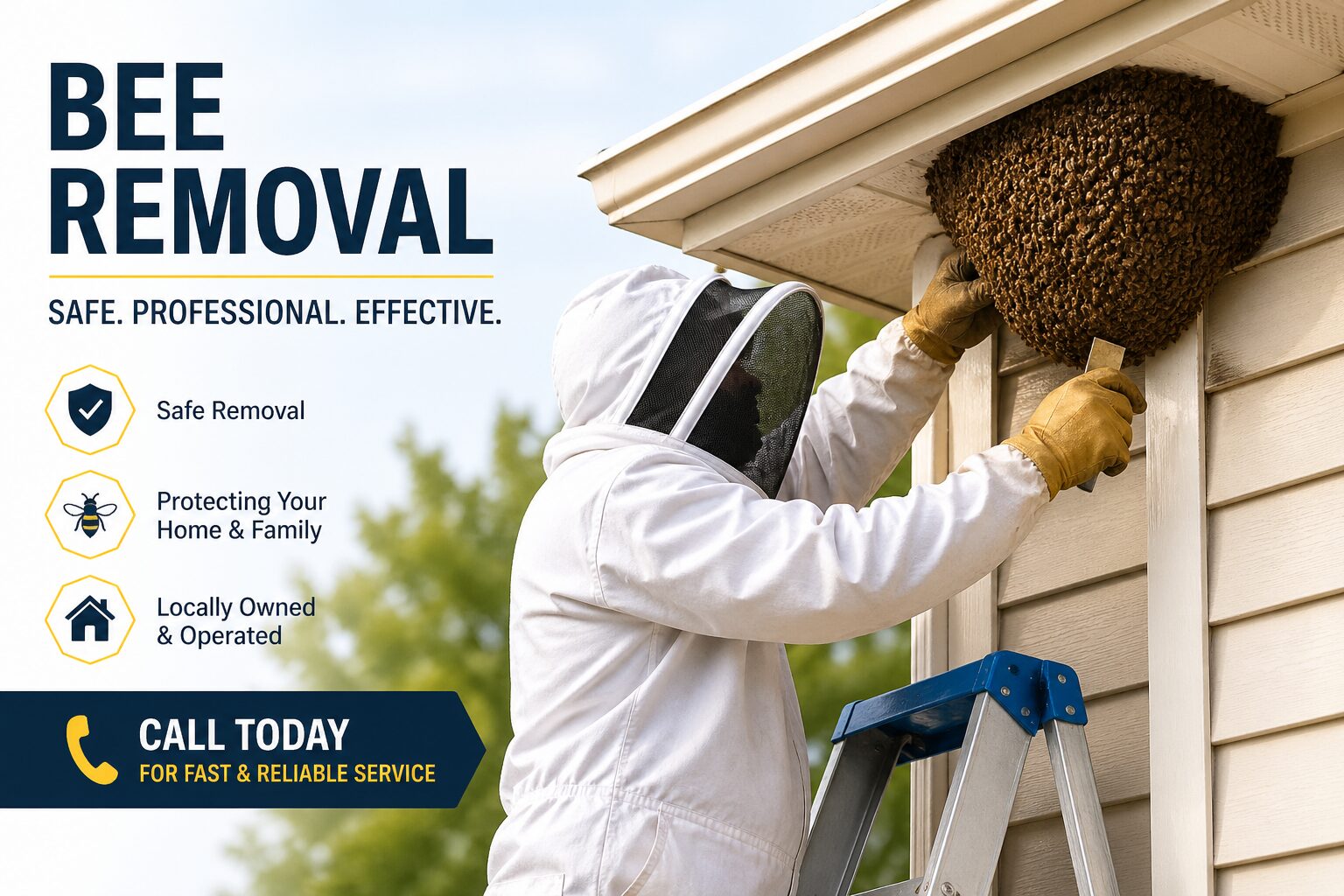
Bees play an important role in the environment, but when they build nests too close to homes or businesses, they can pose a serious safety concern. Swarms around entryways, roofs, walls, attics, or gardens may put family members, pets, customers, and employees at risk of painful stings and allergic reactions. Therefore, many of you search for the Best Bee Removal in Dover when dealing with bee infestations. Our professional pest control specialists understand how to safely identify, remove, and prevent bee colonies while minimizing risks to people and property. If you are looking for Bee removal in Dover near me, need emergency hive removal, want effective Bee Control in Dover, or want to understand the cost of bee removal in Dover. We will provide a complete guide that explains everything you need to know.
Table of Contents
ToggleWhy Bee Infestations Should Never Be Ignored?
Bees are beneficial pollinators, but when colonies settle in residential or commercial areas, they can quickly become dangerous. A small hive can grow rapidly, increasing the chances of aggressive swarming behavior.
Many of you searching for Bee removal in Dover notice warning signs such as:
- Large numbers of bees around the property
- Buzzing sounds inside walls or ceilings
- Bees are entering small cracks or openings
- Visible hives near roofs, trees, or siding
- Increased bee activity near windows or outdoor spaces
Ignoring these signs may allow the colony to expand, making removal more difficult and expensive later.
Why Professional Bee Removal Is Important?
Attempting to remove bees without proper training can be extremely dangerous. Disturbing a hive may trigger aggressive swarming, leading to multiple stings and potential injuries.
You must hire the Best Bee Removal in Dover who offers several important benefits.
- Safe hive removal
- Proper protective equipment
- Reduced risk of stings
- Prevention of structural damage
- Long-term bee control solutions
Our professional pest control experts understand how to handle bees safely while protecting both occupants and the surrounding property.
Where Do Bees Build Nests?
Bees can establish colonies in many hidden locations around homes and businesses. If you search for ” bee removal in Dover near me, you often discover infestations only after bee activity becomes highly visible.
Roofs and Attics
Warm attic spaces often attract bees because they provide shelter and protection.
Wall Cavities
Bees enter through small openings and create hives inside walls.
Chimneys
Unused chimneys can become ideal nesting areas for bee colonies.
Trees and Shrubs
Outdoor swarms frequently gather in landscaping areas.
Garages and Sheds
Quiet storage areas may provide safe nesting spaces for bees.
Which Signs Show You Need Bee Removal Services?
You must recognize the early signs of infestation to help prevent larger problems. If you notice these issues, contacting professionals specializing in Bee Control in Dover is highly recommended.
Increased Bee Activity
Large groups of bees hovering around one area may indicate a nearby hive.
Buzzing Sounds
Persistent buzzing inside walls or ceilings often suggests hidden colonies.
Honey Stains
Dark stains on walls or ceilings might indicate honey leaking from a hive.
Sweet Odors
A strong, sweet smell may signal honeycomb buildup inside structures.
Visible Swarms
Swarms clustering on trees, fences, or roofs require immediate attention.
Types of Bees Commonly Found in Dover
Different bee species require different removal methods. Understanding the species helps professionals determine the safest and most effective removal strategy.
Honey Bees
Honey bees are important pollinators, but may become problematic when nesting inside homes.
- Golden-brown appearance
- Large colonies
- Honey production
Carpenter Bees
Carpenter bees tunnel into wood and may damage decks, fences, and siding.
- Small round holes in wood
- Sawdust beneath wooden surfaces
- Hovering bees near structures
Bumble Bees
Bumble bees are larger and often nest underground or in dense vegetation.
Why Prevention Matters for Bee Control in Dove?
Removing an active colony is only part of the solution. Long-term Bee Control in Dover focuses on preventing future infestations. Moreover, preventive maintenance reduces the likelihood of recurring infestations.
- Small gaps and cracks around the home should be sealed to prevent bees from accessing the home.
- Sweet food sources, standing water, and flowering plants near entryways may attract bees.
- Routine inspections help identify early signs of bee activity before colonies grow.
- Keeping landscaping trimmed and reducing clutter minimizes nesting opportunities.
What Happens During Professional Bee Removal?
It is essential to understand the removal process to help you know what to expect.
Property Inspection
Professionals inspect the property to:
- Identify the bee species
- Locate the hive
- Assess infestation severity
- Determine entry points
This evaluation helps create the safest removal plan.
Safety Preparation
Technicians wear protective equipment and secure the surrounding area before beginning removal.
Safety measures may include:
- Protective suits
- Gloves and face shields
- Restricted access zones
Hive Removal
It depends on the infestation; specialists may offer some of the factors. The goal is to eliminate the infestation while minimizing harm and preventing structural damage.
- Relocate the hive
- Remove honeycomb
- Vacuum bees safely
- Apply treatment solutions
Cleanup and Sanitization
After removal, our professionals will clean affected areas. This step is essential because leftover honey or wax can attract new colonies.
- Remove leftover honeycomb
- Eliminate bee pheromones
- Prevent future infestations
Prevention Recommendations
Experts provide guidance for long-term Bee Control in Dover and future prevention strategies.
What Affects Prices for Bee Removal in Dover?
One of the most common questions homeowners ask is about the cost of bee removal in Dover. Pricing varies depending on several important factors. If you are searching for Bee removal in Dover, you should request a detailed inspection and estimate before work begins.
Hive Location
Hard-to-reach areas such as walls, roofs, or chimneys may increase labor costs.
Colony Size
Large infestations require more time and resources to remove safely.
Bee Species
Different bee types require different removal methods.
Structural Repairs
If bees have damaged walls, insulation, or wood, repair costs may be additional.
Emergency Services
Urgent or after-hours removals may involve higher service rates.
Are There Risks of DIY Bee Removal?
Many people consider removing bee nests themselves, but DIY removal can be extremely dangerous. It is essential to hire the Best bee removal in Dover to ensure the infestation is handled safely and correctly.
Increased Sting Risk
Disturbing a hive often causes bees to swarm aggressively.
Incomplete Removal
Leave parts of the hive behind may attract new colonies.
Structural Damage
However, improper removal techniques can damage siding, roofs, or walls.
Allergic Reactions
Bee stings may trigger severe allergic responses in sensitive individuals.
Emergency Bee Removal Services
Some infestations require immediate action. Thus, fast response services help reduce safety risks and restore peace of mind.
- Bees inside living spaces
- Aggressive swarms near children or pets
- Large colonies near entrances
- Allergic family members on the property
Commercial Bee Removal Services
Businesses also require professional bee management to protect employees and customers. Our professional Bee Control in Dover helps businesses maintain safe environments while avoiding disruptions.
- Restaurants
- Offices
- Warehouses
- Retail stores
- Schools
Benefits of Eco-Friendly Bee Removal
Our pest control services now use environmentally responsible removal techniques whenever possible. In some situations, bees may be relocated instead of exterminated.
- Reduced environmental impact
- Safe for pets and families
- Preservation of pollinator populations
- Lower chemical exposure
How to Prevent Future Bee Infestations?
After removal, preventive measures are essential for long-term protection. Moreover, preventive care reduces the likelihood of repeat infestations.
Seal Exterior Openings
Inspect siding, roofs, vents, and windows for gaps.
Maintain Landscaping
Trim overgrown trees and shrubs near structures.
Remove Standing Water
Bees are attracted to water sources.
Schedule Routine Inspections
Our regular pest inspections help detect activity early.
Why Bees Choose Residential Properties?
Homes often provide suitable nesting conditions because they offer various things. Wall voids, attics, and roof spaces are especially attractive to bee colonies.
- Warm shelter
- Protection from predators
- Easy access to food and water
Homeowners searching for Bee removal in Dover near me are often surprised by how quickly colonies can establish themselves.
Seasonal Bee Activity in Dover
Bee activity changes throughout the year. It is essential to understand seasonal patterns which helps you schedule preventive inspections.
Spring
Colonies begin expanding rapidly during warmer temperatures.
Summer
Bee activity reaches peak levels.
Fall
Bees search for protected nesting locations before winter.
Winter
Some colonies remain hidden inside structures.
How to Choose the Best Bee Removal Company?
When looking for the best bee removal in Dover, consider some of the factors.
- Experience and certifications
- Safety procedures
- Fast response times
- Humane removal methods
- Transparent pricing
Our reliable pest control services should clearly explain.
- Removal procedures
- Prevention recommendations
- Estimated timelines
- Bee removal in Dover cost details
How Bee Infestations Can Damage Property?
Many of you underestimate the damage a bee infestation can cause over time. While bees may appear harmless initially, large colonies hidden inside walls, attics, or ceilings can create serious structural concerns if left untreated.
One of the biggest problems occurs when honeycomb expands inside enclosed spaces. As the hive grows, honey and wax may begin leaking into drywall, insulation, and wooden structures. This moisture can attract ants, rodents, and other pests while also creating unpleasant odors inside the property.
- Stained ceilings and walls
- Damaged insulation
- Wood deterioration
- Sticky honey residue
- Attraction of secondary pests
Our professional Bee removal in Dover services help eliminate infestations before major structural damage develops.
Why Fast Bee Removal Is Important?
Quick action is essential when dealing with bee activity near homes or businesses. Colonies can grow rapidly during warm seasons, increasing both safety risks and removal complexity.
- Larger colonies become harder to remove
- Increased chances of aggressive swarming
- Higher repair and cleanup costs
- Greater risk for children and pets
- Increased possibility of indoor infestations
Property owners searching for Bee removal in Dover near me should contact professionals as soon as unusual bee activity is noticed.
Bee Safety Tips for Homeowners
Until professional help arrives, homeowners should avoid disturbing the hive or swarm. Attempting to spray, hit, or remove bees without proper equipment may provoke aggressive behavior.
- Stay away from visible hives
- Keep children and pets indoors
- Avoid loud noises near bee activity
- Do not block hive entrances
- Contact licensed pest control professionals immediately
Benefits of Regular Pest Inspections
Routine inspections play an important role in preventing recurring infestations. Our professional pest control technicians can identify early warning signs before a small problem turns into a major colony.
- Early detection of nesting activity
- Prevention of structural damage
- Lower long-term pest control costs
- Reduced risk of emergency infestations
How to Protect Outdoor Living Spaces From Bees?
Outdoor areas, like patios, decks, pools, and gardens often attract bees due to food, flowers, and water sources. Proper maintenance can help reduce bee activity around these spaces.
- Cover sugary drinks and food outdoors
- Keep trash bins tightly sealed
- Trim flowering plants near entrances
- Repair damaged wood structures
- Eliminate standing water sources
These simple preventive measures support long-term Bee Control in Dover and help create safer outdoor environments for families and guests.
Investing in Professional Bee Control Services
Professional bee removal is not just about eliminating visible bees. It is about protecting your home, family, and property from long-term risks. Our experienced pest control specialists use safe removal methods, advanced tools, and preventive strategies to keep infestations from returning.
Frequently Asked Questions
How do I know if I need professional bee removal?
If you notice large numbers of bees around your property, hear buzzing inside walls, or see visible hives near your home, it is best to contact professional bee removal experts immediately.
Is bee removal safe for my family and pets?
Our professional pest control technicians use safe methods and protective equipment to remove bees while minimizing risks to people and pets.
What affects bee removal in dover cost?
The cost depends on factors such as hive size, location, accessibility, bee species, and if structural repairs or emergency services are needed.
Can bees come back after removal?
Bees can return if entry points and attractants are not addressed. Our professional bee control services often include prevention recommendations to reduce future infestations.
How long does professional bee removal take?
Most bee removal services can be completed within a few hours, but larger or hidden infestations may require additional time for safe removal and cleanup.