
Ant Trails
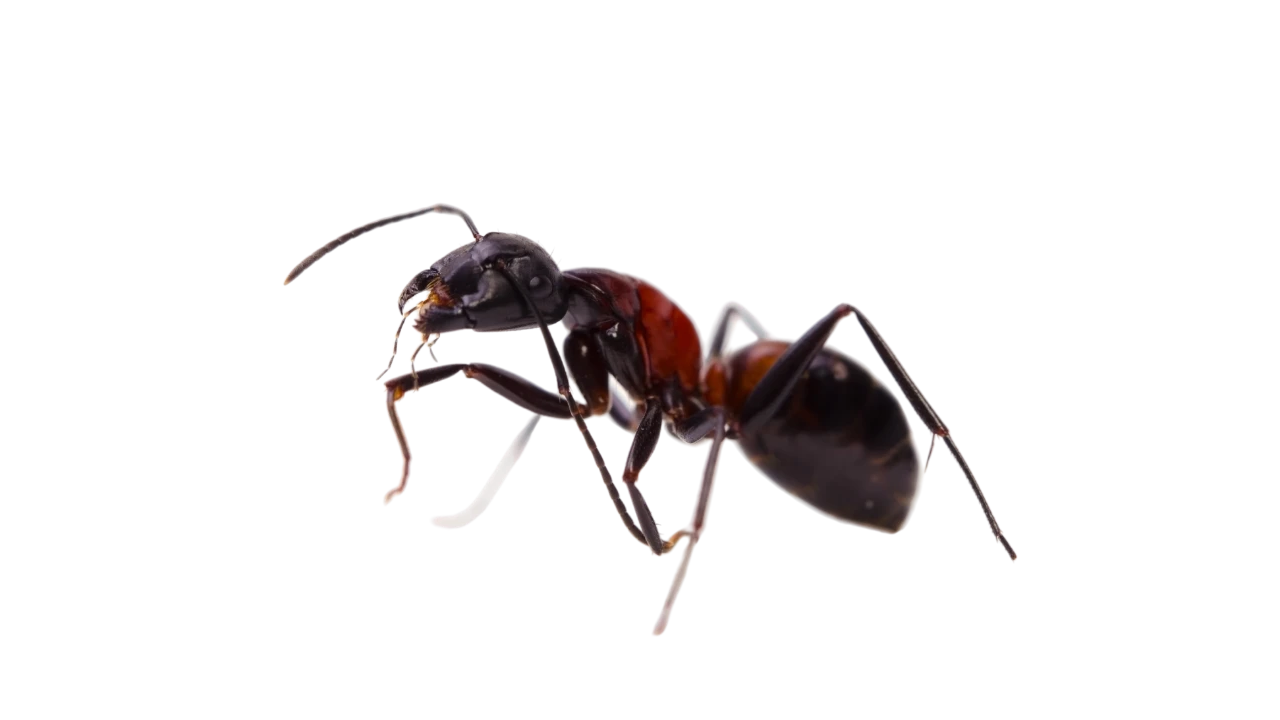
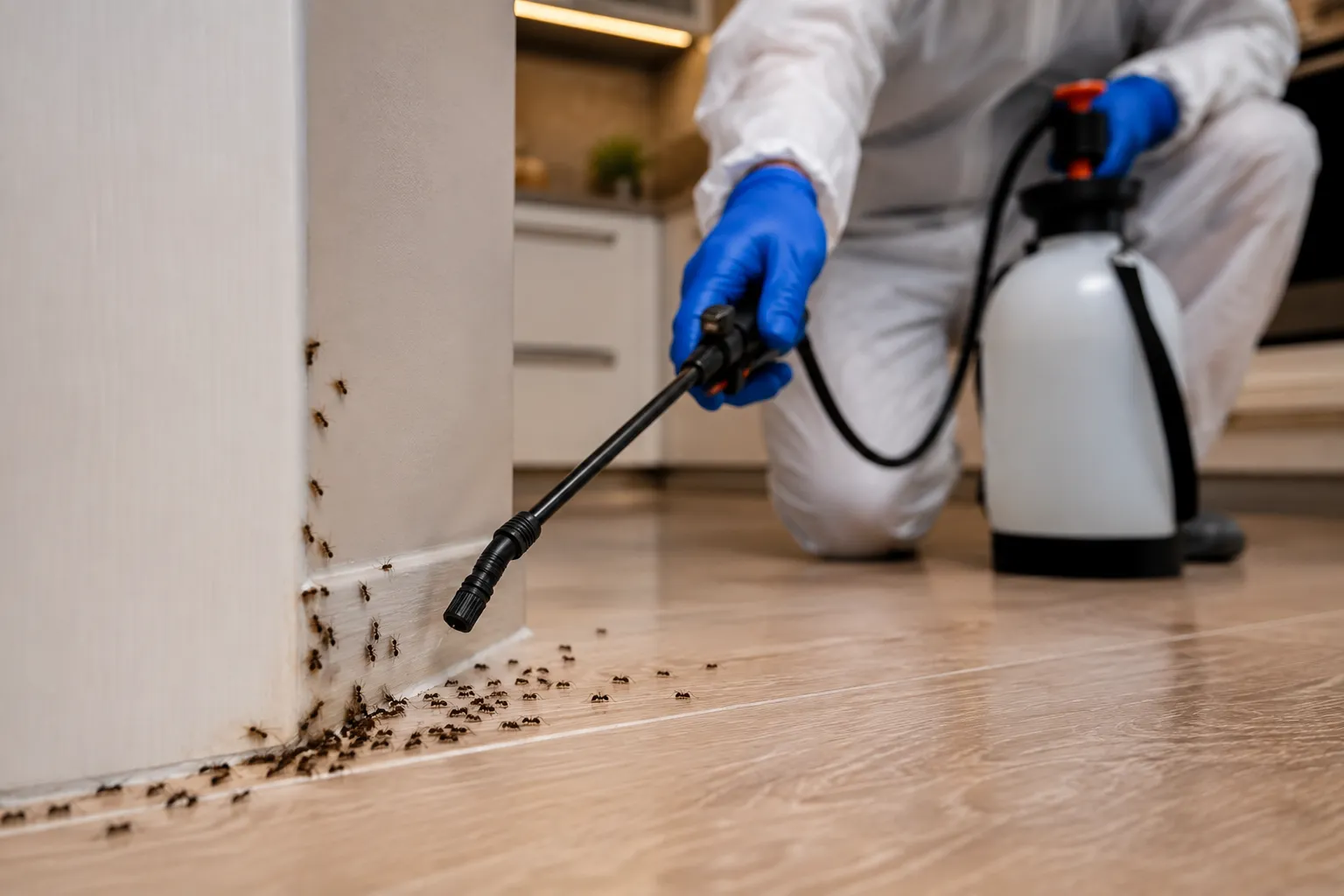
Long lines of ants moving between food sources and nesting areas may indicate an established colony.

Ant Nests
Mounds, soil activity, or visible nests around foundations, patios, walls, and landscaping can indicate active infestation.

Carpenter Ant Damage
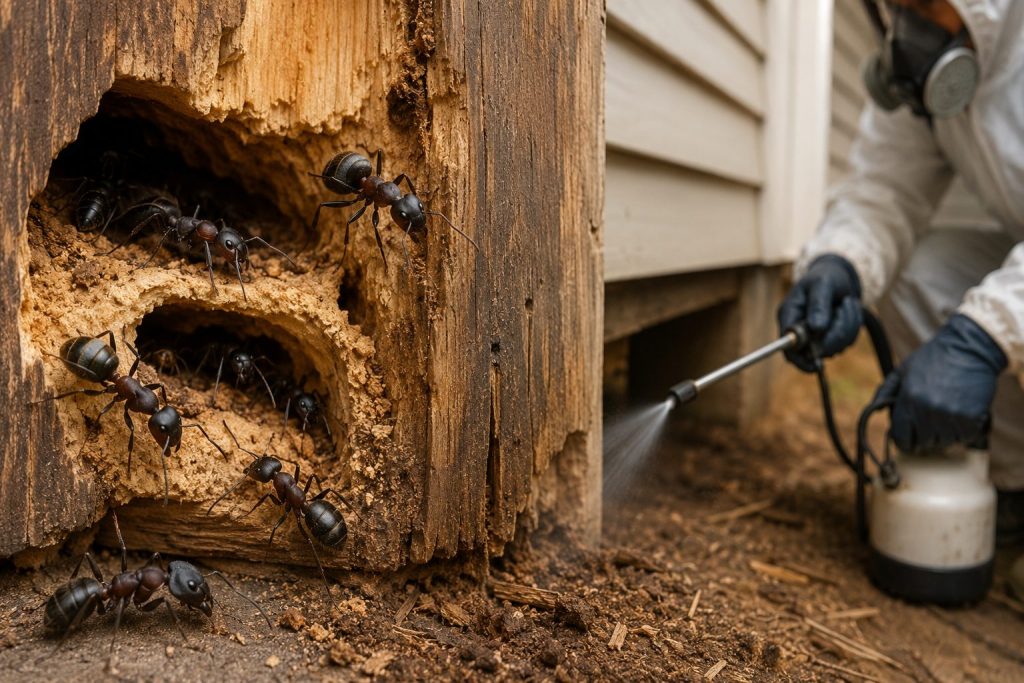
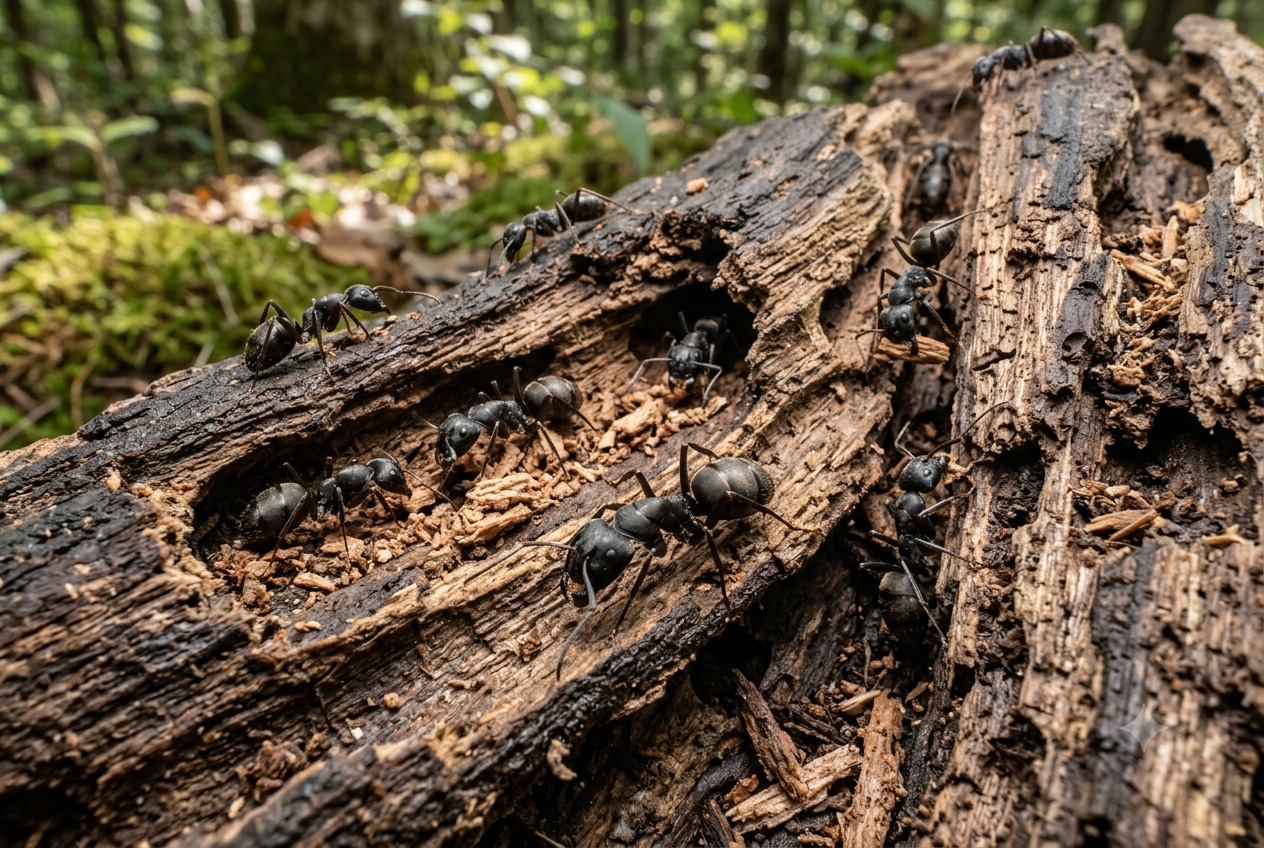
Sawdust-like material, small openings, or damaged wood may indicate carpenter ant activity.

Ants Inside Your Kitchen
Frequent ants around sinks, countertops, cabinets, pantry items, or pet food can indicate indoor activity.
Ants Around Entry Points
Activity near doors, windows, utility openings, foundations, or cracks may indicate where ants are entering.

Repeated Infestation
If ants continue returning after cleaning or DIY treatments, the colony or nesting location may not have been addressed.
01. Detailed Property Inspection
We begin with a thorough inspection of your property to identify visible ant activity, trails, nesting areas, entry points, moisture concerns, and environmental conditions that may encourage infestation.
02. Ant Species Identification
Different ant species can have different nesting habits and behaviors. Identifying the species helps us determine where the colony may be located and which control strategy is most appropriate.

03. Infestation Assessment
We evaluate the extent of the infestation by examining ant trails, nesting locations, indoor and outdoor activity, moisture sources, food availability, vegetation, and potential entry points.
04. Customized Treatment Plan
Based on our findings, we develop a treatment plan specifically for your property. The recommended approach considers the ant species, infestation severity, affected areas, and property conditions.

05. Targeted Ant Treatment
Treatment is focused on active ant areas, potential nesting locations, entry points, and other problem areas. The goal is to address the source of activity rather than simply eliminating visible ants.
07. Follow-Up & Monitoring
Depending on the severity of the infestation, follow-up service may be recommended. Monitoring activity after treatment helps determine whether ant activity has decreased and whether additional control is necessary.

Carpenter Ants
Carpenter ants may establish nests in damp, damaged, or decaying wood around buildings. Their activity can become a concern when colonies develop near or inside structures.
Odorous House Ants
Odorous house ants commonly enter kitchens, bathrooms, and other areas while searching for food and moisture. They can establish multiple nesting locations, making recurring activity difficult to manage without proper treatment.

Pavement Ants
Pavement ants commonly nest beneath sidewalks, driveways, foundations, patios, and other hard surfaces. They may enter buildings through small cracks and openings while searching for food.
Argentine Ants
Argentine ants can form large colonies and may appear in significant numbers when food and moisture are readily available. Professional control can help manage established activity.

Other Common Ants
Our ant pest control services can also address other ant species found around residential and commercial properties in Dover. Proper identification helps determine the most appropriate treatment strategy.
Property Size
Larger homes and commercial properties may require additional inspection and treatment areas.
Ant Species
Different ant species may require different treatment strategies.

Nesting Location
Colonies located inside walls, structures, landscaping, or other difficult-to-access areas may require additional attention.
Infestation Severity
A small localized problem may require less service than an established colony with activity across multiple areas.
Treatment Method
The recommended approach depends on the ant species, activity, and property conditions.
Follow-Up Service
Recurring or established infestations may require additional visits or monitoring.