
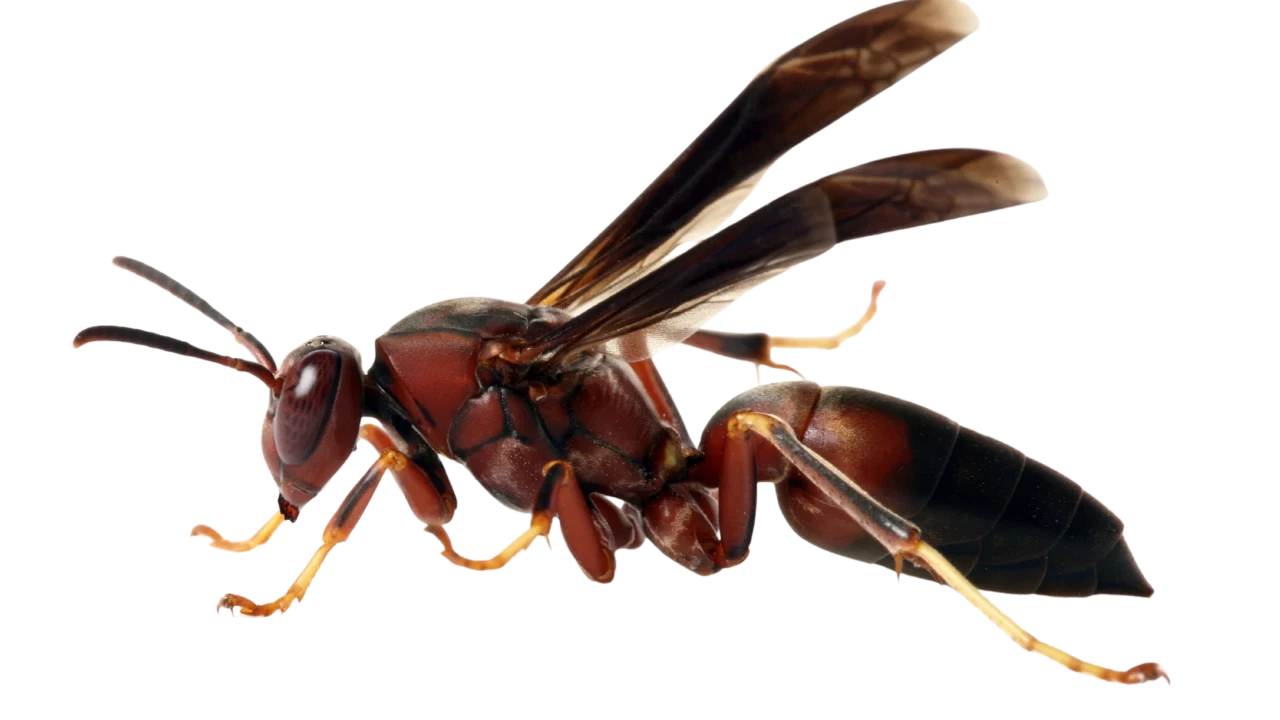

Visible Wasp Nests: Paper-like nests under eaves, roof edges, porches, sheds, trees, and other protected areas.

Frequent Wasp Activity: Repeated activity around doors, windows, patios, decks, outdoor seating areas, or gardens.

Wasp Entry Points: Wasps repeatedly entering and leaving openings around walls, roofs, vents, or other structural areas.

Multiple Nests: Several nests around the property may indicate recurring or widespread activity.
Defensive Behavior: Wasps repeatedly flying near people or becoming defensive around a specific location.

Recurring Infestations: Wasps returning to the same areas during warmer months may indicate favorable nesting conditions.
01. Property Inspection
We inspect the property for visible wasps, active nests, potential nesting areas, and possible entry points around the structure.
02. Wasp Identification
Different wasp and hornet species can have different nesting habits and behaviors. Identifying the pest helps determine an appropriate control strategy.

03. Nest Assessment
We evaluate the nest's location, accessibility, size, and activity level to determine the most suitable treatment approach.
04. Targeted Treatment
Treatment is directed toward active nests and areas where wasp activity has been identified, helping avoid unnecessary treatment of unaffected areas.

05. Nest & Entry-Point Prevention
We look for potential nesting locations, structural openings, food sources, shelter, and other conditions that could encourage wasps to return.
06. Follow-Up Inspection
For certain infestations, follow-up service may be recommended to check for remaining activity and determine whether additional treatment or prevention measures are needed.


Paper Wasps
Paper wasps build open, umbrella-shaped nests beneath eaves, porch ceilings, roof overhangs, and other protected locations. Nests can become a concern when located close to frequently used areas.
Yellowjackets
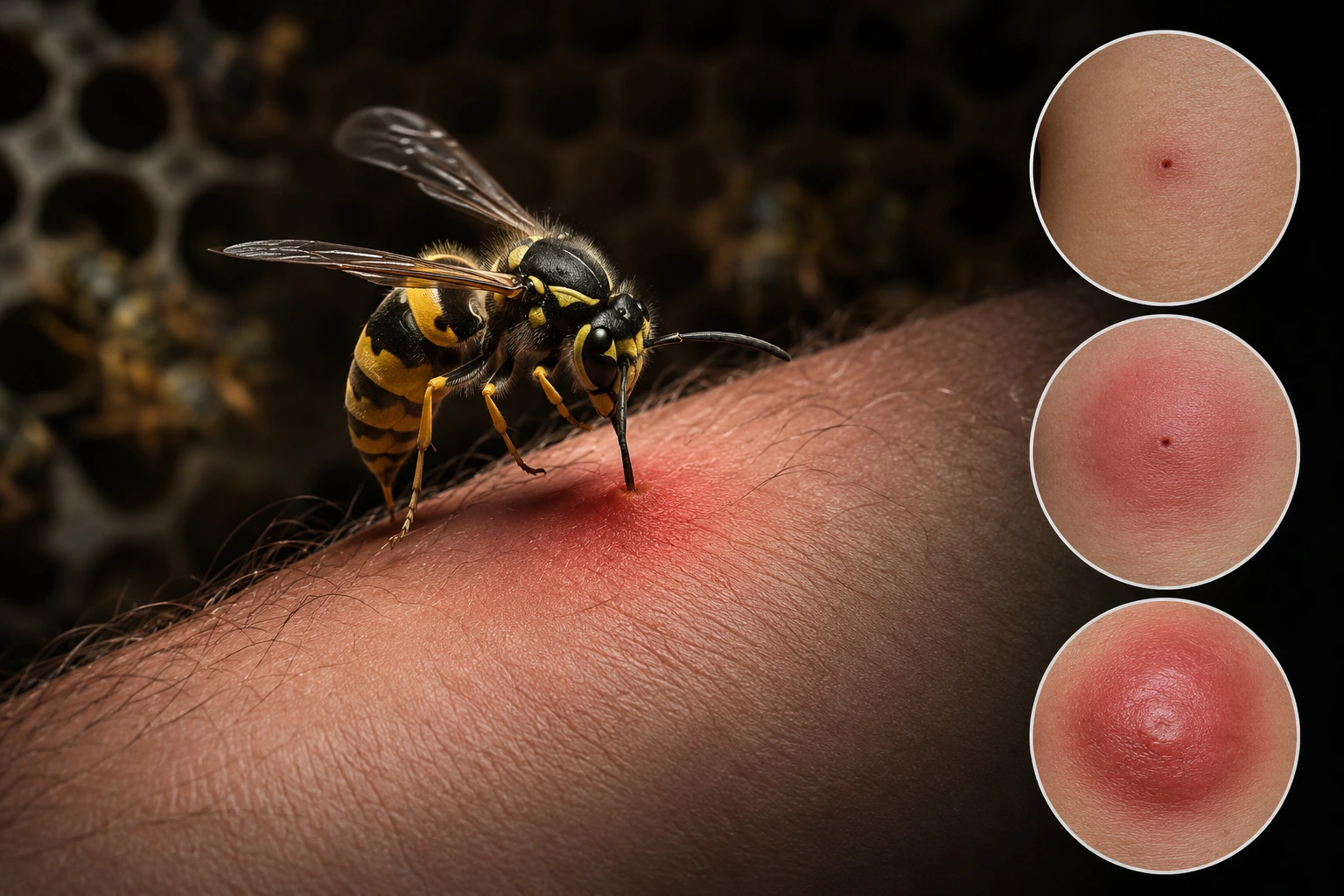
Yellowjackets can become particularly troublesome around outdoor eating areas, garbage containers, gardens, fallen fruit, and other locations where food is readily available.

Bald-Faced Hornets
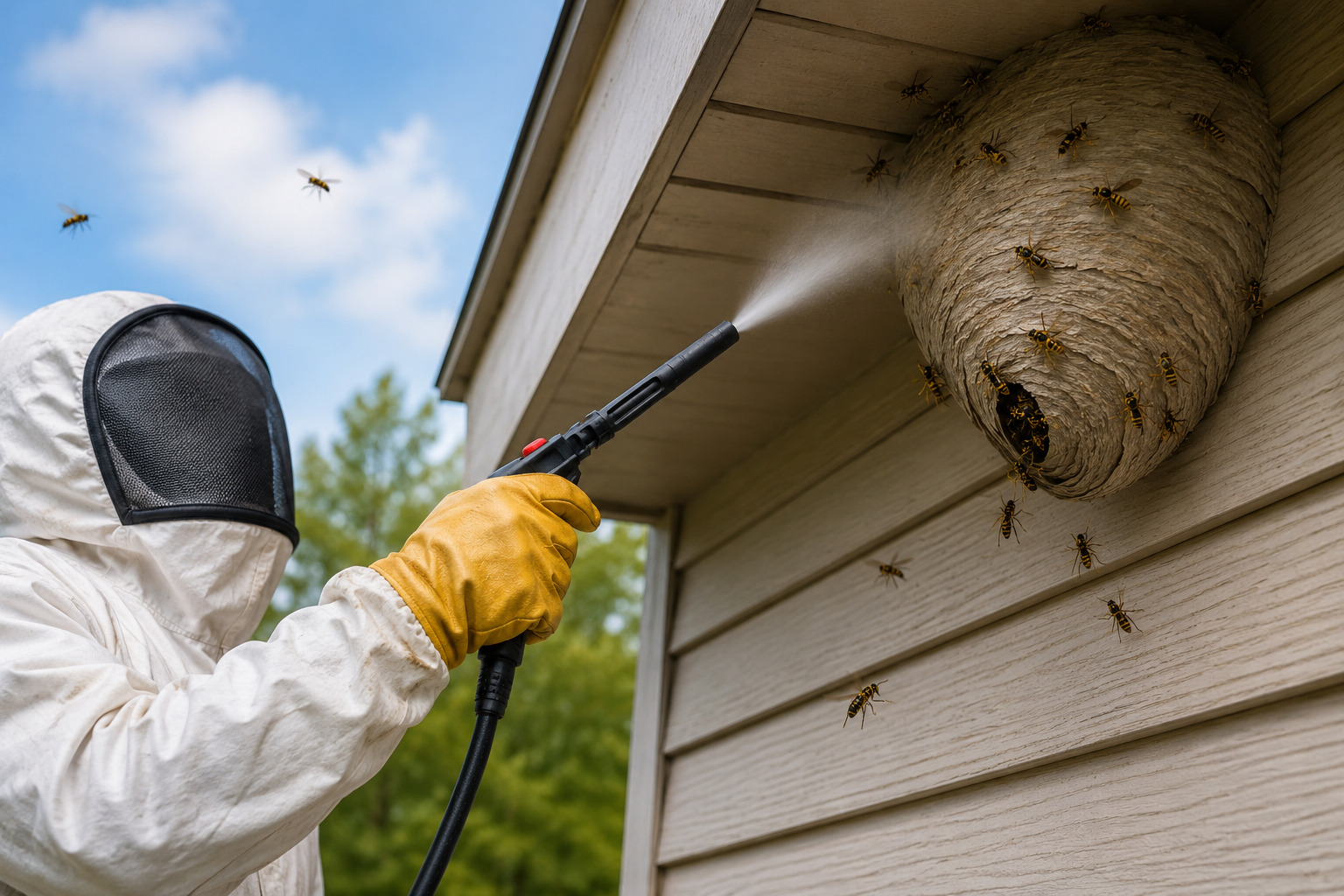
Bald-faced hornets build larger paper nests that may be suspended from trees, buildings, utility structures, and other elevated locations. Active nests should not be disturbed without appropriate precautions.

Mud Daubers
Mud daubers build mud nests on walls, under eaves, and around other sheltered areas. Although their behavior differs from many social wasps, recurring nesting can still become a nuisance.
Other Stinging Insects
Not sure whether you have wasps, hornets, or another stinging insect? Professional identification can help determine the appropriate management approach.
Property Size
Larger properties may require a more extensive inspection to identify potential nesting locations.
Type of Stinging Insect
Different species may have different nesting behaviors and treatment requirements.

Nest Location
An easily accessible nest may require a different approach than one located inside walls, roofs, trees, or other difficult-to-reach areas.
Nest Size
Larger or well-established nests may require additional treatment or service.
Infestation Severity
Multiple nests or widespread activity can increase the overall scope of service.
Follow-Up Requirements
Some infestations may require additional visits to monitor remaining activity or address new nests.