
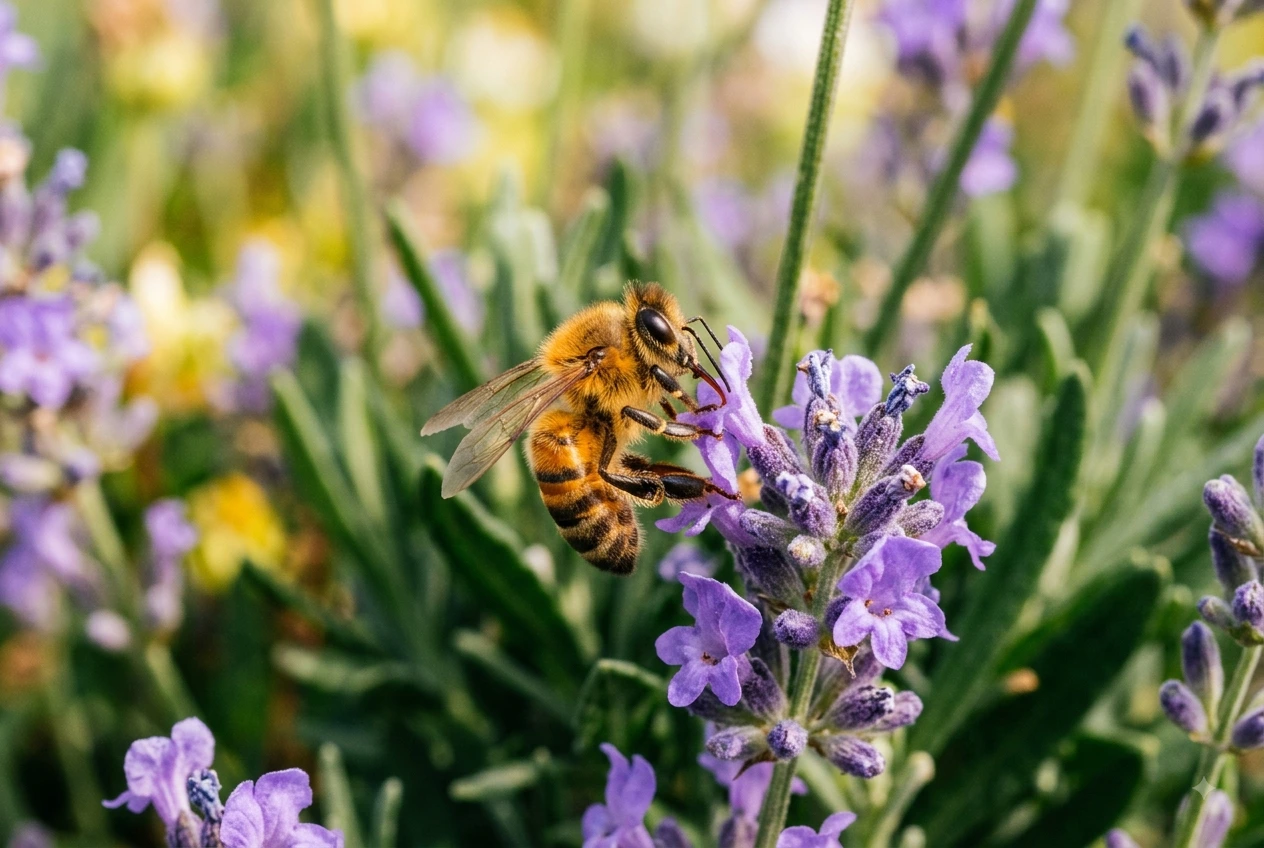
Honey is one of nature’s most remarkable foods. It begins as flower nectar collected by honey bees and undergoes a natural transformation inside the hive before humans harvest and package it. While honey may appear simple when it reaches a kitchen shelf, its journey involves several fascinating biological and processing stages. If you are wondering, how is honey processed step by step? It helps to understand both the work performed by bees and the methods used by beekeepers after harvesting.
Table of Contents
ToggleHow Do Bees Process Honey?
Before discussing commercial or beekeeping methods, it is important to understand How do bees process honey?
Honey bees collect nectar from flowers by using their long tongues. The nectar is stored temporarily in a specialized part of the bee’s digestive system called the honey stomach or crop. During this process, enzymes begin changing the nectar’s chemical composition.
The bees then place the partially processed nectar into honeycomb cells. At this stage, the material contains considerably more water than mature honey.
Bees help reduce the moisture content by creating airflow through the hive. They fan their wings, encouraging water to evaporate from the nectar. As the nectar becomes thicker and reaches suitable maturity, bees seal the honeycomb cell with a thin layer of beeswax called a wax capping.
This sealed honey is stored as food for the colony.
How Is Honey Processed Step by Step?
The human processing stage begins after honey has matured in the hive. Beekeepers generally follow several steps to extract and prepare honey.
Inspecting the Honeycomb
Beekeepers first inspect the frames inside the hive. Mature honey is generally found in cells that have been sufficiently filled and capped by the bees.
The beekeeper carefully removes appropriate frames while taking steps to minimize disturbance to the colony.
Removing the Wax Cappings
The honeycomb cells are sealed with beeswax. Before honey can be extracted, the wax cappings must be removed.
A special uncapping knife or tool may be used to open the cells carefully. The removed wax can be collected and used for other purposes, including beeswax products.
Extracting the Honey
Once the cells are uncapped, the frames are placed into a honey extractor.
A honey extractor uses centrifugal force for removing honey from the comb without destroying the entire wax foundation. The honey flows toward the bottom of the extractor and is collected for further processing.
Filtering the Honey
Freshly extracted honey may contain small pieces of beeswax, pollen, or other natural particles. It can be passed through a suitable filter or strainer to remove larger unwanted particles.
Filtering should not be confused with removing all naturally occurring components. Processing methods depend on the type of honey being produced.
Settling
After extraction and filtering, honey may be placed in a settling tank or container. Small air bubbles and remaining particles can gradually rise to the surface.
This makes it easier to obtain a cleaner final product.
Moisture and Quality Checks
Honey may be checked for moisture content and other quality characteristics before packaging. Moisture is particularly important because honey with excessive moisture can be more susceptible to fermentation.
Packaging
Finally, the processed honey is placed into clean, food-safe containers. The containers are sealed and labeled before the honey is distributed.
Depending on the product, honey may be sold as liquid honey, creamed honey, raw honey, or other specialty varieties.
How Many Bees to Make 1 kg of Honey?
A common question is: How many bees to make 1 kg of honey? There is no exact number because honey production depends on bee species, colony strength, available flowers, weather, distance to nectar sources, and the amount of honey required by the colony itself.
A commonly cited estimate is that bees collectively need to make many thousands of foraging trips to produce about 1 kilogram of honey. A single worker bee produces only a tiny amount of honey during its lifetime.
Rather than thinking about one bee producing a kilogram of honey, it is more accurate to think of honey as the result of collective work performed by an entire colony.
Thousands of worker bees may participate in gathering nectar, processing it, maintaining the hive, regulating temperature, and protecting the colony.
Why Bees Are Important to Honey Production?
Honey production is closely connected with pollination. As bees visit flowers for collecting nectar and pollen, they can transfer pollen between flowers, supporting the reproduction of many flowering plants.
A healthy bee colony therefore contributes not only to honey production but also to broader ecosystem functions.
Beekeepers need to manage colonies responsibly and ensure bees have adequate food resources. Honey should be harvested in a way that does not unnecessarily compromise the colony’s food supply.
What is Honey Processing and Pest Control?
For a pest control website, it is also useful to recognize that bees are beneficial insects and should not automatically be treated like household pests. Honey bees have an important role in pollination and food production.
Wasps, hornets, and other stinging insects might require different management approaches because their behavior, nesting habits, and risks can differ from those of honey bees.
Frequently Asked Questions
How honey is processed step by step?
Honey processing begins when bees collect flower nectar and transform it with enzymes. The nectar is placed into honeycomb cells, where bees reduce its moisture by fanning their wings.
How bees process honey?
Bees collect nectar and temporarily store it in their crops. Enzymes begin breaking down the nectar’s sugars. Worker bees transfer and repeat the process of the nectar before placing it into honeycomb cells.
How many bees to make 1 kg of honey?
Producing approximately 1 kg of honey requires the combined work of thousands of bee foraging trips and the coordinated efforts of many worker bees.
How long does it take bees to make honey?
During strong nectar flows, bees can collect and process substantial amounts of nectar relatively quickly, while production may slow considerably when flowers or suitable weather are limited.
Are honey bees considered pests?
However, a colony nesting inside a home, wall, attic, or another occupied area can create safety concerns. In such situations, professional bee management may be appropriate rather than treating honey bees like ordinary household pests.