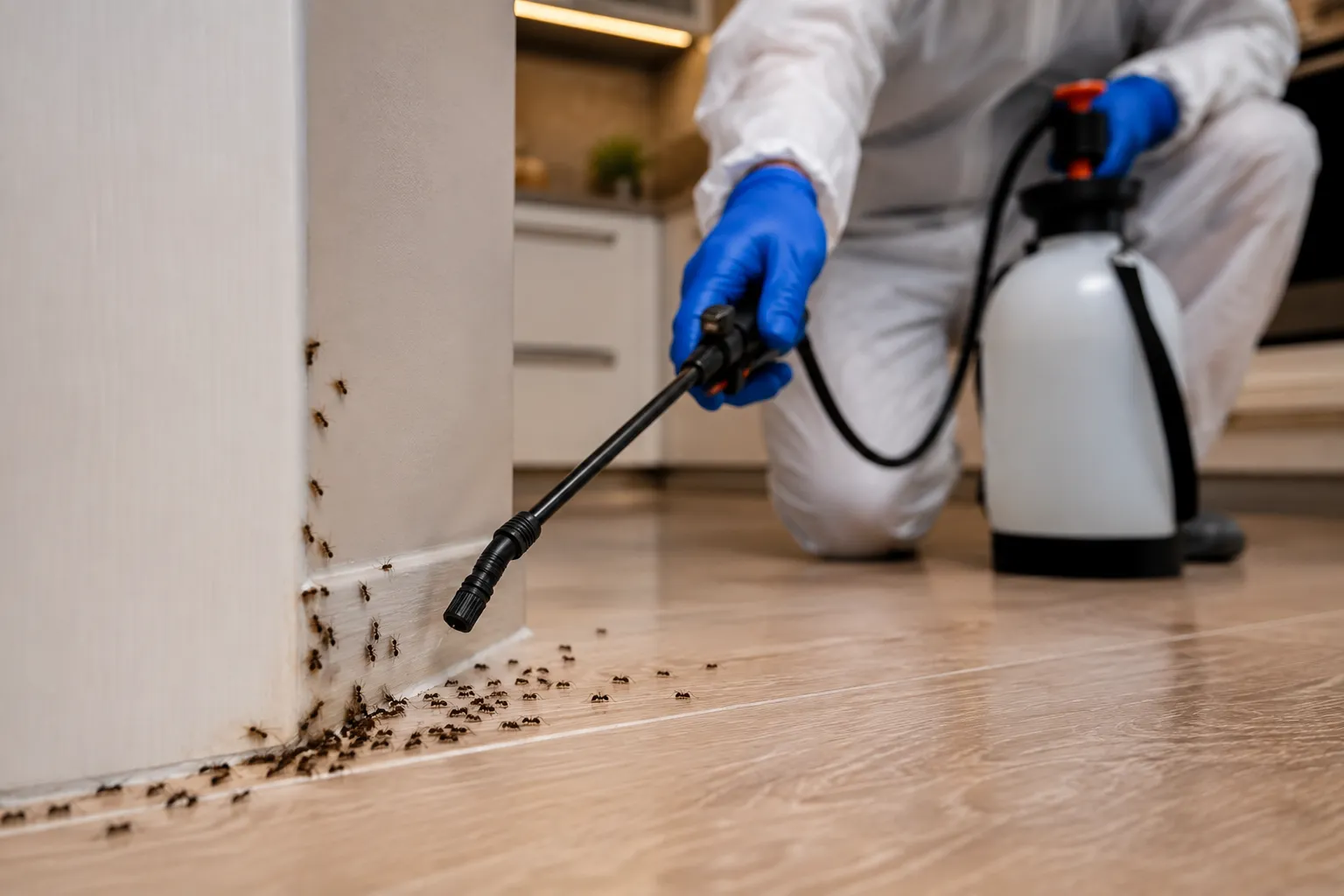
You may notice ants around kitchen counters, sinks, windows, doors, pantry shelves, or other areas where food and moisture are available. While wiping away visible ants may provide temporary relief, it usually does not address the colony responsible for the infestation. If you are wondering which pest control is best for ants? The most suitable approach depends on the ant species, the colony’s location, the severity of the infestation, and the conditions around the property.
Table of Contents
ToggleWhy Do Ants Enter Homes?
Ants enter homes in search of food, water, shelter, or suitable nesting conditions. However, even tiny crumbs or spills attract foraging ants.
- Sugary foods
- Pet food
- Grease and food residue
- Open garbage
- Standing water
- Leaking pipes
- Damp areas
- Cracks around windows and doors
- Vegetation touching the building
Once worker ants find a reliable food source, they can leave chemical trails that guide other ants toward it. Therefore, a few ants can quickly become a noticeable problem.
Which Pest Control Is Best for Ants?
So, which pest control is best for ants? There is no single treatment that works identically for every ant infestation. The best solution begins with identifying the ant species and determining the colony’s location.
Professional ant control may involve a combination of inspection, baiting, targeted treatments, exclusion, sanitation, and moisture management.
Ant Baits
Ant baits are commonly used because worker ants carry the bait back to the colony. This approach can help target ants that are not immediately visible.
Baits must be selected and placed appropriately because different ant species may respond differently to available bait formulations.
Targeted Treatments
Professional pest control technicians may apply treatments to cracks, entry points, nesting areas, wall voids, or exterior locations where ants are active.
Targeted application can help minimize unnecessary treatment of unrelated areas.
Entry-Point Control
Seal cracks and gaps around doors, windows, pipes, and foundations to help reduce opportunities for ants to enter.
Sanitation and Moisture Management
Remove food residue, fix leaks, clean spills, and reduce moisture to make the property less attractive to ants.
What Will Kill Ants Permanently?
A common question you ask is: What will kill ants permanently? There is no guaranteed permanent solution from simply spraying visible ants. Ant colonies can be located in soil, wall voids, landscaping, foundations, or other difficult-to-reach locations.
- Identifying the ant species.
- Finding major activity areas.
- Locating potential nesting sites.
- Removing accessible food sources.
- Addressing moisture problems.
- Using appropriate ant baits or treatments.
- Sealing entry points.
- Monitoring activity after treatment.
- Maintaining good sanitation.
If the colony remains undisturbed, new worker ants may continue entering the home even after visible ants have been eliminated.
How to 100% Get Rid of Ants?
Many of you search for how to 100% get rid of ants? Although complete elimination of an infestation is the goal, no pest-control method can honestly guarantee that ants will never appear again.
Ants are widespread environmental insects, and new colonies can develop or enter a property in the future.
- However, you can reduce the likelihood of recurring infestations by combining treatment with preventative measures.
- Keep food in sealed containers and clean crumbs and spills quickly. Pay particular attention to sugary and greasy residues.
- Use sealed trash containers and remove garbage regularly.
- Leaking faucets, pipes, appliances, and damp areas can attract ants and other pests.
- Inspect doors, windows, walls, foundations, and utility openings for gaps that ants could use.
- Trim branches, shrubs, and plants that touch the exterior walls or roofline.
- After treatment, continue checking areas where ants were previously active.
How to Stop Ants in Home Naturally?
If you are searching for how to stop ants in home naturally?, start with prevention and environmental changes rather than relying entirely on household remedies.
Natural prevention methods include keeping surfaces clean, storing food properly, removing standing water, fixing leaks, and sealing potential entry points.
These methods may only discourage ants temporarily and are not guaranteed to eliminate a colony.
- Clean kitchen surfaces regularly and remove food particles that can attract ants.
- Use airtight containers for sugar, cereal, snacks, pet food, and other products that may attract ants.
- Dry sinks and address plumbing leaks or condensation.
- Use suitable caulk or sealant around small cracks and gaps.
- Cleaning areas where ants travel can help remove scent trails that guide additional workers toward food.
- Natural prevention is most useful when combined with good household maintenance.
What are the Types of Ant Problems?
Different ants can behave differently, which is why species identification matters.
Odorous House Ants
These small ants are often found indoors around food and moisture sources. They can establish nests in wall voids or other protected areas.
Carpenter Ants
Carpenter ants can nest in damp or damaged wood. Their presence may indicate a moisture or structural issue that should be investigated.
Pavement Ants
These ants may establish nests beneath pavement, foundations, stones, or other protected outdoor areas and can occasionally enter buildings.
Fire Ants
Fire ants can be aggressive and may create outdoor mounds. Professional treatment may be appropriate when they pose a risk around frequently used outdoor areas.
Because treatment can vary between species, identifying the type of ant is an important first step.
Frequently Asked Questions
Which is the best pest control for ants?
Our treatment will include inspection, ant baiting, targeted applications, entry-point sealing, and sanitation recommendations to address both visible ants and the source of the infestation.
What will kill ants permanently?
Identifying and treating the colony, removing food and water sources, sealing entry points, and monitoring the property can provide longer-lasting ant control.
How to get rid of ants?
However, you can greatly reduce ant activity by removing food sources, fixing leaks, sealing cracks, maintaining cleanliness, and using professional pest-control treatments when necessary.
How to stop ants in home naturally?
To stop ants naturally, keep kitchen surfaces clean, store food in containers, remove standing water, repair leaks, and seal cracks around windows, doors, and other entry points.
Why do ants keep coming back after treatment?
Ants would return when the colony has not been completely addressed or when food, moisture, and entry points remain available. Our inspection help identify the source of recurring activity and recommend appropriate treatment.