
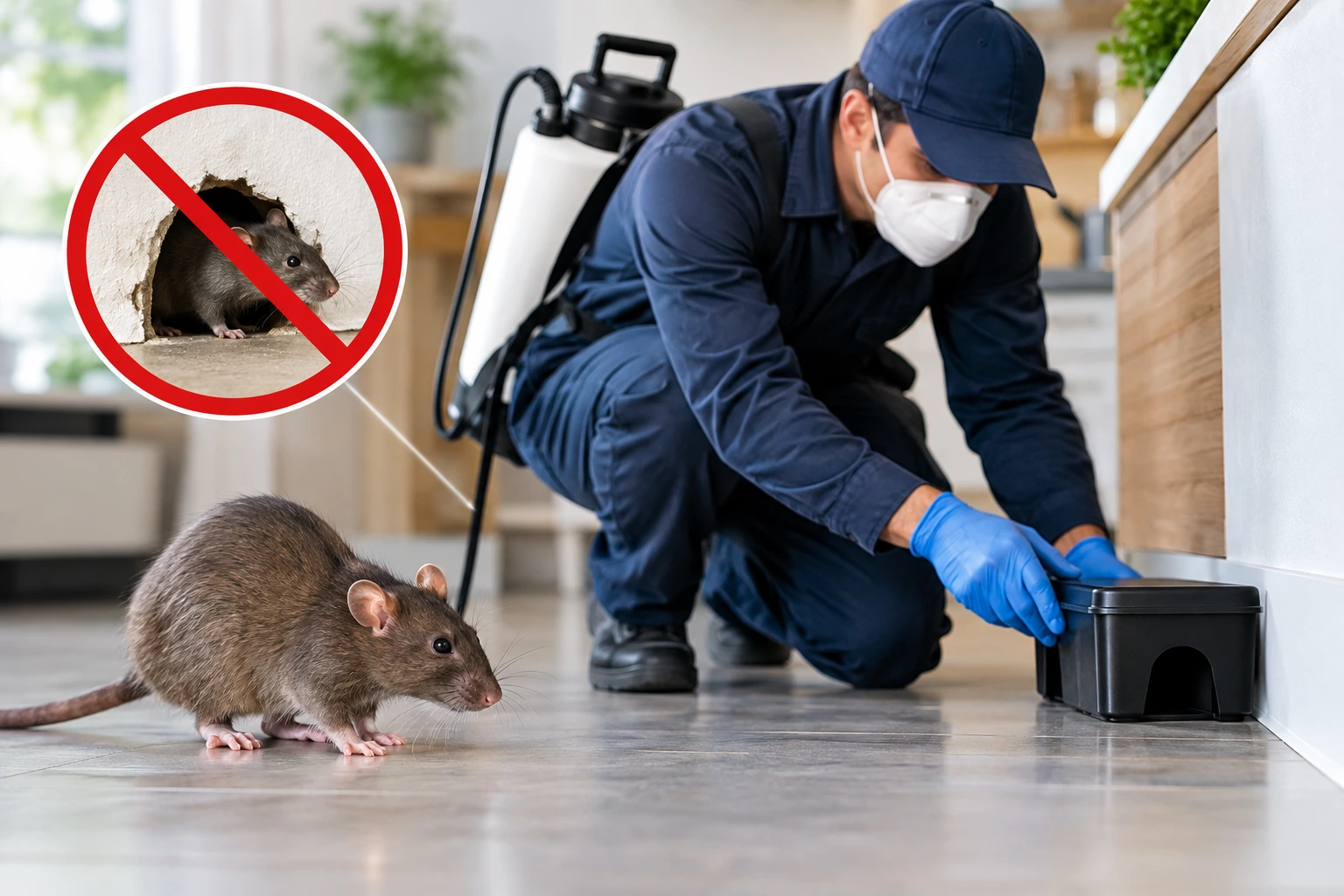
Rats can become a serious household pest problem when they find reliable sources of food, water, shelter, and entry points around a property. Early pest control can help prevent a small rodent issue from becoming a larger infestation. You begin by asking about the average cost of rat pest control for residential homes. However, the total cost can depend on the size of the infestation, the size of the home, the number of entry points, and the treatment method required.
Table of Contents
ToggleWhat Determines Rat Pest Control Cost?
The average cost of rat pest control for residential homes can vary because every property has different conditions. A home with signs of one or two rodents may require a different treatment plan than a property with an established infestation.
- A small and recently discovered problem may require less work than an infestation that has been present for an extended period.
- Larger homes may have more areas that need inspection, including garages, attics, basements, crawl spaces, kitchens, storage areas, and exterior structures.
- Rats can enter through surprisingly small openings. Gaps around pipes, vents, doors, foundations, rooflines, and utility connections may need to be identified and addressed.
- The treatment plan may include traps, bait stations, exclusion work, sanitation recommendations, or a combination of methods.
- Follow-up inspections may be necessary to monitor activity and determine whether additional treatment or exclusion work is needed.
Which Signs Show You May Have a Rat Problem?
Recognizing an infestation early can make treatment more manageable.
- Rat droppings
- Scratching or movement sounds
- Gnaw marks
- Damaged food packaging
- Greasy marks along walls
- Nesting materials
- Unusual odors
- Burrows around exterior areas
- Damaged insulation
- Rodent activity at night
Is Professional Rodent Control Worth the Money?
Many of you ask, Is professional rodent control worth the money when they believe they can handle the problem themselves.
- It depends on the severity and circumstances of the infestation.
- For a minor issue, you may consider basic prevention measures such as sealing food containers, reducing clutter, and closing obvious gaps.
- However, established infestations can be more difficult to manage because rats may have multiple hiding areas and entry routes.
Professional pest control can provide several advantages.
- A systematic inspection of the property
- Identification of potential entry points
- Treatment based on observed activity
- Assistance with exclusion and prevention
- Follow-up monitoring when required
- Guidance on reducing conditions that attract rodents
Why Rat Exclusion Is Important?
Eliminating current rodent activity is only part of long-term prevention. Rats can return if they continue to have access to food, water, shelter, or entry points. Exclusion includes identifying and sealing openings that could allow rodents to enter.
- Foundation gaps
- Openings around pipes
- Garage doors
- Damaged vents
- Utility penetrations
- Roofline gaps
- Broken screens
- Gaps around doors and windows
How Often Do You Need Rodent Control Service for Home?
The question how often do you need rodent control service for home, it depends largely on the property’s risk factors and whether an infestation is currently present.
- A home with an active infestation may require multiple visits.
- Pest professionals may use follow-up inspections to determine whether rodent activity has decreased and whether additional treatment is needed.
- Homes with recurring rodent problems may benefit from periodic inspections or preventive services, particularly when the property has conditions that make rodent entry more likely.
- However, routine treatment is not necessarily required for every home.
- If a property has no signs of rodent activity and effective exclusion measures are in place, you may only need to monitor for signs and address problems if they appear.
How to Prevent Rats from Returning?
After treatment, prevention is an important part of maintaining a rodent-free home.
- Keep food in sealed containers and avoid leaving pet food or uncovered food available overnight.
- Use containers with secure lids and clean areas around garbage storage regularly.
- Storage areas filled with cardboard, unused materials, or other debris can provide rodents with potential nesting areas.
- Repair leaking faucets, pipes, appliances, or other sources of accessible water.
- Inspect the exterior of the home for gaps, cracks, and openings that could provide rodent access.
- Keep vegetation, debris, and stored materials away from the foundation where practical. This can reduce sheltered areas close to the home.
When Should You Call a Pest Control Professional?
You should consider professional assistance when signs of rat activity continue, increase, or appear in multiple areas of the property.
- Rats are repeatedly seen
- Droppings continue appearing
- Noises are heard inside walls or ceilings
- Food packaging is being damaged
- DIY measures have not solved the problem
- Entry points are difficult to locate
- There may be a larger infestation
What is the Overall Cost?
When researching the average cost of rat pest control for residential homes, you should consider the entire treatment process rather than focusing only on the initial visit.
- An estimate may cover inspection, treatment, traps or baiting equipment, follow-up visits, monitoring, exclusion recommendations, or physical sealing work.
- Not every service includes all of these components, so you should ask what is included before approving treatment.
- The condition of the property can also influence the overall expense.
- A home requiring extensive exclusion work may cost more to address than one where only limited treatment is necessary.
Frequently Asked Questions
What factors affect the cost of residential rat pest control?
The cost can depend on the size of the infestation, property size, number of entry points, treatment method, accessibility, and whether follow-up visits or exclusion work are required.
How can I tell if rats are living inside my home?
Common signs include droppings, scratching noises, gnaw marks, damaged food packaging, nesting materials, unusual odors, and greasy marks along walls or other frequently used pathways.
Can rats come back after professional treatment?
Rats may return if food sources, shelter, or entry points remain available. Sealing gaps, improving sanitation, storing food properly, and addressing exterior conditions can help reduce the risk of recurring activity.
How many pest control visits are usually needed for rats?
The number of visits depends on the infestation severity and how the rodents respond to treatment. A minor problem may require limited service, while an established infestation may need follow-up inspections.
What should I do if I keep finding rat droppings after treatment?
Continued droppings may indicate ongoing activity or another accessible entry point. Contact the pest control professional for a follow-up inspection so the source of the activity can be identified and addressed.