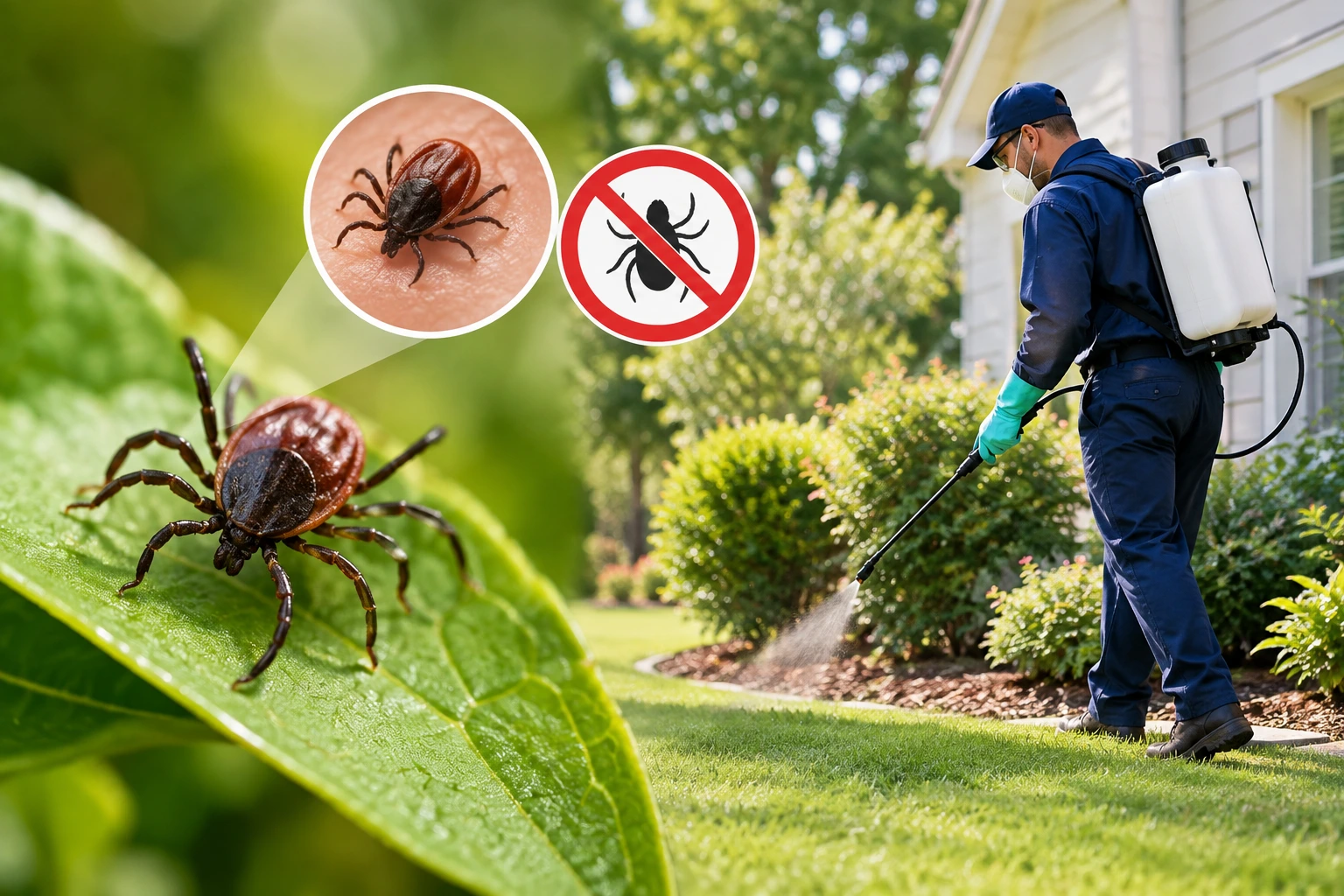
Ticks can become a concern when they are present around lawns, gardens, wooded edges, and areas where pets or people spend time outdoors. If you are wondering how to get rid of ticks in the yard immediately, the most effective approach is a combination of habitat reduction, yard maintenance, pet protection, and targeted pest treatment.
Table of Contents
ToggleWhy Ticks May Be Living in Your Yard
Ticks do not thrive equally throughout an entire lawn. They often prefer areas that provide shade, moisture, vegetation, and access to hosts such as rodents, deer, birds, and other wildlife.
- Tall grass
- Leaf piles
- Dense shrubs
- Wooded borders
- Overgrown garden areas
- Brush piles
- Damp shaded locations
- Areas frequented by wildlife
How to Get Rid of Ticks in the Yard Immediately?
The first step is to make the yard less suitable for ticks.
- Keep grass regularly mowed and remove excessive weeds and brush.
- Trim vegetation around walkways, patios, play areas, and outdoor seating spaces.
- Removing leaf litter can also reduce sheltered areas where ticks and their hosts may remain.
- If your property borders a wooded area, consider creating a maintained buffer between the lawn and dense vegetation.
- A strip of mulch or gravel can help separate frequently used lawn areas from tick-friendly habitat.
- However, yard cleanup alone may not eliminate an established tick population. When activity is significant, targeted pest control may be necessary.
What are the Professional Tick Yard Treatments?
Professional pest control services can inspect the property and identify areas where ticks are likely to be concentrated. Treatment can then be focused on suitable tick habitats rather than applied randomly.
A professional treatment may target:
- Shaded lawn edges
- Shrubs and ornamental vegetation
- Wooded borders
- Leaf-litter areas
- Tall grass
- Brush
- Areas where pets frequently travel
How Much Does Professional Tick Yard Spraying Cost?
You ask, how much does professional tick yard spraying cost? The price can vary considerably because pest control services consider several factors before providing an estimate.
- Property size
- Severity of tick activity
- Yard layout
- Vegetation density
- Treatment area
- Number of treatments required
- Accessibility
- Local pest-control rates
- Type of treatment selected
A small residential yard may require a different treatment approach than a large property with extensive wooded borders.
Can You Remove Ticks Without Professional Treatment?
Some of you can reduce tick-friendly conditions through regular yard maintenance.
- Keeping grass short, removing leaf litter, controlling brush, and trimming vegetation can all contribute to a less favorable environment.
- However, DIY maintenance may not be sufficient when tick activity is widespread or persistent.
- It is also important to remember that wildlife can continuously introduce ticks into a property.
- Deer, rodents, and other animals may move through the yard and bring additional ticks with them.
- For this reason, long-term tick management often requires both environmental improvements and appropriate pest-control measures.
Are Tick Tubes Effective for Deer Tick Control?
A common question is are tick tubes effective for deer tick control? Tick tubes are designed to take advantage of the behavior of certain rodents.
- The tubes contain treated nesting material that rodents may collect and carry back to their nests. The treatment is intended to affect ticks that feed on those rodents.
- Tick tubes can be one component of an integrated tick-management strategy, particularly where deer ticks are associated with rodent activity.
- However, they should not be viewed as a guaranteed solution for every tick problem.
- Their effectiveness can depend on rodent behavior, placement, timing, environmental conditions, and the local tick population.
- Tick tubes also do not directly address every tick host. Deer and other wildlife can continue moving through the property, so additional management may be necessary.
How to Reduce Tick Hosts Around Your Property?
Ticks depend on animals for parts of their life cycle. Reducing conditions that attract wildlife can therefore support broader tick management.
- Keep trash containers securely closed and avoid leaving pet food outdoors.
- Remove unnecessary brush piles and maintain vegetation around the property.
- Where appropriate, fencing can also help reduce access by larger wildlife.
- However, wildlife management should always follow local regulations and humane practices.
- Rodent control can be particularly relevant for deer tick management because certain tick species use small mammals during parts of their life cycle.
Can Pets be Protected From Yard Ticks?
Dogs and outdoor cats can pick up ticks while walking through grass, shrubs, and wooded areas. Pets can then bring ticks into the home.
- Use veterinarian-recommended tick prevention for pets and inspect them after outdoor activity.
- Pay attention to areas such as around the ears, neck, legs, paws, and between toes.
- Regular grooming can also help identify attached ticks sooner.
- If you find a tick attached to a pet, follow appropriate removal and veterinary guidance rather than relying solely on yard treatment.
When Should You Call a Pest Control Professional?
Professional assistance may be appropriate when:
- You repeatedly find ticks around the property.
- Pets are frequently bringing ticks indoors.
- Tick activity continues despite regular yard maintenance.
- Your property borders woods or dense vegetation.
- You are unsure where ticks are concentrated.
- You want a targeted treatment plan.
- You need recurring seasonal protection.
Frequently Asked Questions
What attracts ticks to a residential yard?
Ticks are associated with shaded, moist areas, tall grass, leaf litter, dense vegetation, brush, and areas visited by wildlife such as deer and rodents.
How quickly can professional tick treatment reduce yard activity?
A professional treatment can begin reducing tick activity after application, but results vary depending on the infestation, weather, property conditions, and tick species.
Can mowing the lawn help control ticks?
Keeping grass short and trimming overgrown vegetation can make the yard less favorable for ticks and reduce areas where they can hide.
Can ticks from the yard get inside my home?
Ticks can enter homes on pets, clothing, footwear, or outdoor equipment. Regularly checking pets and people after outdoor activities can help reduce the chance of bringing ticks indoors.
Should I treat my entire yard for ticks?
Professional pest control can identify areas with favorable tick conditions and focus treatment on locations such as shaded borders, dense vegetation, leaf litter, and wooded edges.