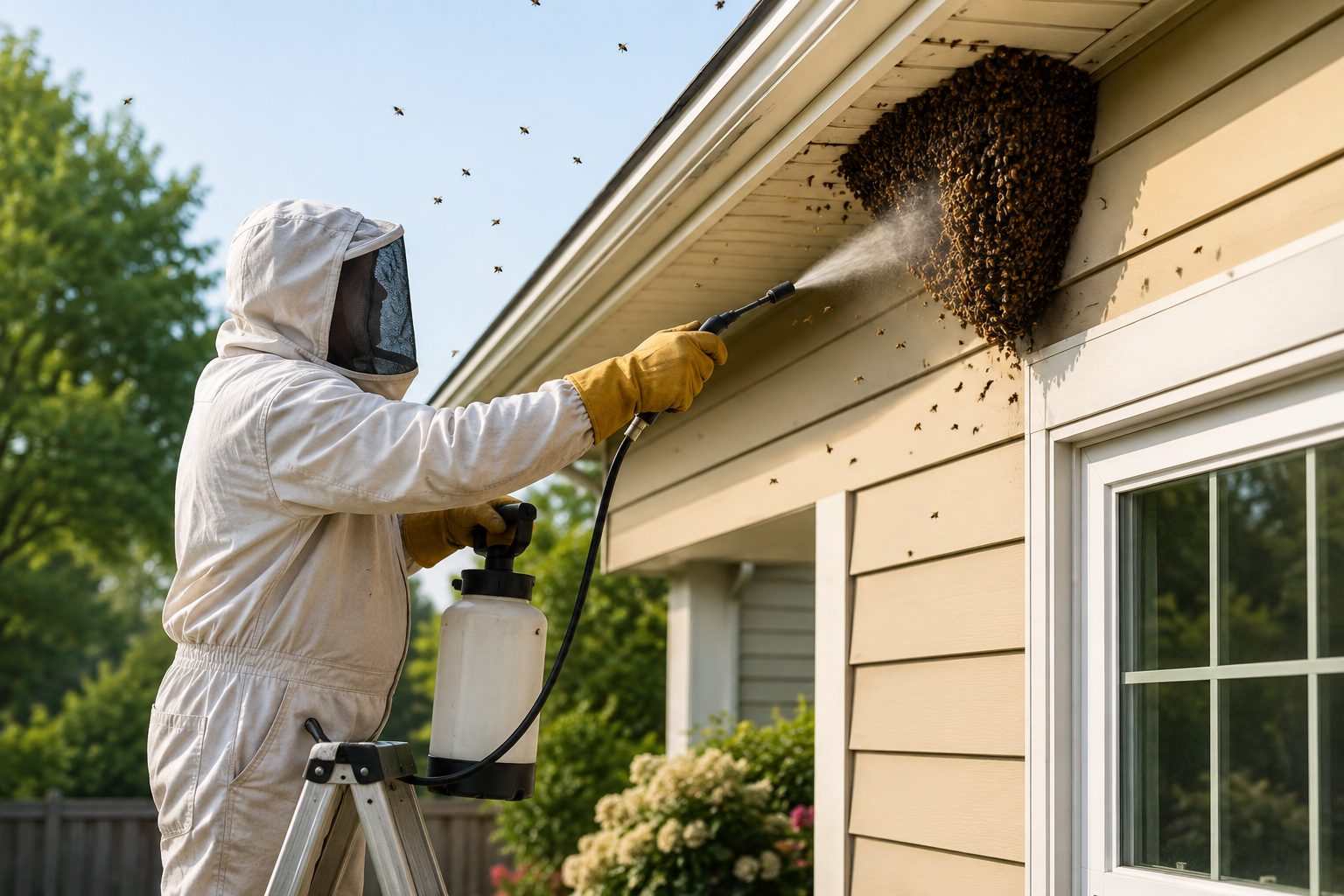
Bees play an important role in pollination and maintaining the natural ecosystem. Still, when they begin nesting too close to homes, they can become a concern for you and your family. Large bee infestations near entryways, attics, walls, roofs, or gardens may increase the risk of stings and structural damage. Many of you search for safe and eco-friendly methods when learning how to bee pest control for your home naturally, without causing unnecessary harm to beneficial pollinators. We will explain safe and effective techniques, prevention tips, and professional Pest advice for controlling Bees while helping you understand how to remove bees from your home naturally.
Protect your property with trusted natural bee control services. Call now to learn How to remove bees from home naturally with safe and effective solutions.
Table of Contents
ToggleWhy Bees Enter Homes and Properties?
Bees are constantly searching for food, water, and shelter. Certain areas around residential properties provide ideal nesting conditions, especially during warmer seasons.
Common reasons bees are attracted to homes include:
- Flowering gardens
- Standing water sources
- Wall cavities
- Roof gaps
- Attic openings
- Wooden structures
- Sweet food residues
- Garbage containers
Learning how to bee pest control for your home naturally begins with identifying why bees are attracted to your property in the first place.
Understanding Different Types of Bees
Before attempting bee control, it is important to identify the type of bee present around your home.
Honey Bees
Honey bees are beneficial pollinators that usually build colonies inside wall voids, tree hollows, or roof spaces.
Carpenter Bees
These bees drill holes into wooden structures and may damage decks, fences, or siding.
Bumble Bees
Bumble bees often nest underground or in dense vegetation.
Different species may require different approaches when learning how to remove bees from home naturally.
Why Natural Bee Control Is Important?
Many of you prefer natural bee control methods because they are safer for children, pets, and the environment.
- Reduced chemical exposure
- Eco-friendly pest management
- Protection of beneficial pollinators
- Safer indoor air quality
- Lower environmental impact
Our professional Pest advice for controlling Bees often recommends humane, preventive solutions before you resort to stronger treatments.
Which Signs Show a Bee Infestation Around Your Home?
Early detection is important for successful bee management. It is crucial to recognize these signs to help you understand how to bee pest control for your home naturally before infestations become severe.
- Large numbers of bees flying around a particular area might indicate a nearby hive.
- Buzzing noises behind walls or ceilings can suggest hidden colonies.
- Carpenter bees often leave perfectly round holes in wooden surfaces.
- Visible wax or sticky stains near walls may indicate honey bee nests.
- Bee swarms sometimes gather temporarily before relocating to a permanent nesting site.
How to Remove Bees From Home Naturally?
There are several effective ways to safely discourage bees from nesting near your home.
Use Natural Bee Repellents
Certain scents naturally deter bees without harming them.
Popular natural repellents include:
- Peppermint oil
- Cinnamon
- Citronella
- Vinegar spray
- Garlic spray
Mixing peppermint oil with water and spraying entry points may help discourage bee activity. Many homeowners searching for ways to remove bees from their homes naturally use essential oils as a safe preventive measure.
Remove Food and Water Sources
Bees are attracted to easily accessible food and moisture. These simple prevention steps support effective, natural How to bee pest control strategies for your home.
- Clean outdoor eating areas
- Cover garbage bins
- Remove standing water
- Avoid sugary spills
- Keep pet food indoors
Seal Entry Points Around Your Home
Small openings around the house often provide ideal nesting areas.
- Roof gaps
- Window cracks
- Wall openings
- Pipe entry points
- Attic vents
Preventing access is one of the best long-term solutions for How to remove bees from home naturally.
Plant Bee-Repelling Herbs
Certain plants naturally discourage bees from gathering too close to homes.
- Mint
- Eucalyptus
- Basil
- Wormwood
- Citronella grass
Strategically planting these around patios and entryways may naturally reduce bee activity. This is commonly included in professional Pest advice for controlling Bees because it combines landscaping with pest prevention.
Use Smoke Carefully
Smoke has long been used to calm bees and encourage relocation.
Burning natural materials like dried leaves or untreated wood near an outdoor hive may gently encourage bees to move elsewhere. However, smoke methods should be used cautiously and only for small outdoor bee problems. Large infestations often require professional assistance.
Keep Outdoor Areas Clean
Maintaining a clean property is an important part of how to bee pest control for your home naturally.
- Trim overgrown vegetation
- Remove fallen fruit
- Keep gutters clean
- Store firewood properly
- Eliminate clutter
These measures reduce potential nesting sites and food sources for bees.
What are the Natural Solutions for Carpenter Bees?
Carpenter bees require specialized attention because they damage wood structures. It is essential to understand how to remove bees from home naturally, which often includes preventative wood protection strategies.
Use Citrus Spray
Citrus oil sprays are often effective against carpenter bees.
Paint or Seal Wood
Unfinished wood attracts carpenter bees more easily.
Install Bee Traps
Natural wooden bee traps may help safely reduce carpenter bee populations.
Looking for expert Pest advice for controlling Bees? Schedule a professional inspection and let us help you prevent future bee infestations naturally.
How Does the Weather Affect Bee Activity?
Bee activity changes throughout the year. Thus, seasonal awareness helps you apply effective Pest advice for controlling Bees at the right time.
Spring and Summer
During warm weather and flowering seasons, bees are most active.
Fall
Bee colonies begin preparing for colder temperatures.
Winter
Many bees become less active or remain hidden inside protected nesting sites.
Are There Safe Bee Relocation Methods?
In many cases, relocation is better than extermination. Our professional pest control specialists and local beekeepers often relocate hives safely without harming the colony.
- Honey bee swarms
- Large outdoor hives
- Environmentally sensitive areas
This approach supports eco-friendly Pest advice for controlling Bees while you preserve pollinators, which are important to agriculture and ecosystems.
Which Common Mistakes Should You Avoid?
When attempting natural bee control, some mistakes can worsen the situation. Moreover, our professional Pest advice for controlling Bees recommends careful, humane approaches whenever possible.
Block Active Entrances Immediately
Sealing entrances while bees remain inside may trap them within walls.
Use Excessive Water
Spray the large amounts of water might agitate bees.
Disturb Large Hives
Large colonies can become defensive if disturbed improperly.
Use Harsh Chemicals Without Experience
Improper use of chemicals may harm people, pets, and beneficial pollinators.
What are the Long-Term Prevention Tips?
However, preventing future infestations is as important as removing current bee activity. These strategies help maintain long-term success when learning how to bee pest control for your home naturally.
- Schedule regular home inspections to verify the roof, siding, and attic.
- Maintain landscaping, trim bushes, and remove overgrown vegetation.
- Repair Damaged Wood, replace or seal rotting wood structures.
- Install Protective Screens and cover vents and openings with mesh screens.
- Monitor Seasonal Bee Activity, as early monitoring helps prevent large infestations.
Eco-Friendly Pest Control Solutions
Our pest control services offer eco-friendly bee management solutions that are responsible and align with safe Pest advice for controlling Bees while protecting beneficial insect populations.
- Essential oil applications
- Humane hive relocation
- Non-toxic repellents
- Preventative exclusion work
When to Call Professional Bee Control Services?
While small bee problems can often be managed naturally, some situations require professional help. Moreover, our professional pest control experts understand how to remove bees from a home naturally while prioritizing safety and proper hive management.
- Bees are inside the walls.
- Large swarms appear
- Family members have been allergic to bees
- Aggressive bee behavior occurs
- Structural damage is visible
Benefits of Natural Bee Pest Control
Natural bee management provides several long-term advantages. These benefits make natural methods increasingly popular for homeowners seeking how to bee pest control for your home naturally.
- The natural pest control reduces chemical exposure and improves safety for children and pets.
- It protects important pollinator populations.
- However, addresses root causes rather than temporary fixes.
- Prevention often reduces future pest control expenses.
How Landscaping Choices Can Help Reduce Bee Activity?
Your landscaping design can play a major role in preventing unwanted bee activity near your home. While flowers and plants are beautiful additions to outdoor spaces, certain types of vegetation may attract large numbers of bees close to patios, doorways, windows, and play areas. While you are researching How to bee pest control for your home naturally should carefully consider how their landscaping choices influence bee behavior.
Bright flowers with strong fragrances naturally attract pollinators. When you plant these flowers far away from main entrances and outdoor seating areas, it can help reduce bee traffic near frequently used spaces.
What are the Natural Ways to Protect Outdoor Living Spaces?
Outdoor patios, gardens, and decks are common areas where homeowners experience bee problems. Fortunately, there are several natural ways to make these spaces less attractive to bees without harming the environment.
Avoid Sweet Fragrances Outdoors
Strong perfumes, scented candles, and sugary beverages often attract bees during warmer months. You must reduce these items in outdoor areas, it can help minimize bee activity.
Use Covered Trash Containers
Open garbage bins containing food residue may attract bees searching for sugar sources. Tight-fitting lids help reduce odors and prevent insects from gathering nearby.
Keep Outdoor Dining Areas Clean
Cleaning spills quickly after outdoor meals is an important part of How to remove bees from home naturally. Sweet drinks and food crumbs can attract bees rapidly during spring and summer.
Add Natural Deterrents
Hanging small bundles of mint, eucalyptus, or citronella near seating areas may help discourage bees from lingering nearby.
These simple prevention techniques provide effective Pest advice for controlling Bees while helping homeowners enjoy outdoor spaces more comfortably.
What is the Importance of Early Bee Prevention?
Bees often start with small exploratory activity before building larger colonies. Taking early action can help homeowners avoid more serious infestations later. Regular property inspections are a valuable part of How to bee pest control for your home naturally.
- Small wall openings
- Roof cracks
- Gaps around vents
- Wood damage
- Signs of nesting activity
While you catch these issues early, it allows you to make repairs before bees establish permanent colonies.
Seasonal prevention is especially important during spring when bees begin searching for nesting locations. Proactive maintenance during this period can significantly reduce the likelihood of infestation throughout the warmer months.
Eco-Conscious Bee Management for Modern Homes
These approaches allow you to protect your property while supporting the important ecological role bees play in pollination and agriculture.
- Humane hive relocation
- Organic repellents
- Habitat modification
- Structural exclusion work
- Preventative landscaping adjustments
When you understand How to remove bees from home naturally. You can create safer living environments while contributing to responsible environmental stewardship. However, long-term prevention, regular maintenance, and natural deterrents remain some of the most effective ways to manage bee activity safely and naturally around residential properties.
Frequently Asked Questions
What is the safest way for bee pest control for your home naturally?
The safest method includes sealing entry points, removing food sources, using natural repellents like peppermint oil, and keeping outdoor areas clean to discourage bee activity.
How to remove bees from home naturally without harming them?
You can use humane methods such as smoke, essential oil sprays, bee-repelling plants, and professional hive relocation services to safely remove bees naturally.
Why are bees nesting around my house?
Bees are usually attracted to shelter, water, flowering plants, wood surfaces, and small openings in walls or roofs that provide safe nesting spaces.
What is the best Pest advice for controlling Bees around outdoor spaces?
Keeping patios clean, covering trash bins, trimming vegetation, and avoiding sugary spills outdoors are some of the best natural bee prevention methods.
When should I call professional pest control for bees?
We recommend professional help, if bees are nesting inside walls, large swarms appear, aggressive behavior occurs, or family members have bee sting allergies.
Need safe and eco-friendly bee removal services? Contact our team today for natural bee pest control solutions that protect your home and family.