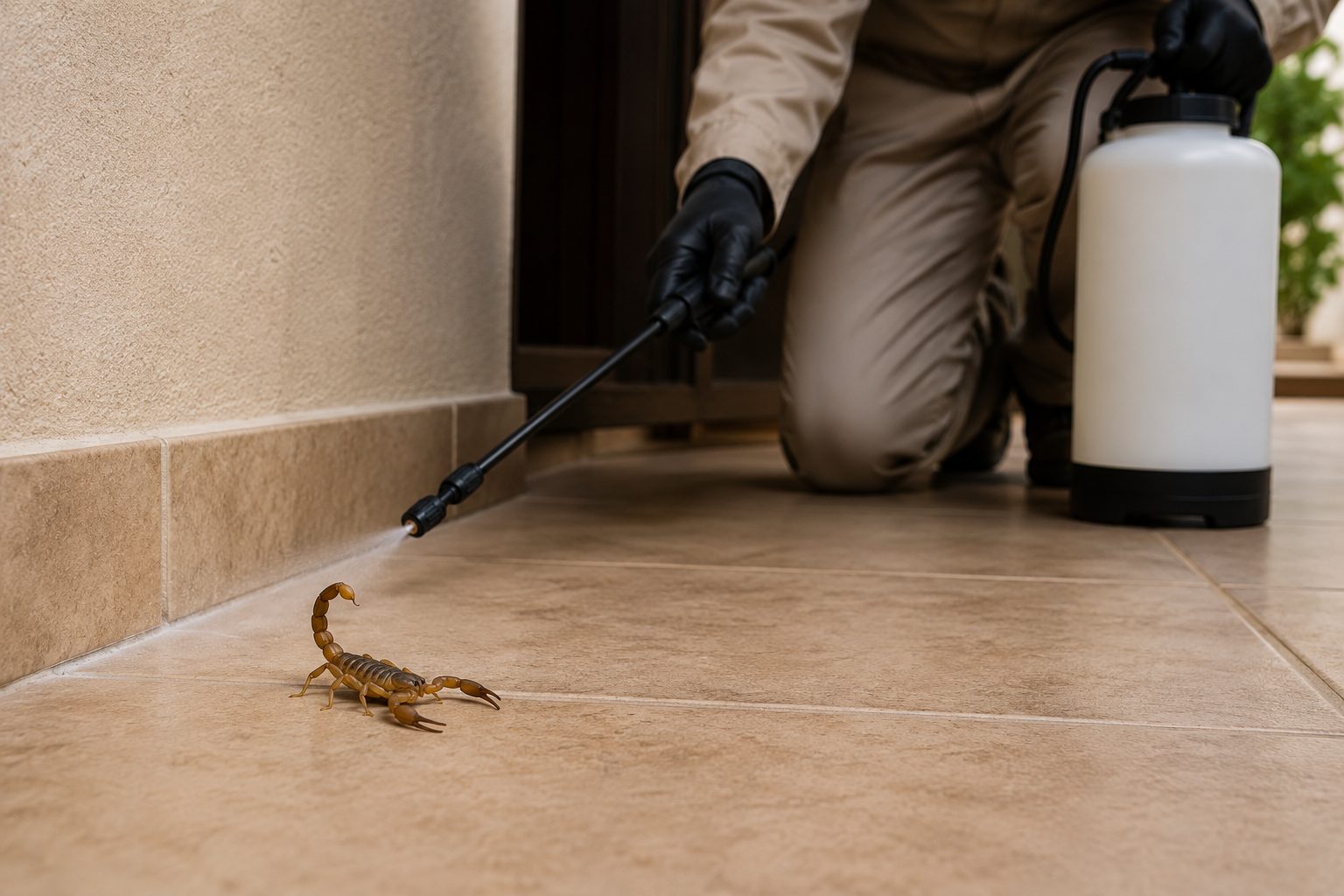
Scorpions are one of the most feared household pests because of their painful stings and ability to hide in dark, hard-to-reach places. If you are living in warm, dry climates, you often struggle with recurring scorpion infestations in garages, bathrooms, basements, kitchens, and outdoor storage spaces. Learning how to do scorpion control in house is important to protect your family, pets, and property from unwanted pest activity. Our professional pest control services and preventive home maintenance are the most effective methods to reduce scorpion activity.
Table of Contents
ToggleWhy Scorpions Enter Homes?
Scorpions enter residential properties in search of survival essentials, like food, water, and shelter. Moreover, it is essential to understand what attracts scorpions in the first step toward effective pest prevention.
Access to Food Sources
Scorpions feed on insects such as:
- Crickets
- Cockroaches
- Spiders
- Ants
- Beetles
If your home already has other insect infestations, scorpions may follow the food supply indoors.
Moisture and Water
Scorpions are attracted to damp areas around bathrooms, kitchens, laundry rooms, and leaking pipes.
Dark Hiding Spots
They prefer quiet and dark hiding areas such as:
- Closets
- Garages
- Storage boxes
- Wood piles
- Crawl spaces
- Basements
Seasonal Weather Changes
During extreme heat or heavy rain, scorpions may move indoors seeking protection from harsh outdoor conditions.
Learning how to scorpion control at home starts with eliminating the environmental conditions that attract these pests.
Common Signs of Scorpion Activity
Scorpions are excellent at hiding, which means infestations may go unnoticed until sightings become frequent.
Here are some common signs of scorpions inside homes:
Direct Scorpion Sightings
Seeing live scorpions around walls, floors, bathrooms, or garages is the clearest warning sign.
Increased Insect Activity
Since scorpions feed on insects, a rise in cockroaches or crickets may attract them.
Scorpion Molts
Scorpions shed their outer skin as they grow. Finding molts near hiding areas may indicate activity.
Activity at Night
Scorpions are nocturnal and are more active after dark.
Pet Reactions
Dogs and cats may become alert or disturbed when they encounter hidden scorpions.
Understanding these warning signs helps homeowners take immediate action before infestations worsen.
How to Scorpion Control in House Naturally
Many homeowners prefer natural prevention methods before using chemical treatments. Learning how to keep scorpions away naturally can reduce pest activity while improving household safety.
Eliminate Clutter
Scorpions hide in cluttered areas such as cardboard boxes, unused furniture, and storage piles. When you keep rooms organized, it reduces the hiding spaces.
Seal Entry Points
Check your home carefully for cracks and openings around.
- Doors
- Windows
- Utility lines
- Vents
- Foundation gaps
Use weather stripping, silicone caulk, and door sweeps to block access points.
Remove Outdoor Debris
Scorpions often live in outdoor hiding areas near homes.
- Wood piles
- Rocks
- Yard debris
- Fallen leaves
- Excess vegetation
Maintaining a clean yard is one of the most effective strategies for How to keep scorpions away naturally.
Reduce Moisture
Fix leaking faucets, pipes, and drainage issues. You must use dehumidifiers in damp spaces, like basements and crawl spaces.
Control Other Insects
Since scorpions feed on insects, reducing their food source helps discourage infestations. Routine pest management is essential for long-term prevention.
Best Indoor Scorpion Prevention Methods
Indoor prevention is critical because scorpions can hide in dangerous locations within the home.
Inspect Shoes and Clothing
Always check shoes, towels, blankets, and clothing before use, especially in areas prone to scorpion activity.
Use Yellow Outdoor Lighting
Bright white lights attract insects, which may attract scorpions. Yellow outdoor bulbs help reduce insect activity around entryways.
Keep Floors Clear
Scorpios may hide in clutter, laundry, or boxes; you must avoid leaving any of these behind.
Store Firewood Away from the House
Firewood piles near walls create suitable scorpion shelter zones.
Install Door Sweeps
Scorpions enter through tiny gaps beneath doors. Proper sealing greatly reduces entry opportunities.
Learning how to scorpion control in the house involves combining indoor prevention with outdoor pest management.
How Professional Pest Control Helps?
Our professional pest control services provide advanced treatments that target scorpions and their food sources.
- Home inspections
- Crack and crevice treatments
- Exterior perimeter spraying
- Insect control programs
- Entry point sealing
- Yard treatment services
In Which Areas Scorpions Commonly Hide?
Scorpions prefer quiet and dark locations with limited human activity.
Inside the Home
- Bathrooms
- Closets
- Laundry rooms
- Garages
- Basements
- Under sinks
- Behind furniture
Outdoor Areas
- Rock piles
- Garden debris
- Retaining walls
- Outdoor storage units
- Firewood stacks
Knowing where scorpions hide helps you inspect your property more effectively.
How to Scorpion Control at Home with Safe Cleaning Habits?
Meanwhile, you can maintain a clean home, which plays an important role in scorpion prevention.
Vacuum Regularly
Vacuuming helps remove insects that attract scorpions and eliminates hiding opportunities.
Declutter Storage Areas
Keep garages, closets, and storage rooms organized and elevated off the floor whenever possible.
Dispose of Trash Properly
Garbage attracts insects, which can attract scorpions into the property.
Clean Outdoor Spaces
Regularly trim bushes, mow grass, and remove debris around the home perimeter.
Consistent sanitation practices are key strategies for How to scorpion control at home effectively.
What are the Natural Remedies for Scorpion Prevention?
If you search for how to keep scorpions away naturally, you use household remedies to discourage pest activity. Moreover, natural methods work best when combined with proper home maintenance and professional pest prevention strategies.
Essential Oils
You can use lavender, cedar, peppermint, or citrus oils around entry points because strong scents may discourage pests.
Diatomaceous Earth
Food-grade diatomaceous earth may help control insects that scorpions feed on.
Cedar Mulch
Cedar materials are sometimes used in landscaping to reduce pest activity.
Vinegar Cleaning Solutions
Vinegar-based cleaning solutions can help remove food residue and odors that attract insects.
Dangers of Scorpion Infestations
Scorpion infestations can pose health and safety concerns for homeowners.
Painful Stings
Most scorpion stings cause:
- Sharp pain
- Swelling
- Numbness
- Irritation
Risk to Children and Pets
Young children, elderly individuals, and pets may be more sensitive to venomous stings.
Anxiety and Stress
Frequent scorpion sightings can create fear and discomfort in the home.
Increased Pest Problems
Scorpion infestations often indicate underlying insect activity within the property.
Understanding the risks associated with infestations highlights the importance of learning how to scorpion control in the house properly.
What are the Seasonal Scorpion Prevention Tips?
Scorpion activity may increase during certain times of the year.
Summer Prevention
Hot weather drives scorpions indoors in search of cooler shelter.
Rainy Season Protection
Heavy rain may flood outdoor hiding places, forcing scorpions inside homes.
Winter Maintenance
Continue sealing entry points and inspecting storage areas during colder months.
How to Manage Scorpion Control for Child and Pet Safety?
When you need to manage scorpions, safety should remain a top priority.
- Avoid placing beds directly against walls where scorpions may climb.
- This is especially important in regions with frequent scorpion activity.
- Our professional pest services can recommend treatments appropriate for homes with children and pets.
- Check patios, gardens, and play zones regularly for pest activity.
Learning how to scorpion control at home safely helps reduce risks for the entire household.
Long-Term Scorpion Prevention Strategies
Scorpion control is not a one-time task. Ongoing prevention is necessary to keep infestations under control. Long-term prevention plans provide better protection than temporary treatments alone.
- Routine inspections help identify new entry points and hidden pest activity.
- Keep doors, windows, and foundation seals in good condition.
- Reducing insect populations removes food sources for scorpions.
- Dry environments are less attractive to many household pests.
What is the Importance of Professional Home Inspections?
Our professional inspections can identify hidden pest issues you may overlook, and improve the effectiveness of both natural and chemical treatment strategies.
- Entry points
- Moisture problems
- Insect infestations
- Yard conditions
- Structural vulnerabilities
What is the Scorpion Behavior Inside Homes?
Scorpions are highly adaptable pests that can survive in harsh environments for long periods. Understanding their behavior is essential when learning how to scorpion control in house effectively. Unlike many household pests, scorpions are skilled hunters that remain hidden during the day and become active at night.
They prefer cool, dark spaces where they can avoid sunlight and predators. Indoors, scorpions might hide beneath furniture, inside cabinets, around plumbing fixtures, or within wall cracks.
Best Outdoor Practices for Scorpion Prevention
Outdoor maintenance plays a major role in preventing scorpions from entering residential properties. When you are searching for how to scorpion control at home should focus heavily on reducing outdoor shelter areas.
Trim Landscaping Regularly
Overgrown plants and shrubs create cool hiding spaces for scorpions and insects. Keep bushes trimmed away from the home’s exterior walls.
Remove Stone and Wood Piles
Rock piles, firewood stacks, and construction debris are common outdoor scorpion habitats. Store these materials away from the house whenever possible.
Keep Grass Short
Tall grass increases moisture retention and provides cover for insects that scorpions feed on.
Maintain Proper Drainage
Standing water near the home attracts insects and creates suitable conditions for pests. Check if gutters and drainage systems function correctly.
Maintaining a clean outdoor environment is one of the most effective ways to reduce scorpion activity around homes.
Why Entry Point Sealing Is Important?
Scorpions can enter homes through extremely small openings around foundations, plumbing lines, utility cables, windows, and doors. One of the most effective prevention methods is creating strong physical barriers around the property.
Weather Stripping
When you install weather stripping around doors and windows, it can help block pest access.
Silicone Caulking
Seal cracks around foundations, baseboards, vents, and utility openings.
Mesh Screens
Install fine mesh covers over vents and drains where pests may enter.
Repairing Damaged Screens
Torn window screens create easy access points for insects and scorpions.
You can focus on how to scorpion control in the house, and should inspect the property seasonally for new cracks or structural gaps.
Nighttime Scorpion Inspection Tips
Since scorpions are nocturnal, nighttime inspections can help identify hidden activity around the property. Homeowners often notice scorpions after dark near patios, garages, or outdoor walls.
- Using outdoor flashlights at night
- Checking around foundation edges
- Inspecting dark corners and storage areas
- Looking near water sources
- Monitoring outdoor lighting areas where insects gather
Routine inspections help detect infestations early, before scorpion populations increase indoors.
The Role of Insect Control in Scorpion Prevention
Insect infestations often attract scorpions into residential areas.
- Roaches
- Crickets
- Silverfish
- Spiders
- Beetles
Reducing these pest populations is a critical part of how to scorpion control at home successfully. Homes with active insect infestations are more likely to experience recurring scorpion problems.
Professional pest management services often treat both insects and scorpions together for better long-term results.
What is the Importance of Routine Pest Monitoring?
Scorpion prevention requires consistency. Even after infestations are eliminated, ongoing monitoring is necessary to prevent future activity.
- Monthly inspections
- Exterior treatments
- Moisture checks
- Landscaping maintenance
- Garage organization
- Foundation inspections
How to Create a Long-Term Scorpion-Free Environment?
Long-term prevention is the ultimate goal for homeowners dealing with scorpion problems. Understanding how to control scorpions in the house means creating an environment that no longer supports their survival.
- Eliminate the food sources.
- Block entry points
- Reduce moisture
- Maintain cleanliness
- Schedule the regular pest inspections
With the right approach, you can reduce scorpion activity and maintain a cleaner, safer, and more comfortable living environment throughout the year.
Frequently Asked Questions
What attracts scorpions into a house?
Scorpions are attracted by food, water, and shelter. Thus, homes with insect activity, moisture problems, cluttered storage areas, or cracks in walls and doors are more likely to experience infestations.
How can I learn How to scorpion control in house effectively?
The best approach includes sealing entry points, reducing clutter, controlling insects, fixing moisture issues, and scheduling professional pest inspections for long-term prevention.
What are the best methods for How to scorpion control at home naturally?
Natural prevention methods include keeping the home clean, trimming vegetation, removing wood piles, reducing moisture, sealing cracks, and eliminating insects that scorpions feed on.
How do I know if I have a scorpion infestation?
When you see signs, like seeing live scorpions, finding shed skins, increased nighttime pest activity, or noticing insects such as crickets and cockroaches inside the home.
How to keep scorpions away naturally without harmful chemicals?
You can focus on proper sanitation, outdoor maintenance, sealing gaps, organizing storage spaces, and using natural pest prevention methods to discourage scorpions from entering the property.