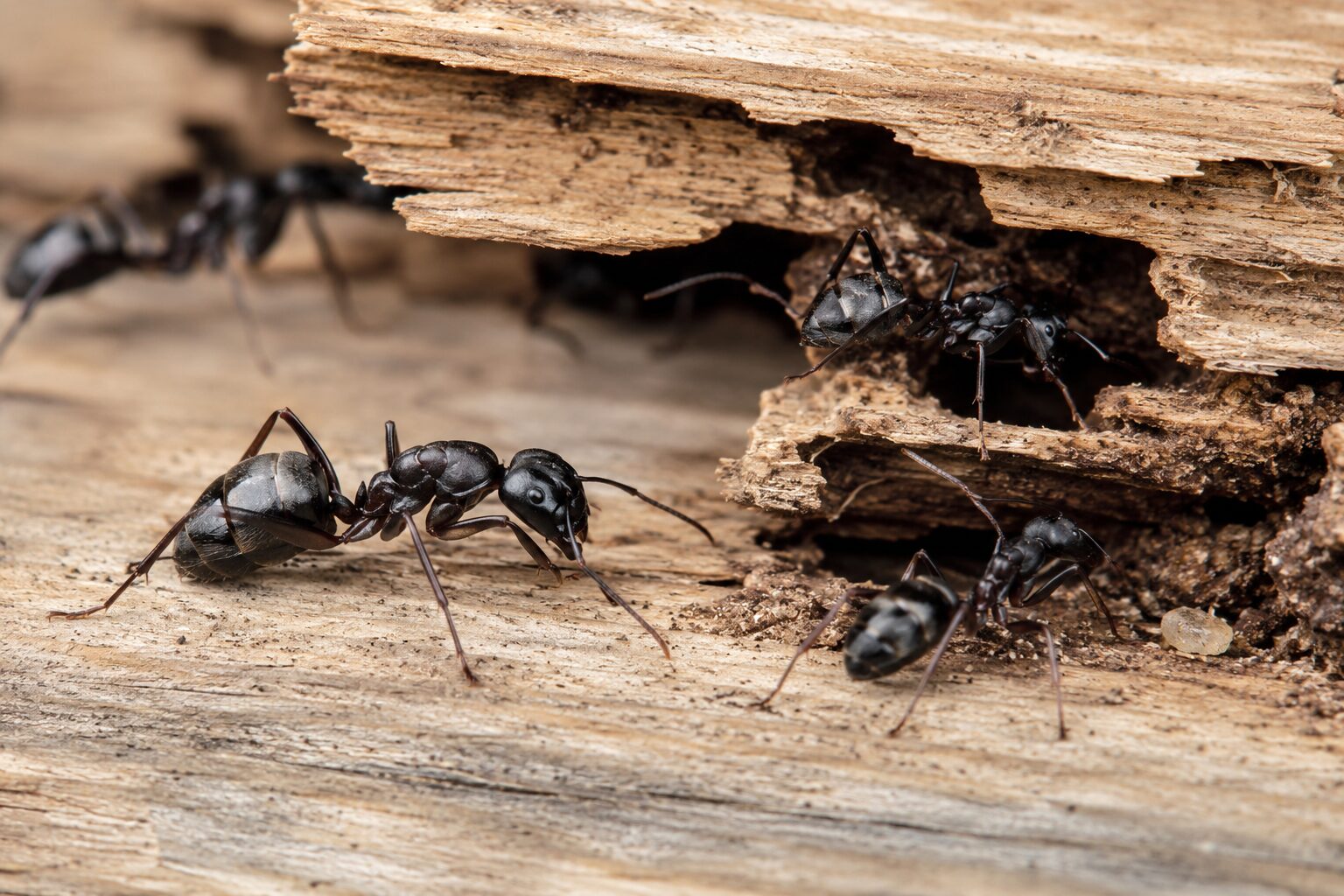
Carpenter ants are the most destructive household pests because they enter through wood to build their nests. Unlike termites, they do not eat wood for nutrition, but their excavation can weaken wooden structures over time if the infestation is left untreated. Understanding What are the first signs of a carpenter ant infestation? can help you take action before damage occurs.
Table of Contents
ToggleWhy Carpenter Ants are a Serious Problem?
These ants prefer decaying wood, but they can also expand into dry, sound timber as their colony grows. Over time, their tunneling may weaken wooden beams, wall studs, window frames, and other structural components.
- Structural wood damage
- Increased repair costs
- Multiple satellite colonies
- Reduced property value
- Persistent indoor pest activity
Which are the First Signs of a Carpenter Ant Infestation?
Recognising What Are the First Signs of a Carpenter Ant Infestation? allows you to respond before serious structural damage develops.
Large Black or Reddish Ants Indoors
One of the earliest signs is regularly seeing large ants inside your home, particularly in kitchens, bathrooms, basements, or near windows.
Carpenter ants are noticeably larger than many common household ants and are often seen searching for food during the evening or nighttime.
Small Piles of Wood Shavings
Carpenter ants push excavated wood out of their tunnels. These piles often appear beneath wooden furniture, window frames, wall voids, or baseboards.
- Fine sawdust-like material
- Small wood fragments
- Insect body parts mixed with debris
Rustling Sounds Inside Walls
Large carpenter ant colonies sometimes produce faint rustling or crackling noises inside walls or ceilings as worker ants move through their tunnels.
These sounds are often more noticeable during quiet nighttime hours.
Winged Ants Indoors
Winged reproductive carpenter ants emerge when the colony matures.
Finding winged ants inside your home may indicate that an established nest is nearby.
Because flying ants resemble termites, professional identification is recommended to determine the correct treatment approach.
Hollow-Sounding Wood
As carpenter ants expand their galleries, affected wood may begin to sound hollow when tapped.
This is one of the important indicators when determining How to Identify Carpenter Ant Damage in Your Home.
How to Identify Carpenter Ant Damage in Your Home?
Knowing How to Identify Carpenter Ant Damage in Your Home can prevent a minor infestation from becoming a major structural issue.
Unlike termites, carpenter ants create smooth, clean tunnels inside wood rather than consuming it.
Smooth Interior Galleries
The inside of damaged wood often appears polished and clean because carpenter ants remove debris as they tunnel.
Weak Wooden Structures
Wood may begin to:
- Flex
- Crack
- Sag
- Feel soft in certain areas
Visible Openings
Small entry holes may appear where ants remove excavated material from their nesting galleries.
Damaged Window and Door Frames
Wooden frames exposed to moisture become attractive nesting locations and may show signs of internal deterioration.
Understanding How to Identify Carpenter Ant Damage in Your Home helps you recognize hidden infestations before severe structural damage develops.
Where Do Carpenter Ants Usually Nest in Homes?
Understanding Where Do Carpenter Ants Usually Nest in Homes? is essential for locating colonies during an inspection.
- Carpenter ants prefer quiet, protected areas with access to moisture and wood.
- Interior walls provide excellent protection while allowing ants to expand their galleries unnoticed.
- Poor ventilation and occasional roof leaks make attics an attractive nesting environment.
- Basements often contain damp wooden framing that supports carpenter ant activity.
- Moisture beneath homes creates suitable nesting conditions.
- Condensation and water intrusion can soften wood around windows.
- Exterior doors exposed to weather may develop moisture damage that attracts carpenter ants.
- Leaking roofs create damp wooden beams that carpenter ants readily occupy.
- Outdoor wooden structures are common starting points for infestations before ants spread indoors.
Learning Where Do Carpenter Ants Usually Nest in Homes? allows you to inspect vulnerable areas regularly.
Which Conditions Attract Carpenter Ants?
Several environmental conditions encourage carpenter ant activity. It reduces these conditions to make your property less attractive to carpenter ants.
- Water leaks
- Damp wood
- Poor drainage
- Firewood stored against the home
- Dead tree stumps nearby
- Dense vegetation touching exterior walls
- Unsealed wall openings
How to Prevent Carpenter Ant Infestations?
You must take preventive measures to protect your home. Thus, routine inspections also help identify early warning signs before colonies become established.
- Repair plumbing leaks promptly.
- Replace water-damaged wood.
- Keep gutters clean.
- Improve attic ventilation.
- Trim tree branches away from the roof.
- Seal cracks around doors and windows.
- Store firewood away from the foundation.
- Remove decaying wood from your yard.
Why Professional Carpenter Ant Control Matters?
Carpenter ant colonies often include a primary nest along with one or more satellite colonies. Treating only the visible ants rarely eliminates the entire infestation.
- Perform detailed property inspections.
- Locate hidden nesting sites.
- Identify moisture sources
- Apply targeted treatment solutions
- Monitor colony activity
- Recommend long-term prevention strategies
When Should You Call a Pest Control Professional?
You should schedule an inspection if you notice some of the issues. However, early intervention reduces repair costs and limits structural damage.
- Repeated carpenter ant sightings
- Winged ants indoors
- Wood shavings near walls
- Hollow-sounding wood
- Visible structural damage
- Persistent moisture problems
- Ant trails returning after DIY treatments
Frequently Asked Questions
Are carpenter ants dangerous to homes?
While they do not eat wood, they tunnel through it to build nests, which weakens the structural components over time.
Is there a difference between carpenter ants and termites?
Carpenter ants have narrow waists, elbowed antennae, and create smooth tunnels. Whereas termites have straight antennae, thicker waists, and consume wood as food.
Do carpenter ants only infest damp wood?
They prefer damp or decaying wood initially, but larger colonies can expand into dry, healthy wood as the infestation grows.
Can carpenter ants return after treatment?
If moisture problems and entry points are not addressed, new colonies may establish themselves in the future. Preventive maintenance is essential.
Should I replace damaged wood after carpenter ant treatment?
If the wood has suffered significant structural damage, replacing it after the infestation has been eliminated helps restore the strength and safety of your home.