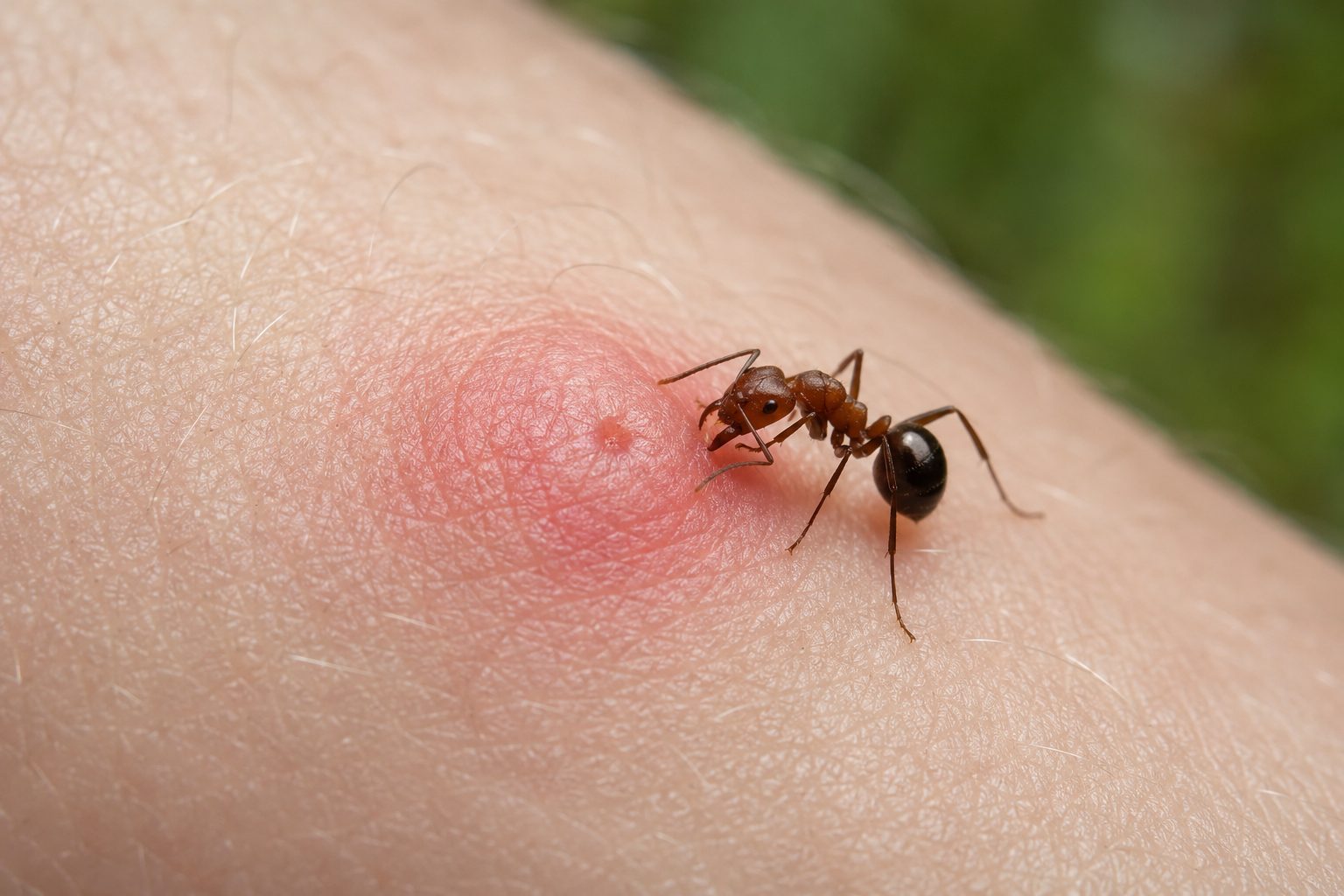
Ants are among the most common pests found in homes, gardens, and commercial properties. While many ant species are harmless, some can bite or sting humans, causing discomfort, irritation, and in some cases allergic reactions. You often ask, ” What is an ant bite? It is essential to understand ant bites and stings to help you recognize symptoms, seek treatment, and prevent future infestations.
Table of Contents
ToggleWhy Do Ants Bite?
Ants generally bite when they feel threatened or when their colony is disturbed. Common situations that may trigger ant bites.
- Stepping on ant mounds
- Disturbing nests during yard work
- Accidental contact with ant trails
- Handling infested materials
- Gardening near colonies
Knowing What is an ant bite? Also means understanding that most ants are defensive rather than aggressive. They bite primarily to protect themselves and their colony.
What are the Symptoms of Ant Bites?
The symptoms of an ant bite can vary depending on the ant species and your sensitivity.
Redness and Swelling
Most people experience redness and mild swelling around the bite area.
Itching
Itching is one of the most common symptoms associated with ant bites.
Pain or Burning Sensation
Some ant species can cause a sharp stinging or burning sensation that lasts for several hours.
Raised Bumps
Small raised welts or bumps often develop after an ant bite.
Blisters
Certain species, particularly fire ants, may cause blister-like pustules that appear within a day or two.
Recognizing these symptoms can help answer the question “What is an ant bite?” and determine whether medical attention is necessary.
Types of Ants That Commonly Bite or Sting
Not all ants pose the same risk. Some species are more likely to bite or sting humans than others.
- Fire ants are among the most well-known biting and stinging ants. Their stings are painful and may result in pustules and allergic reactions.
- Carpenter ants have strong mandibles and can deliver painful bites when disturbed.
- Harvester ants possess venomous stings that can cause significant discomfort.
- Pavement Ants are less aggressive, but may bite if their nests are threatened.
- Understanding local ant species can help you better understand What is an ant bite? and the risks associated with infestations.
How Are Ant Bites/Stings Diagnosed?
Many people wonder, How are ant bites/stings diagnosed? In most cases, diagnosis is straightforward and based on visible symptoms and recent exposure to ants.
Physical Examination
Healthcare providers often examine the affected area.
- Redness
- Swelling
- Blisters
- Bite patterns
- Signs of infection
Patient History
You must understand the recent outdoor activities or known ant exposure to help determine whether an ant bite occurred.
Allergy Assessment
For severe reactions, medical professionals may evaluate whether the patient has an allergy to insect venom.
Monitoring Symptoms
The progression of symptoms often provides important clues regarding the diagnosis.
Knowing How are ant bites/stings diagnosed? helps you seek appropriate medical care when necessary.
When to Seek Medical Attention?
Most ant bites are minor and resolve without treatment. However, medical attention may be required if symptoms become severe.
- Difficulty breathing
- Severe swelling
- Chest tightness
- Dizziness
- Rapid heartbeat
- Extensive skin reactions
These symptoms may indicate an allergic reaction needing immediate treatment.
Understanding How are ant bites/stings diagnosed? It is particularly important when serious reactions occur.
What Is the Treatment for Ant Bites?
One of the most common concerns people have is, What is the treatment for ant bites? Fortunately, most ant bites can be treated at home with basic first aid measures.
- The first step in treating ant bites is washing the area with soap and water to reduce the risk of infection.
- Cold packs helps in reducing swelling and relieve discomfort.
- Over-the-counter creams can minimize itching and irritation.
- Antihistamines may help control allergic reactions and itching.
- Scratching can increase the infection risk and prolong healing.
- For more severe cases, healthcare providers may recommend prescription medications.
Understanding What is the treatment for ant bites allows you to manage symptoms effectively and recover more comfortably.
How to Prevent Ant Bites Around Your Property?
Prevention is one of the best ways to avoid ant bites and stings.
- Store food properly and clean spills promptly to reduce ant activity.
- Close cracks around doors, windows, and foundations.
- Trim vegetation and remove debris that may provide shelter for ants.
- Regularly check for ant mounds and nests around your property.
- We can help identify and eliminate ant colonies before they become a serious problem.
By reducing ant populations, you can minimize the risk of bites and stings.
The Role of Pest Control in Ant Management
While treating individual bites is important, addressing the underlying ant infestation is equally critical.
- Identify an ant species
- Locate nesting sites
- Implement targeted treatments
- Prevent future infestations
- Protect homes and businesses
Understanding What is an ant bite? should also include recognizing the importance of long-term ant control solutions.
Why Ant Infestations Should Not Be Ignored?
Ant colonies can grow and become difficult to control without professional assistance.
- Increased bite risks
- Food contamination
- Property damage
- Electrical issues
- Structural concerns in some cases
Frequently Asked Questions
What does an ant bite mean?
An ant bite occurs when an ant uses its jaws to pinch or bite the skin. Some ant species also sting and inject venom, which can cause pain, redness, swelling, and itching.
How are ant bites/stings diagnosed?
Diagnosis is based on the appearance of the bite or sting, symptoms such as redness and swelling, and a history of recent exposure to ants. In severe cases, a healthcare provider may evaluate for allergic reactions.
What is the treatment for ant bites?
Ant bites treatment includes washing the affected area with soap and water, applying a cold compress, using anti-itch creams, and taking antihistamines if needed.
Are ant bites dangerous?
Most ant bites are mild and cause temporary discomfort. However, certain species, such as fire ants, can cause stings and, in cases, severe allergic reactions that may require emergency medical care.
How can I prevent ant bites around my home?
You can reduce the ant bites risks by keeping food sealed, cleaning up crumbs, sealing entry points, maintaining your yard, removing ant nests, and scheduling regular pest control services to manage ant infestations.