
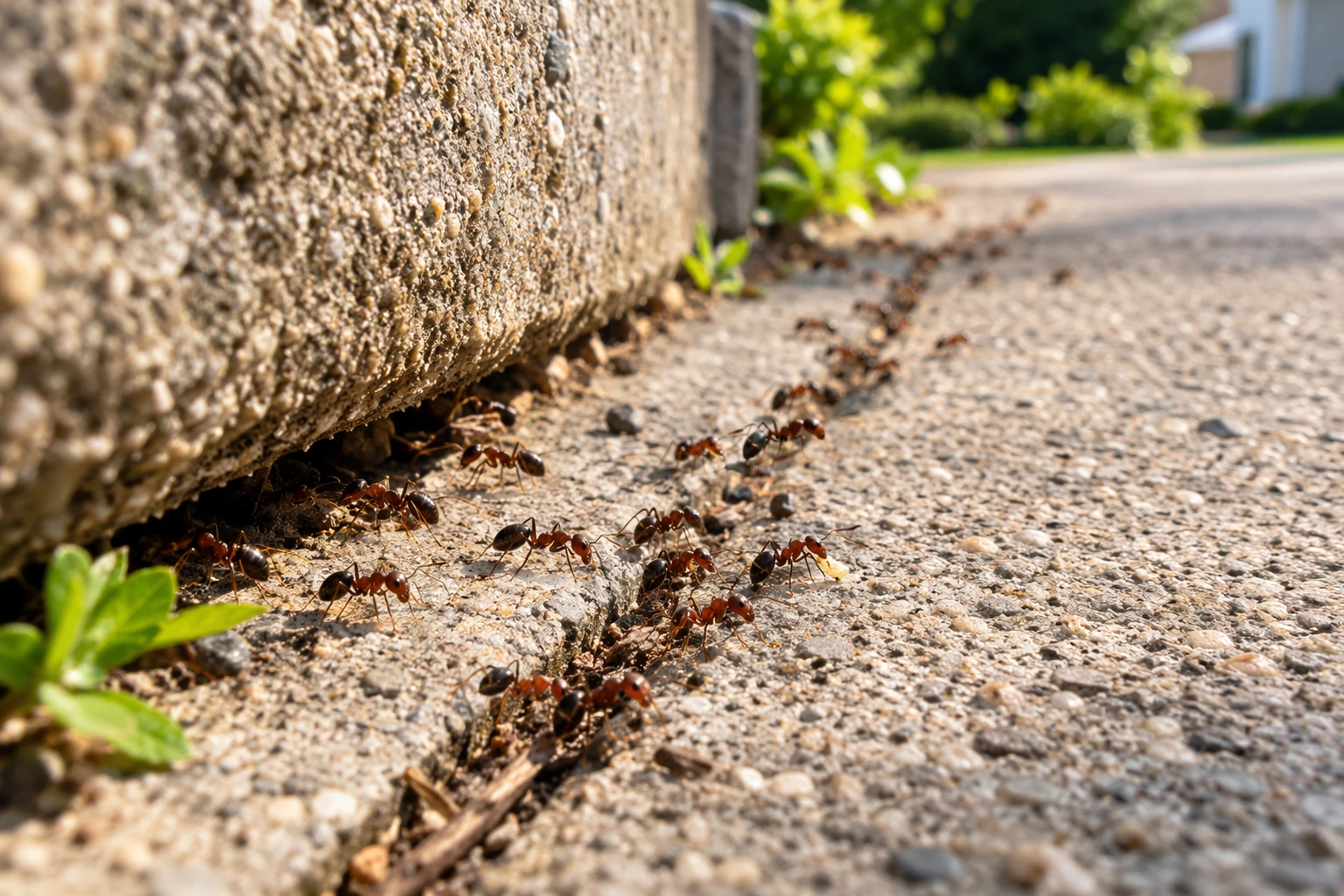
Pavement ants are small household pests that can become a persistent nuisance when they establish colonies around foundations, sidewalks, driveways, patios, and other protected areas. Understanding How do I kill pavement ants starts with identifying the pest correctly and determining where it is entering your property. Effective control includes eliminating food and water sources, sealing entry points, treating active trails, and addressing outdoor nesting areas.
Table of Contents
ToggleHow to Identify a Pavement Ant?
One of the first steps in controlling an infestation is learning how to identify a pavement ant. Pavement ants are small, dark-colored ants that commonly establish nests beneath stones, pavement, concrete slabs, foundations, and other protected locations.
Their appearance, behavior, nesting location, and trails can help distinguish them.
- Small body size
- Dark brown to black coloration
- Distinctive segmented antennae
- Slow-to-moderate movement
- Frequent travel along established trails
- Nesting beneath pavement, stones, or structural edges
- Attraction to food and moisture
Pavement ants may enter buildings through cracks around foundations, windows, doors, utility penetrations, and other openings. Once workers discover a reliable food source indoors, they can establish consistent trails between the nest and the food.
What Do Pavement Ants Eat?
Understanding what do pavement ants eat? It can help you make your property less attractive to them. Pavement ants are opportunistic feeders and can consume various types of foods.
- Sugary substances
- Food crumbs
- Syrups
- Fruit
- Grease
- Meat or protein-based food
- Pet food
- Insects and other small organisms
- Outdoor food debris
Inside homes, spilled drinks, crumbs, uncovered food, and garbage can provide attractive food sources. Outdoors, fallen fruit, trash, compost, and other organic material can also attract foraging ants.
How to Kill Pavement Ants?
If you are wondering How do I kill pavement ants? You should start by determining if the ants are primarily indoors, outdoors, or traveling between both areas.
Clean Food Sources
Thoroughly clean countertops, floors, cabinets, and areas where food is prepared or consumed. Pay special attention to sugary spills and crumbs.
Store food in tightly sealed containers and avoid leaving pet food available for extended periods.
Remove Standing Water
Moisture can encourage pest activity. Check for leaking pipes, dripping faucets, condensation, clogged drains, and areas of standing water around the property.
Repairing moisture problems can make the environment less attractive to ants and other pests.
Follow Ant Trails
Watch where the ants travel. Pavement ants often follow established trails between food sources and nesting locations.
Following the trail may help you determine where ants are entering your home or where an outdoor colony may be located.
Seal Entry Points
Inspect areas around doors, windows, foundations, pipes, vents, and utility openings. Seal suitable cracks and gaps to reduce opportunities for ants to enter.
Weatherstripping around doors and properly maintained window seals can also help reduce potential entry points.
Address Outdoor Nesting Areas
Pavement ants frequently nest beneath or alongside hard surfaces. Inspect areas around patios, sidewalks, driveways, foundation edges, stones, and other protected locations.
Reducing debris and unnecessary vegetation near the foundation can make inspection and treatment easier.
What are Ant Baits and Colony Control?
Workers seen inside the home are usually foraging for food rather than representing the entire colony. When you eliminate a few visible ants, it may provide temporary relief without addressing the nest.
Ant baits can be useful because workers may carry suitable bait material back to the colony. However, bait selection and placement matter, and results may vary depending on the ant species and available food sources.
Avoid randomly applying multiple products around the home. Always follow the product label and keep pesticides away from children and pets as directed.
When Should You Consider Professional Pest Control?
Professional assistance may be appropriate when ants continue appearing despite repeated cleaning and exclusion efforts.
- Ant trails appear frequently
- Ants are present in several rooms
- You repeatedly find ants near windows or foundations
- Outdoor colonies are difficult to locate
- DIY treatments provide only temporary results
- The infestation returns after treatment
- You are unsure which ant species you are dealing with
Why Spraying Every Ant May Not Solve the Problem?
You might spray visible ants immediately. While this may kill individual workers, it does not necessarily eliminate the colony.
If the nest remains active, additional workers may continue entering the property. In some situations, disrupting established trails without addressing the colony can make the infestation more difficult to understand.
How to Prevent Pavement Ants From Returning?
After controlling an infestation, prevention can help reduce future activity.
- Keep food sealed, clean spills promptly, empty garbage regularly, and avoid leaving pet food exposed.
- Outside, remove accumulated debris and maintain areas near the foundation.
- Inspect the exterior periodically for cracks and gaps.
- Pay attention to areas where utility lines enter the building, as these can provide potential access points.
- Managing moisture is equally important.
- Fix leaks, improve drainage where necessary, and avoid allowing water to collect near the foundation.
Frequently Asked Questions
Where do pavement ants build their nests?
Pavement ants commonly nest beneath sidewalks, driveways, concrete slabs, stones, foundations, and other protected areas. They may also establish nests in wall voids or other hidden spaces near buildings.
Why are pavement ants coming into my house?
Pavement ants may enter homes while searching for food, water, or shelter. Crumbs, sugary spills, pet food, moisture, and small cracks around doors and foundations can attract them.
How can I prevent pavement ants from returning?
Keep food sealed, clean spills promptly, manage moisture, remove outdoor debris, maintain clean areas around the foundation, and seal cracks and gaps that could provide entry points.
Are pavement ants difficult to control?
They can be persistent because their colonies may be hidden beneath pavement, foundations, or other protected locations. Eliminating visible ants without addressing the colony may only provide temporary results.
When should I call a pest control professional for pavement ants?
Consider professional treatment when ant activity is frequent, widespread, keeps returning after DIY efforts, or when you cannot locate the nesting area. Our inspection can help identify the source and determine an appropriate treatment approach.