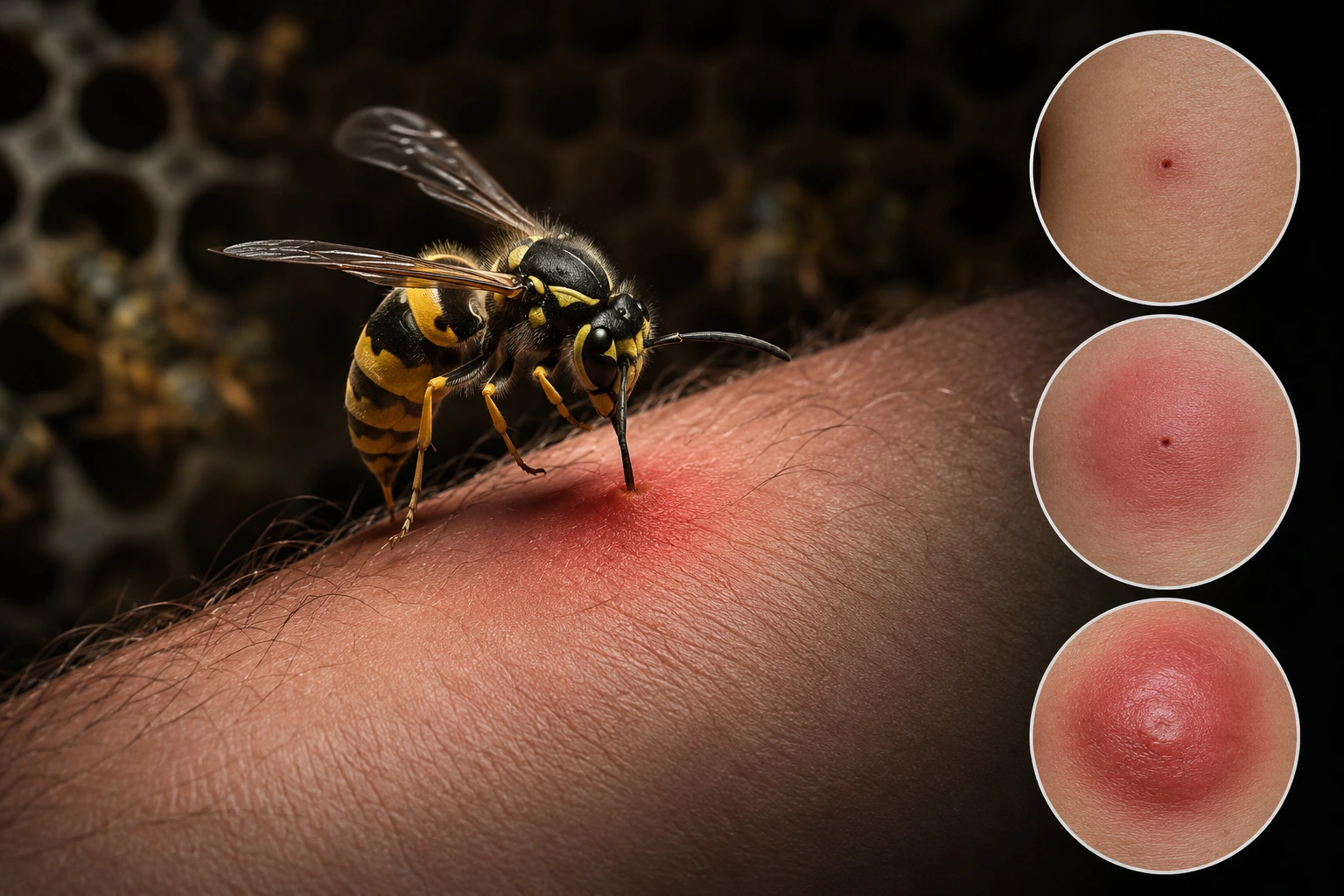
A wasp sting can be painful, irritating, and sometimes frightening, especially when the affected person does not know how to respond. Most wasp stings cause temporary pain, redness, swelling, and itching, but some people can experience a serious allergic reaction requiring immediate medical attention. Knowing what is the best treatment for wasp stings? It can help reduce discomfort and identify warning signs early.
Table of Contents
ToggleWhen Is a Wasp Sting an Emergency?
Most stings are not life-threatening, but wasp venom can cause a severe allergic reaction known as anaphylaxis. Seek emergency medical help immediately if someone develops symptoms.
- Difficulty breathing
- Swelling of the throat, tongue, or lips
- Difficulty swallowing
- Widespread hives
- Severe dizziness
- Fainting
- Rapid deterioration
- Significant weakness
- Signs of shock
Someone with a known severe insect-sting allergy should follow their personal emergency action plan. If they have been prescribed epinephrine for anaphylaxis, it should be used according to their medical instructions, and emergency services should be contacted.
How Long Will a Wasp Sting Last?
Many of you ask, How long will a wasp sting last? It depends on the person’s sensitivity, the location of the sting, and whether the reaction is mild or more significant.
For a localized reaction, pain may be severest shortly after the sting and gradually improve. Redness, itching, and swelling can remain for several hours or a few days.
Some of you may experience a larger local reaction, where swelling spreads beyond the immediate sting site. This can last longer and may become particularly uncomfortable.
If symptoms are getting worse instead of gradually improving, or if unusual symptoms develop, medical advice should be sought.
A sting around the face, mouth, or throat deserves particular caution because swelling in these areas can interfere with breathing.
What Is the Best Solution to Get Rid of Wasps?
Treating a sting is only one part of the problem. If wasps are appearing around your home, the more important question becomes: What is the best solution to get rid of wasps? It depends on the species, nest location, size of the infestation, and accessibility of the nest.
- Under roof edges
- Inside wall voids
- Around eaves
- Beneath decks
- In sheds
- Inside garages
- Around attic areas
- In trees and shrubs
- Under outdoor structures
Why You Should Avoid Disturbing an Active Wasp Nest?
An active nest can contain many wasps. Disturbing it can cause defensive behavior and increase the likelihood of multiple stings.
This is particularly concerning for children, older adults, pets, and anyone with a known insect-sting allergy.
You should avoid hitting, blocking, burning, or otherwise disturbing an active nest. Approaching a nest without appropriate equipment can create unnecessary risk.
Instead, consider arranging a professional inspection. Our trained pest control technician can assess the activity and determine an appropriate treatment strategy.
What is Professional Wasp Control?
Professional pest control can be useful when wasps are nesting near frequently used areas of a property.
- The technician looks for wasp activity and potential nesting locations.
- Different wasp species can behave differently, so identifying the pest can help determine the appropriate control approach.
- The location of the nest, accessibility, property layout, and nearby occupants are considered.
- An appropriate professional treatment may be applied according to the situation and product label requirements.
- Once activity is controlled, the technician can advise whether the nest should be removed and whether additional measures are appropriate.
- Potential entry points and conditions that attract wasps can be discussed to reduce the likelihood of future nesting.
How to Reduce Wasp Activity Around Your Home?
Although professional control may be necessary for an established nest, you can take several steps to make your property less attractive to wasps.
Keep garbage containers tightly closed and clean up spilled food or sugary beverages promptly. Outdoor pet food should not be left exposed for extended periods.
- Keep food covered during outdoor meals
- Clean outdoor cooking areas
- Empty trash regularly
- Secure garbage-bin lids
- Remove fallen fruit
- Seal suitable openings around structures
- Inspect sheds and garages periodically
- Keep outdoor areas reasonably clean
- Check roof edges and sheltered areas for early nesting activity
What is the Difference Between Wasp Stings and Bee Stings?
Wasps and bees are both capable of causing painful stings, but their behavior can differ. Unlike honey bees, many wasps can sting repeatedly.
This is one reason it is important to move away from an active wasp immediately after being stung rather than remaining near the nest.
If you are unsure if an insect sting is responsible for your symptoms, focus on the symptoms themselves and seek medical advice when the reaction appears severe or unusual.
When Should You Call Pest Control?
Consider our professional pest control when you notice repeated wasp activity or discover an active nest close to areas used by people or pets.
Professional assistance can be especially valuable when the nest is:
- Inside a wall
- Near an entrance
- Around a roofline
- High above the ground
- Inside an attic
- Near children’s play areas
- In a difficult-to-reach location
Frequently Asked Questions
How can I tell if wasps are building a nest around my property?
Frequent wasp activity around one particular area, wasps entering a wall opening, or visible nest construction under eaves, decks, sheds, or roof edges can indicate an active nest.
Should I remove a wasp nest myself?
Wasps can become defensive when their nest is threatened, increasing the risk of multiple stings. Our pest control can assess and manage difficult or active nests more safely.
Why are wasps attracted to my house?
Wasps may be attracted by exposed food, sugary drinks, garbage, fallen fruit, pet food, and sheltered locations suitable for nesting.
Can wasps return after their nest has been treated?
Wasp activity can sometimes continue for a period after treatment, and new wasps may establish nests in the same general area in the future.
What should I do if I am stung by several wasps?
Move away from the area immediately and monitor yourself for signs of a serious allergic reaction. Difficulty breathing, swelling of the throat, dizziness, or fainting requires immediate emergency medical attention.