
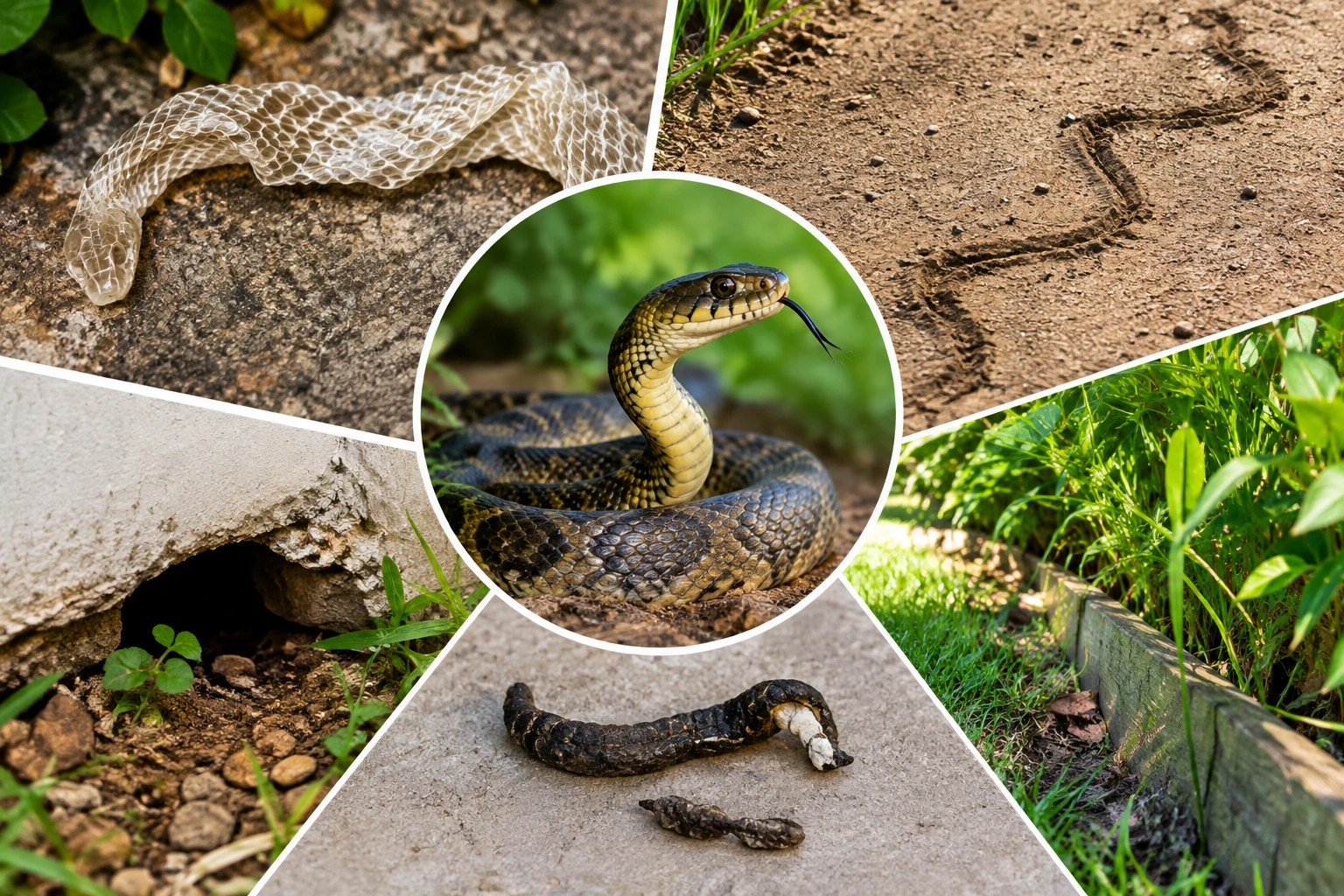
Finding out that a snake may have entered your home can be unsettling. Snakes are secretive animals and may remain hidden in dark, quiet spaces for long periods. You may not always see the snake itself, but certain clues around your property can indicate that one has been nearby. Recognizing the Signs of Snakes in Your Home early can help you take appropriate steps before the problem becomes more difficult to manage.
Table of Contents
ToggleCommon Signs of Snakes Inside a House
A direct sighting is the clearest indication, but several other signs may suggest snake activity.
Shed Snake Skin
Snakes periodically shed their outer layer as they grow. Finding a dry, translucent piece of snake skin in a basement, garage, attic, storage area, or other secluded location can indicate that a snake has been present.
Snake Droppings
Snake droppings can sometimes be found near areas where snakes have been active. Their waste may contain dark material along with a lighter or whitish portion caused by uric acid.
Unusual Tracks or Trails
Snakes can leave subtle movement marks in dusty areas. You may notice winding patterns in dust, loose soil, or other surfaces where a snake has traveled.
Unusual Pet Behavior
Dogs and cats may react to something moving inside walls, under furniture, or in areas that people cannot easily access. Excessive attention toward a particular corner, cabinet, crawl space, or gap could indicate the presence of an animal.
Missing Rodents
Snakes prey on rodents and other small animals. If you have previously noticed mice or rats around your property and suddenly observe changes in rodent activity, a predator may be present.
Hiding in Dark Areas
Snakes often prefer quiet, sheltered spaces. Possible hiding locations include boxes, wood piles, underneath appliances, behind stored materials, crawl spaces, garages, and areas around foundations.
Why Do Snakes Enter Homes?
Snakes may enter properties for several reasons. Food availability is an important factor, particularly when rodents or other prey are present.
- Accessible water
- Cool areas during hot weather
- Warm sheltered spaces during colder periods
- Tall vegetation
- Outdoor clutter
- Gaps around doors and foundations
- Open vents or other entry points
- Unsecured garages or sheds
What are the Signs and Symptoms of Snake Bites?
It is important to understand the Signs and symptoms of snake bites when someone may have been bitten.
Symptoms can depend on the snake species, amount and type of venom involved, location of the bite, and other factors. Some bites may produce little immediate discomfort, while venomous bites can cause serious symptoms.
- Pain or tenderness
- Swelling
- Redness
- Bruising
- Puncture marks
- Blistering
- Bleeding
More serious symptoms can include nausea, vomiting, weakness, dizziness, difficulty breathing, abnormal bleeding, vision changes, muscle weakness, or problems with consciousness.
What Are the Symptoms of Snake Poison?
You might ask, What are the symptoms of snake poison? The effects of snake venom vary considerably because different snake species produce different types of venom.
Depending on the species, venom can affect the nervous system, blood clotting, muscles, tissues, or multiple body systems.
- Increasing swelling or pain
- Difficulty breathing
- Drooping eyelids
- Blurred or altered vision
- Difficulty speaking or swallowing
- Muscle weakness
- Excessive bleeding
- Blood in urine or vomit
- Severe nausea or vomiting
- Fainting or confusion
- Rapidly worsening weakness
How to Prevent Snakes From Entering Your Home?
Prevention is an important part of long-term snake control. Inspect the exterior of your property for openings that could provide access.
- Gaps around doors
- Cracks in foundations
- Openings around pipes
- Damaged screens
- Garage door gaps
- Crawl-space entrances
- Vent openings
- Areas beneath sheds
- Spaces around utility lines
Seal appropriate openings using suitable materials while ensuring that ventilation and drainage systems are not improperly blocked.
Keeping grass trimmed, removing unnecessary piles of wood or debris, and maintaining outdoor storage areas can also reduce potential shelter.
Reduce Food Sources Around Your Property
Snakes may be attracted to properties where prey is readily available.
- Rodents, frogs, insects, and other small animals can provide food for different snake species.
- Reducing rodent attractants can therefore be an important part of prevention.
- Store food securely, keep garbage containers closed, clean up spilled pet food, and address signs of rodent activity promptly.
- Outdoor lighting can also attract insects, which may in turn attract animals that feed on them.
- Managing the environment around your property can help reduce conditions that support a food chain favorable to snakes.
When to Call Pest Control?
Professional assistance may be appropriate if you repeatedly notice Signs of Snakes in Your Home, discover shed skin or droppings, hear movement in inaccessible areas, or find evidence of recurring animal activity.
- We can inspect potential entry points and identify environmental conditions that may be attracting snakes.
- Rather than focusing only on removing an individual snake, a broader inspection can help address the reasons snakes are reaching the property.
- If someone has been bitten, however, medical care takes priority over pest control.
- Contact emergency medical services immediately for a suspected venomous bite.
Frequently Asked Questions
Where do snakes usually hide inside a house?
Snakes may hide in quiet, dark, and undisturbed areas such as garages, basements, crawl spaces, closets, storage rooms, underneath appliances, or behind boxes.
How can I make my property less attractive to snakes?
Keep grass and vegetation trimmed, remove piles of debris or wood, control rodents, secure garbage, and seal gaps around foundations, doors, vents, and other potential entry points.
Can snakes enter a house through very small openings?
Depending on the species and size of the snake, they can use surprisingly narrow gaps around doors, foundations, pipes, vents, and other openings.
Should I try to remove a snake myself?
It is safer not to handle or approach an unfamiliar snake. Keep children and pets away, maintain a safe distance, and contact a qualified pest control professional for assistance.
What should I do immediately after a suspected snake bite?
Move away from the snake and seek emergency medical attention immediately if a venomous bite is possible. Keep the affected person as calm and still as practical while waiting for medical assistance.