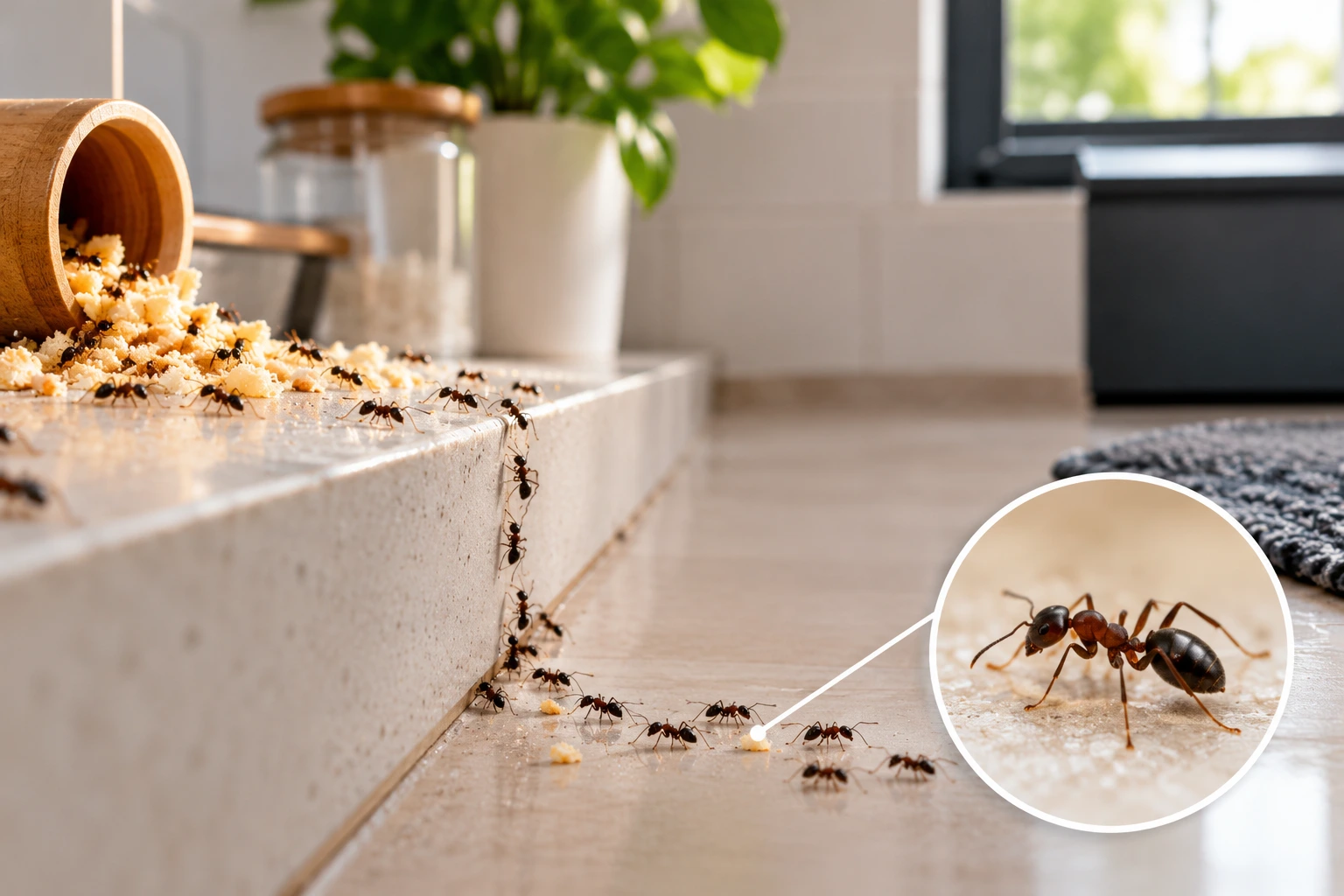
Odorous house ants are small, dark-colored insects that commonly enter homes in search of food, water, and shelter. They appear in kitchens, bathrooms, pantries, and other areas where moisture or food residue is available. Learning how to get rid of odorous house ants permanently requires more than killing the ants you can see. The key is to locate their nesting areas, eliminate the colony, remove attractants, and prevent new ants from entering your property.
Table of Contents
ToggleWhy Do Odorous House Ants Keep Coming Back?
Odorous house ants may return when their colony remains active or when conditions inside the home continue to attract them. These ants can establish nests in wall voids, beneath flooring, around foundations, and in other protected locations.
Several factors can contribute to recurring infestations.
- Food residue: Crumbs, sugary spills, grease, and uncovered food attract foraging ants.
- Moisture problems: Leaking pipes, damp cabinets, and condensation provide access to water.
- Accessible entry points: Small gaps around windows, doors, pipes, and foundations allow ants to enter.
- Hidden colonies: Treating visible ants without addressing the nest may leave the infestation unresolved.
- Outdoor nesting sites: Ants nesting beneath stones, mulch, or debris can repeatedly enter the home.
What Is the Most Effective Bait for Odorous House Ants?
If you are wondering, What is the most effective bait for odorous house ants? Slow-acting ant bait is a useful option because foraging workers can carry the bait back to the colony and share it with other ants.
- The best bait depends on the colony’s current food preferences.
- Odorous house ants may seek sugary foods at certain times and protein- or grease-based foods at others.
- Therefore, a bait that works well in one infestation may be less attractive in another.
Choosing the Right Ant Bait
Liquid sugar bait: This can be effective when ants are actively seeking sweet food sources. Place it near established trails, following the product label.
Gel bait: Ant gel products may be useful in cracks, along suitable surfaces, or near ant trails where the label permits application.
Protein or grease-based bait: These products may help when ants show a preference for protein-rich or fatty foods.
How to Find an Odorous House Ant Nest Inside Wall Voids?
Finding the nest can be challenging because odorous house ants often hide inside structural gaps. If you want to know how to find an odorous house ant nest inside wall voids? Begin by observing their movement rather than opening walls immediately.
Follow the Ant Trails
Watch where ants travel after discovering a food source. Their trails may lead toward cabinet edges, baseboards, electrical or plumbing penetrations, window frames, and small gaps in walls.
Inspect Moisture-Prone Areas
Check beneath sinks, around dishwashers, near bathroom plumbing, and behind appliances. Damp conditions can make these locations attractive nesting areas.
Look for Entry Points
Examine gaps around pipes, cracks in trim, and spaces around doors and windows. Ants may travel through these openings between hidden nesting sites and food sources.
Monitor Activity at Different Times
Observe whether ant activity increases during particular periods. Follow the trails carefully without disturbing them excessively, as this may help reveal their routes.
Avoid Unnecessary Wall Damage
You cannot confirm the exact location of a nest simply by watching ants. If activity repeatedly emerges from wall voids or continues despite appropriate baiting, a pest control professional can investigate further using suitable inspection methods.
What are the Natural Ways to Reduce Odorous House Ant Activity?
Several household practices can reduce ant activity, although they may not eliminate an established colony on their own.
- Wipe kitchen counters and remove crumbs promptly.
- Store sugar, snacks, and other food in sealed containers.
- Clean sticky spills around rubbish bins and appliances.
- Repair leaking taps and pipes.
- Empty indoor rubbish bins regularly.
- Seal suitable cracks and gaps around entry points.
- Trim vegetation and remove debris near the home’s foundation.
When Should You Call a Professional Pest Control Service?
Professional pest control may be worthwhile when ants repeatedly appear in multiple rooms, emerge from wall voids, or continue returning despite careful cleaning and baiting.
- Our technician can identify the ant species, assess indoor and outdoor nesting areas, and determine suitable treatment options.
- Professional treatment may include targeted bait placement, appropriately selected insecticide applications, nest inspections, and follow-up visits.
- The precise approach depends on the infestation’s size, the property’s construction, and the location of the colony.
- Before treatment, tell the technician about recurring trails, previous products used, moisture problems, and any areas where children or pets spend time.
How to Prevent Odorous House Ants From Returning?
Long-term prevention requires removing the conditions that support an infestation. Continue cleaning food preparation areas, correcting moisture problems, sealing accessible entry points, and inspecting areas where ants have appeared previously.
- Keep rubbish containers closed, avoid excessive moisture around the foundation, and remove accumulated debris that may provide sheltered nesting locations.
- Remember that killing visible ants does not necessarily mean the colony has been eliminated.
- A combination of suitable baiting, sanitation, exclusion, and professional assessment offers a more reliable approach to controlling recurring infestations.
Frequently Asked Questions
How long does it take to eliminate an odorous house ant infestation?
It may take several days to a few weeks to control an infestation. Hidden or interconnected colonies may require additional treatment and monitoring.
Why do odorous house ants smell when crushed?
Odorous house ants release chemical compounds when crushed that produce a distinctive odor compared to rotten coconut. This smell helps distinguish them from some other common household ants.
Can odorous house ants damage my home?
Odorous house ants do not cause structural damage like carpenter ants. However, they can contaminate food and become a persistent nuisance when they establish colonies indoors.
Does spraying insecticide kill an entire odorous house ant colony?
Spraying may kill visible workers but often does not eliminate the hidden colony or its queen. Properly selected slow-acting baits can help workers carry the active ingredient back to the colony.
How can I prevent odorous house ants from entering my kitchen?
Store food in sealed containers, clean crumbs and spills promptly, repair leaks, empty rubbish bins regularly, and seal gaps around pipes, windows, and doors.