
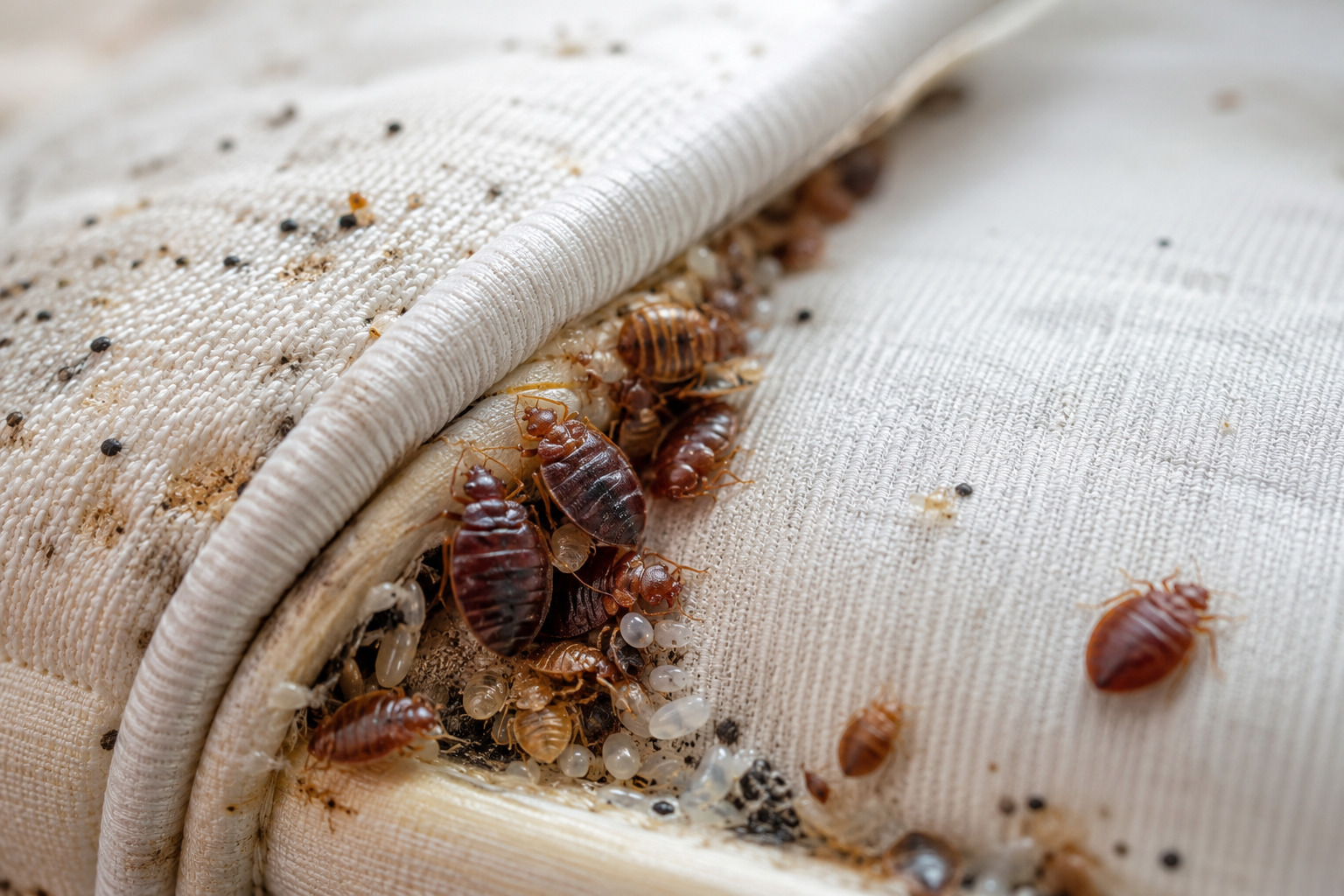
Bed bugs are small, reddish-brown insects who feed on human blood, usually while people are sleeping. Because they are excellent at hiding and reproduce quickly, an infestation can grow before homeowners realize there is a problem. Learning How to Know If You Have Bed Bugs in Your Home? is the first step toward protecting your family and preventing the infestation from spreading.
Table of Contents
ToggleWhat Are Bed Bugs?
Bed bugs are flat, oval-shaped insects about the size of an apple seed. They hide during the day and become active at night to feed. Although they do not fly, they can crawl quickly across floors, walls, furniture, and personal belongings.
- Travel luggage
- Used furniture
- Mattresses
- Clothing
- Backpacks
- Moving boxes
- Shared laundry facilities
- Apartment buildings
If you know how they spread, it helps to reduce the risk of bringing them into your home.
Why Early Detection is Important?
A small bed bug problem quickly become a large infestation because female bed bugs lay multiple eggs throughout their lifetime.
- Reduce treatment costs
- Prevent the infestation from spreading
- Protect furniture and bedding
- Improve sleep quality
- Minimize bites
- Make professional treatment more effective
Recognizing the warning signs early is the best defense against a widespread infestation.
Which are the First Signs of a Bed Bug Infestation?
Many of you ask, What Are the First Signs of a Bed Bug Infestation? Since bed bugs are active at night, the earliest warning signs are often found on bedding and furniture rather than seeing the insects themselves.
- Small itchy bites on exposed skin
- Tiny blood spots on bed sheets
- Dark or rusty stains on mattresses
- Shed bed bug skins
- Small white eggs or eggshells
- Live bed bugs around mattress seams
- A musty odor in severe infestations
Identifying these signs early makes treatment much easier.
How to Inspect Your Home for Bed Bugs?
If you suspect bed bugs, perform a careful inspection of areas where they commonly hide.
- Mattress seams
- Box springs
- Bed frames
- Headboards
- Pillows
- Upholstered furniture
- Recliners
- Nightstands
- Curtains
- Carpet edges
Use a flashlight for inspecting cracks and crevices thoroughly.
Where Do Bed Bugs Hide During the Day?
One of the most common questions you is Where Do Bed Bugs Hide During the Day? They avoid light and spend daylight hours concealed in narrow spaces close to where people sleep.
- Mattress piping and seams
- Behind headboards
- Inside bed frames
- Box springs
- Furniture joints
- Behind picture frames
- Electrical outlet covers
- Baseboards
- Cracks in walls
- Upholstered chairs and sofas
It is essential to understand Where Do Bed Bugs Hide During the Day? It helps professionals locate infestations more efficiently during inspections.
Which Symptoms Show Bed Bug Bites?
Not every inidividual reacts the same way to bed bug bites. Some people experience noticeable itching, while others show little or no reaction.
- Red bumps
- Itchy skin
- Bite clusters
- Bite lines
- Mild swelling
- Skin irritation
Because these symptoms resemble other insect bites, a professional inspection is often necessary to confirm a bed bug infestation.
How Bed Bugs Enter Homes?
Bed bugs are excellent hitchhikers and rarely enter homes on their own. You can carefully inspect secondhand items before bringing them indoors reduces the risk of infestation.
- Hotel stays
- Vacation luggage
- Used mattresses
- Secondhand furniture
- College dormitories
- Apartment buildings
- Public transportation
- Visitors carrying infested belongings
Which Areas are Beyond the Bedroom?
Although bedrooms are the most common location, bed bugs can spread throughout the home. Large infestations often expand beyond sleeping areas if left untreated.
- Living room furniture
- Curtains
- Closets
- Carpets
- Children’s rooms
- Home offices
- Pet sleeping areas
- Wall cracks
Why DIY Treatments Often Fail?
Many of you attempt to eliminate bed bugs using household sprays or home remedies. Unfortunately, these methods rarely eliminate the entire infestation.
- Hidden eggs
- Difficult-to-reach hiding places
- Rapid reproduction
- Resistance to some treatments
- Incomplete elimination
Our pest control services use treatment strategies that target all bed bugs life stages.
How Professionals Detect Bed Bugs?
Our professional inspections are much more thorough than casual visual checks.
- Mattresses
- Box springs
- Furniture
- Wall voids
- Electrical outlets
- Flooring
- Baseboards
- Luggage
- Personal belongings
How to Prevent Bed Bug Infestations?
Preventive measures significantly reduce the risk of bringing bed bugs into your home.
- Inspect hotel rooms while traveling.
- Keep luggage off beds and floors.
- Wash travel clothing immediately after returning home.
- Vacuum frequently.
- Reduce clutter around sleeping areas.
- Inspect used furniture carefully.
- Use mattress encasements.
- Schedule inspections if exposure is suspected.
Simple habits can reduce your chances of an infestation.
When to Call a Professional?
Professional assistance is recommended if:
- You repeatedly wake up with bites.
- Live bed bugs are visible.
- Blood spots appear on bedding.
- Bed bug eggs are discovered.
- Multiple rooms show signs of infestation.
- DIY methods have failed.
Prompt professional treatment prevents the infestation from spreading throughout the property.
Frequently Asked Questions
What are the signs showing a bed bug infestation?
The signs of a bed bug include itchy bite marks, tiny blood stains on bed sheets, dark spots on mattresses, shed skins, and small white eggs hidden in mattress seams or furniture cracks.
Where can bed bugs hide during the day?
Bed bugs commonly hide in mattress seams, box springs, bed frames, headboards, upholstered furniture, baseboards, cracks in walls, behind picture frames, and even inside electrical outlets.
How do bed bugs spread from one room to another?
Bed bugs can crawl through wall voids, under doors, along baseboards, and on personal belongings, which allow them to spread from one room to another if an infestation is not treated promptly.
Are bed bug bites dangerous?
Bed bug bites are not known to transmit diseases, but they can cause itching, skin irritation, allergic reactions in some individuals, and disrupted sleep. If you scratch the bites excessively lead to secondary skin infections.
When should I contact a professional for bed bug treatment?
You should contact a professional pest control service as soon as you notice live bed bugs, recurring bite marks, blood spots on bedding, shed skins, or other signs of an infestation. Early treatment helps prevent bed bugs from spreading throughout your home.