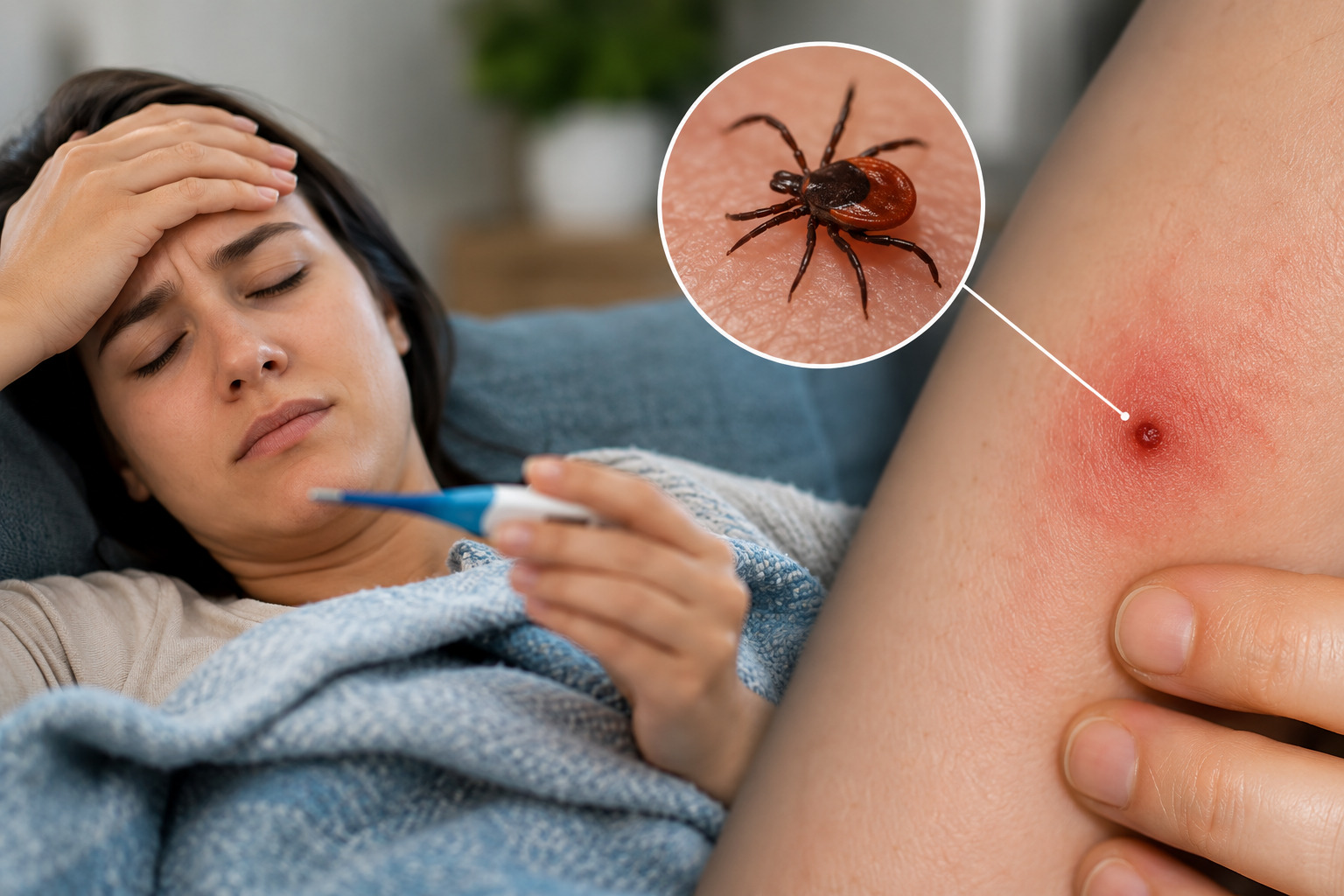
Ticks are small, blood-feeding parasites found in grassy fields, wooded areas, gardens, and places where wildlife and pets are present. While many tick bites are harmless, some ticks can transmit bacteria and other disease-causing organisms that may lead to illness. You must recognize Tick bite fever symptoms early to protect your health and get timely medical care when necessary.
Table of Contents
ToggleWhat is Tick Bite Fever?
Tick bite fever refers to illnesses that develop after a bite from an infected tick. Not every tick carries disease, and not every bite causes illness. However, when disease-causing organisms are transmitted through a tick bite, symptoms may appear several days after exposure.
Early recognition of Tick bite fever symptoms can help ensure prompt diagnosis and appropriate treatment.
What are the Tick Bite Fever Symptoms?
Symptoms can depend on the specific illness transmitted by the tick and an individual’s overall health. Some of the most common Tick bite fever symptoms.
- Fever
- Chills
- Headache
- Muscle aches
- Fatigue
- Joint pain
- Swollen lymph nodes
- Skin rash
- Loss of appetite
- General weakness
Some people experience only mild symptoms, while others may develop more severe illness if left untreated.
Symptoms of a Tick Bite in Adults
Recognizing the Symptoms of a tick bite in adults is important because the bite itself is often painless and may go unnoticed.
Small Red Bump
A small bump may develop where the tick attached to the skin. Mild redness is common and often fades within a few days.
Itching
Some of you might experience mild itching around the bite as the skin reacts.
Swelling
Minor swelling may occur near the bite, especially if the tick remained attached for several hours.
Fatigue
Feeling unusually tired after spending time outdoors could be one of the early Symptoms of a tick bite in adults, particularly if accompanied by fever or body aches.
Rash
Some tick-borne illnesses may cause a spreading rash several days after the bite. Not every infection produces a rash, so its absence does not rule out illness.
Fever and Body Aches
Flu-like symptoms developing after a recent tick bite should not be ignored, especially if they worsen over time.
Where Tick Bites Commonly Occur?
Ticks often attach to warm, hidden areas of the body.
- Behind the knees
- Around the waist
- Under the arms
- Groin area
- Neck
- Hairline
- Behind the ears
- Scalp
It is essential to check these areas after outdoor activities to help detect ticks before they remain attached for an extended period.
Who is Most at Risk?
When any of you spend time outdoors, you may be exposed to ticks, but certain groups are at higher risk.
- Hikers
- Campers
- Gardeners
- Landscapers
- Pet owners
- Hunters
- Children playing outdoors
- Individuals living near wooded or grassy areas
Routine tick checks can significantly reduce the likelihood of disease transmission.
Tick Bite Treatment Home Remedy
Many uncomplicated tick bites can be managed with basic first aid after the tick has been safely removed. However, home care is not a substitute for medical evaluation if symptoms develop.
- Wash the area with soap and clean water thoroughly to reduce the risk of skin infection.
- A cold compress may help reduce swelling and discomfort around the bite.
- Avoid scratching the bite, as broken skin can increase the risk of secondary infection.
- Observe the bite site and your overall health for several weeks after the bite.
Although these Tick bite treatment home remedy steps may relieve minor irritation, persistent fever, rash, or worsening symptoms require medical attention.
When to Worry About a Tick Bite?
Many of you wonder when to worry about a tick bite. While most bites heal without complications, certain warning signs should never be ignored.
You should get medical evaluation if you experience:
- Fever after a tick bite
- Expanding skin rash
- Severe headache
- Persistent fatigue
- Muscle weakness
- Joint swelling
- Difficulty breathing
- Confusion
- Facial weakness
- Persistent vomiting
Understanding when to worry about a tick bite can help prevent complications associated with tick-borne illnesses.
How Long Do Symptoms Take to Appear?
The timing varies depending on the disease and individual response.
- Within 2–7 days
- After one week
- Several weeks later in some cases
This is why monitoring your health after a tick bite is important, even if you initially feel well.
How to Remove a Tick Safely?
If you discover an attached tick, you should follow certain steps.
- Use fine-tipped tweezers.
- Grasp the tick close to the skin.
- Pull upward slowly and steadily.
- Avoid twisting or crushing the tick.
- Clean the bite area thoroughly afterward.
- Wash your hands.
Improper removal techniques may increase skin irritation or leave mouthparts embedded in the skin.
How to Prevent Tick Bites Around Your Home?
Our professional pest management combined with good landscaping practices can reduce tick populations.
- Regular mowing reduces areas where ticks hide.
- Ticks thrive in damp piles of leaves and yard debris.
- Keeping the vegetation maintained reduces tick habitat.
- Gravel or mulch borders between wooded areas and lawns can help discourage tick migration.
- Limiting access for deer and rodents may reduce tick populations around residential properties.
- Use veterinarian-approved tick prevention products and inspect pets after spending time outdoors.
Why Professional Tick Control Matters?
Ticks are difficult to eliminate without addressing the outdoor environments where they live.
- Property inspection
- Tick habitat identification
- Targeted treatment plans
- Yard maintenance recommendations
- Seasonal monitoring
- Preventive outdoor treatments
Frequently Asked Questions
What are the most common Tick bite fever symptoms?
Common Tick bite fever symptoms include fever, chills, headache, muscle aches, fatigue, swollen lymph nodes, joint pain, and sometimes a skin rash.
What are the Symptoms of a tick bite in adults?
The Symptoms of a tick bite in adults may include a small red bump, itching, swelling, fatigue, fever, body aches, and occasionally a rash that develops days after the bite.
What is a simple Tick bite treatment home remedy?
A basic Tick bite treatment home remedy includes washing of the bite area with soap and water, apply a cold compress, keep the area clean, and check for any illness signs.
When should I worry about a tick bite?
Seek medical care if you develop fever, a spreading rash, severe headache, muscle weakness, persistent fatigue, or other flu symptoms after a tick bite.
How can I prevent tick bites around my home?
You can prevent tick bites by regular lawn maintenance, removing leaf litter, trimming vegetation, protecting pets, performing tick checks, and using professional pest control services.