
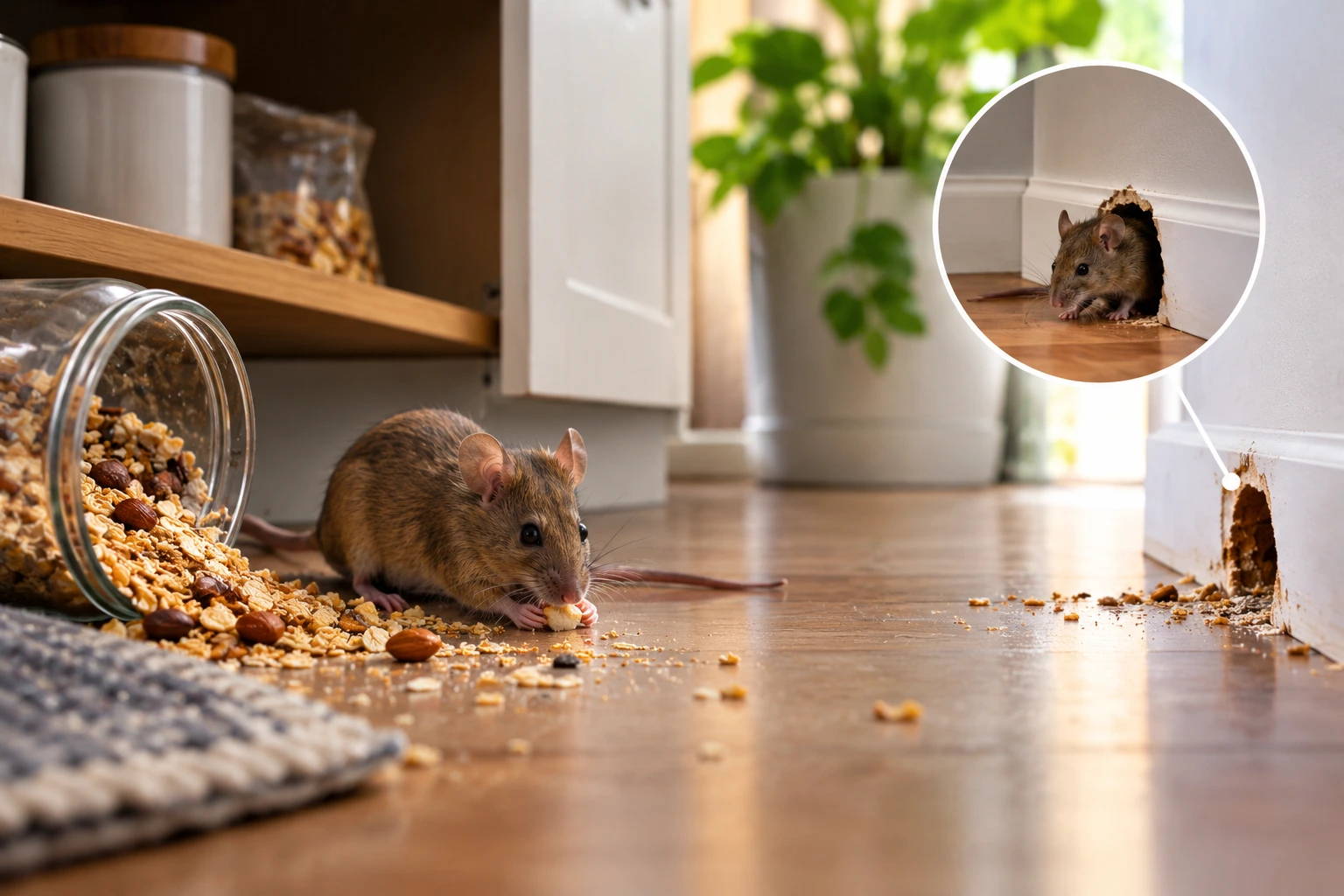
House mice can quickly become a problem when they find food, water, and shelter inside a home. These small rodents can hide behind kitchen cabinets, inside wall cavities, beneath appliances, and in storage areas. You might want to know how to get rid of house mice permanently? You must identify entry points, eliminate food sources, seal gaps, and address any existing infestation.
Table of Contents
ToggleWhat are the Ways to Get Rid of House Mice Permanently?
If you want to know how to get rid of house mice permanently, the most effective approach combines inspection, exclusion, sanitation, and appropriate population control. Mice reproduce quickly, so delaying treatment can allow a small problem to develop into a larger infestation.
Identify Signs of Mouse Activity
Start by checking areas where mice are likely to hide and travel. Common signs include small, dark droppings, gnaw marks, shredded paper, nesting materials, scratching sounds, and unpleasant odours.
- Behind refrigerators, ovens, and washing machines
- Inside kitchen cabinets and pantry corners
- Around plumbing pipes and utility openings
- In basements, attics, garages, and storage rooms
- Along walls, behind furniture, and near food containers
Seal Entry Points
Mice can squeeze through surprisingly small openings.
- Inspect the exterior and interior of your property for gaps around doors, windows, pipes, vents, foundations, and utility lines.
- Seal small openings with suitable rodent-resistant materials, such as metal mesh combined with an appropriate sealant.
- Larger gaps may require durable repairs or professional assistance. Weather stripping and door sweeps can also help close gaps beneath exterior doors.
- Avoid relying on foam alone, as mice may chew through it.
- Sealing entry points is one of the most important steps in preventing another infestation.
Remove Food and Water Sources
Mice are attracted to easily accessible food. Store grains, cereals, pet food, and other dry goods in tightly sealed containers made from durable materials.
- Clean crumbs and spills promptly, wipe kitchen counters, and avoid leaving dirty dishes overnight.
- Keep rubbish in covered bins and empty them regularly.
- Repair leaking taps and pipes, and remove standing water where possible.
- If you feed pets outdoors, remove uneaten food rather than leaving it available throughout the night.
Use Traps Strategically
Snap traps can help control house mice when placed along walls and near signs of activity.
- Position them in areas inaccessible to children and pets, and follow the manufacturer’s instructions.
- Check traps frequently and dispose of captured mice safely. Avoid placing traps where food is prepared or stored.
- Glue traps can cause prolonged suffering and may be less suitable for effective rodent management.
- Poison baits also carry risks to children, pets, and wildlife, so they should be used only in accordance with label directions and applicable regulations.
Maintain Long-Term Prevention
Permanent mouse control depends on continued prevention.
- Regularly inspect your home for new gaps, keep storage areas organised, reduce clutter, and maintain clean kitchen and pantry spaces.
- Trim vegetation touching exterior walls, where practical, and keep firewood and stored materials away from the building.
- If mice continue appearing despite these measures, our inspection can help identify hidden nests, overlooked access points, or a more extensive infestation.
What Is the Fastest Way to Get Rid of House Mice?
The answer to what is the fastest way to get rid of house mice is to combine targeted trapping with immediate sanitation and entry-point inspection.
Locate activity: Look for droppings, gnaw marks, and repeated sightings to identify high-activity areas.
Place appropriate traps: Use several correctly positioned traps rather than relying on one in an unsuitable location.
Remove attractants: Secure food, clean spills, and remove accessible rubbish to make your property less appealing.
Close entry points: Seal accessible gaps using suitable materials while avoiding trapping rodents inside inaccessible wall or ceiling cavities.
Monitor results: Continue checking for new droppings, sounds, and gnawing. Persistent activity may indicate the need for professional treatment.
How Much Does House Mice Extermination Cost?
If you are wondering how much does house mice extermination cost, the price depends on the severity of the infestation, the size of the property, the number of visits required, and the work needed to prevent re-entry.
The main factors affecting extermination costs include:
- Infestation severity: Larger mouse populations may require additional traps, monitoring, and follow-up treatments.
- Property size: Bigger homes and commercial properties generally require more inspection time.
- Entry-point repairs: Sealing gaps, repairing damaged vents, and installing door sweeps can increase the total cost.
- Cleanup requirements: Contaminated insulation, nesting materials, and accumulated droppings may require specialised cleanup.
- Follow-up visits: Monitoring helps confirm whether the infestation has been controlled.
Why Choose Professional House Mouse Extermination?
Professional pest control can be particularly useful when mice keep returning, activity occurs inside walls or ceilings, or multiple areas show signs of infestation.
- Our technicians can identify likely entry routes, assess the extent of the problem, and recommend suitable control and prevention methods.
- Professionals can also advise you on safe cleanup procedures.
- Never sweep or vacuum mouse droppings while they are dry, because this can release contaminated particles into the air.
- Follow public health guidance for disinfecting affected areas, and use appropriate protective equipment.
- A combination of professional treatment, effective exclusion, and good sanitation offers a practical way to manage existing mice and reduce the risk of future infestations.
Frequently Asked Questions
Can house mice return after extermination?
Mice can return if entry points remain open or food and shelter are readily available. Sealing gaps and maintaining sanitation are essential for long-term prevention.
How long does it take to eliminate a mouse infestation?
Minor infestations may be controlled within days, while larger problems can take several weeks, depending on the number of mice and the effectiveness of exclusion measures.
What attracts house mice indoors?
Accessible food, water, warm shelter, clutter, and small openings around the building can attract mice.
Are natural mouse repellents enough to eliminate an infestation?
Peppermint oil and other household repellents are not reliable solutions for established infestations. Trapping, exclusion, sanitation, and professional treatment are generally more effective.
Should I call a pest control professional if I see one mouse?
One mouse does not always indicate a large infestation, but droppings, repeated sightings, or scratching sounds suggest further investigation is needed.