
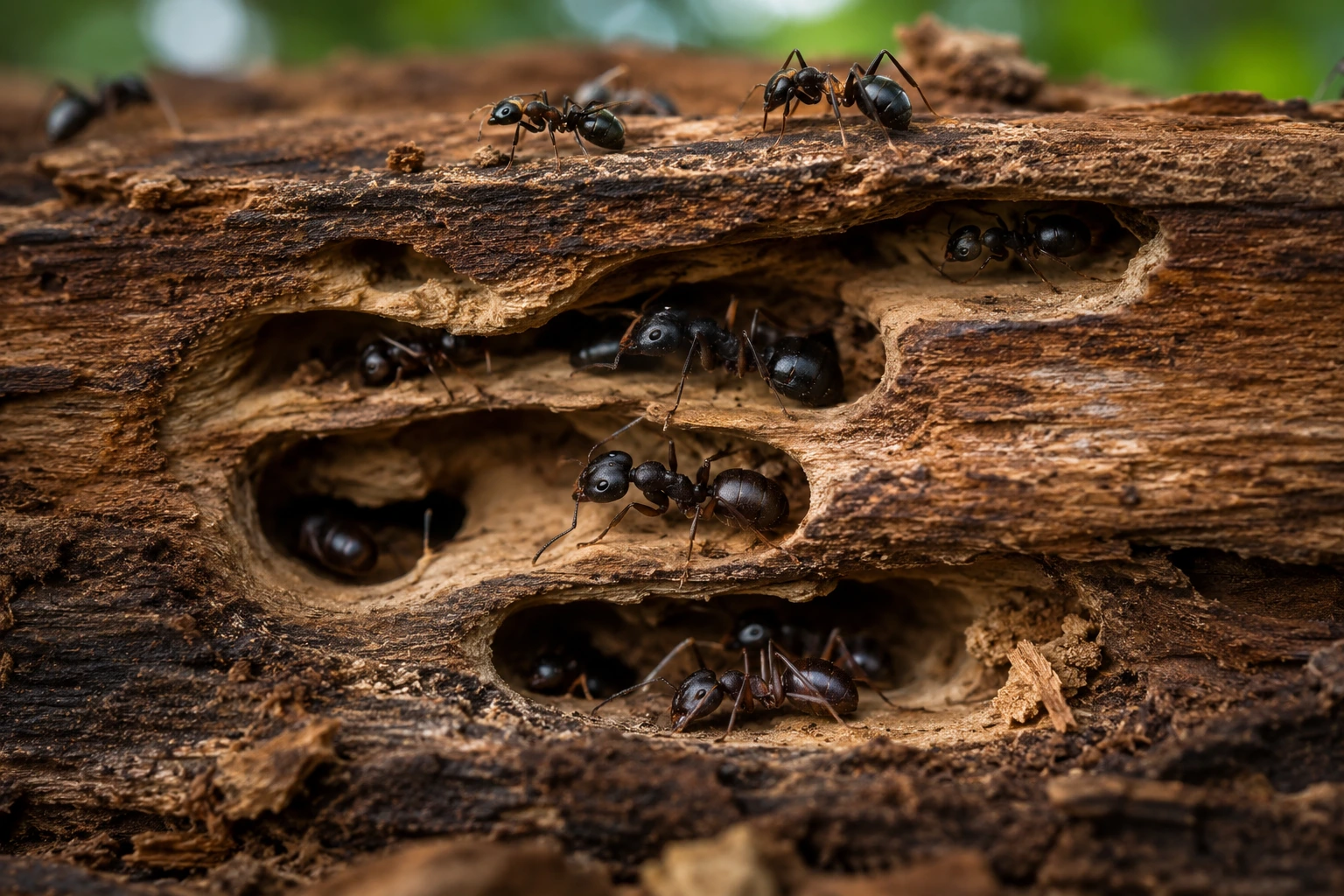
Carpenter ants are the more concerning ants that homeowners may discover around a property. Unlike ants that simply search for food, carpenter ants can excavate galleries in wood to create nesting areas. If you have noticed large ants around your home, you may be asking, Are carpenter ants bad to have around? Understanding their behavior, nesting habits, and signs of infestation can help you determine when professional pest control may be necessary.
Table of Contents
ToggleWhy Are They Called Carpenter Ants?
Carpenter ants use their strong mandibles to create smooth tunnels and chambers within wood. They do not eat the wood they remove. Instead, they push the excavated material out of their galleries, which can sometimes appear as small piles of sawdust-like debris called frass.
Carpenter ants can establish nests in trees, stumps, logs, fence posts, and wooden structures. They may also take advantage of damaged or moisture-compromised areas around a home.
Where Do Carpenter Ants Nest?
Moreover, carpenter ants can create nests in a variety of locations. Outdoors, colonies may be found in different areas.
- Dead trees
- Tree stumps
- Fallen logs
- Firewood
- Wooden fences
- Landscape timbers
Around buildings, they may establish nests in:
- Wall voids
- Roof areas
- Window frames
- Door frames
- Attics
- Crawl spaces
- Porches
- Decks
- Damp structural wood
A carpenter ant colony can have a primary nest and satellite nests. This means eliminating visible ants does not always eliminate the entire colony.
What Attracts Carpenter Ants to a Home?
Meanwhile, moisture is one of the most important factors associated with carpenter ant activity.
- Wood that has become damp or deteriorated can be easier for ants to excavate. Homes with unresolved water leaks or moisture problems may therefore be more attractive.
- Water leaks inside walls, beneath sinks, or around pipes can create damp areas that carpenter ants may exploit.
- Roofing problems can allow moisture to enter attic spaces and wooden components.
- Water collecting near the foundation can contribute to persistently damp conditions.
- Branches touching or extending close to the roof can provide pathways for ants to reach the structure.
- Firewood can harbor insects and should generally be stored away from the home’s exterior.
How to Get Rid of Carpenter Ants?
However, if you are wondering how to get rid of carpenter ants? The most effective approach includes identifying the colony and addressing the conditions supporting it.
- Simply killing visible ants may provide temporary relief but may not eliminate the underlying infestation.
- Look for areas with repeated ant activity, frass, damaged wood, or possible entry points.
- Check for plumbing leaks, roof problems, drainage issues, condensation, and other sources of moisture.
- Moisture-damaged or deteriorated wood should be repaired or replaced where appropriate.
- Cracks and openings around windows, doors, utility lines, and other structural areas can be sealed when practical.
- Professional pest control treatments can target active colonies and areas where carpenter ants are nesting.
- Continued monitoring helps determine if activity has stopped and whether additional treatment is necessary.
Why DIY Carpenter Ant Control May Not Be Enough?
You may use sprays to kill ants you see around the property. While this can reduce visible activity, it does not necessarily address the colony.
Carpenter ants may remain hidden inside walls, insulation, roof structures, trees, or other inaccessible areas. If the nest is not located, the infestation may continue.
Another problem is that spraying randomly around the home can make it more difficult to understand where the ants are coming from. Our pest control services focus on identifying activity patterns and potential nesting areas before selecting an appropriate treatment strategy.
Can Carpenter Ants Damage a House?
Carpenter ants can contribute to wood damage, especially when colonies remain established for extended periods. The risk can be greater when they are nesting in already weakened or moisture-damaged wood.
However, the presence of carpenter ants does not automatically mean that a home’s structural integrity has been seriously compromised.
- Where ants are nesting
- How extensive the activity appears
- Whether moisture is involved
- Which areas require treatment
- Whether damaged wood needs repair
- How future activity can be reduced
How to Prevent Carpenter Ant Infestations?
Preventive maintenance can reduce the likelihood of carpenter ants establishing colonies around a property.
- Repair leaks promptly
- Keep gutters functioning properly
- Improve drainage around the foundation
- Remove dead trees and stumps when appropriate
- Store firewood away from the house
- Keep tree branches trimmed away from the roof
- Replace severely moisture-damaged wood
- Seal potential entry points
- Inspect damp areas periodically
- Keep crawl spaces adequately ventilated
When Should You Contact Pest Control?
Professional assistance is worth considering when carpenter ants repeatedly appear indoors, when you find frass, or when ants are emerging from walls, ceilings, windows, or other structural areas.
You should also consider an inspection if there is known moisture damage combined with recurring ant activity.
Our pest professional can help identify the species, locate potential nesting areas, assess the extent of activity, and recommend appropriate treatment.
Frequently Asked Questions
How can I tell if carpenter ants are nesting inside my walls?
Repeated ant activity indoors, especially at night, along with small piles of sawdust-like material or faint rustling sounds inside walls, can indicate a nearby nest. Our professional inspection can help locate hidden activity.
Do carpenter ants come back after treatment?
They can return if the original nest is not completely addressed or if moisture and other favorable conditions remain around the property. Correcting leaks and damaged wood can help reduce the chances of recurring activity.
Are carpenter ants active throughout the year?
Carpenter ants can remain active inside protected areas during colder months, while outdoor activity increases during warmer conditions. Indoor sightings may therefore occur even when outdoor activity is limited.
Can carpenter ants cause structural damage?
They can contribute to wood damage by excavating galleries, particularly in damp or already weakened wood. Extensive or prolonged activity may affect wooden components, making early inspection important.
How can I prevent carpenter ants from entering my home?
Repair moisture problems, keep gutters and drainage systems functioning properly, trim branches away from the roof, store firewood away from the house, remove decaying wood, and seal cracks or openings around the exterior.