
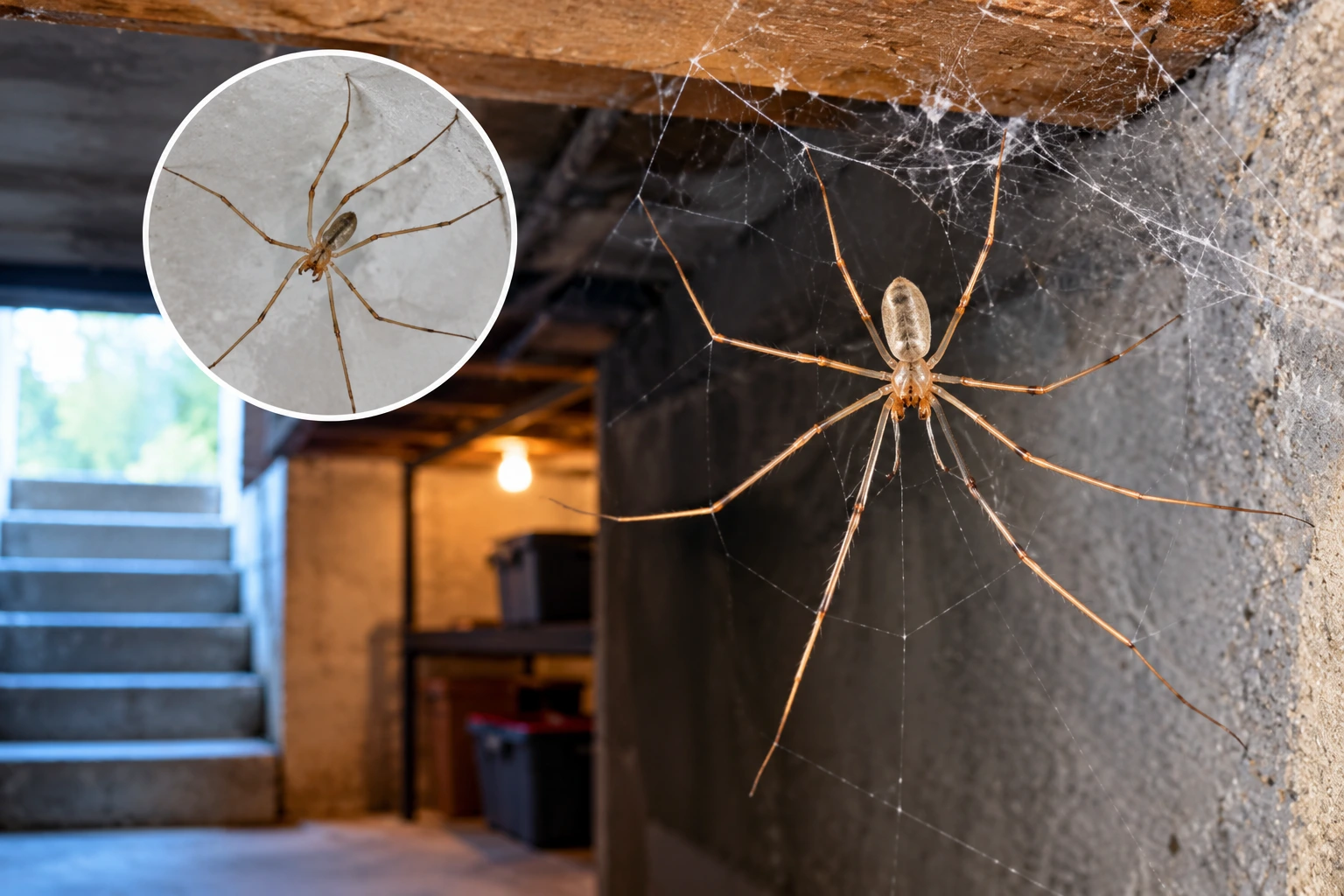
Finding long-legged spiders in your basement, garage, bathroom, or ceiling corners can be an unpleasant experience. If you have noticed the spiders appearing repeatedly, you may wonder, What attracts cellar spiders to your house? The main reasons include access to insects, damp or humid areas, undisturbed corners, clutter, and suitable places to build webs. Understanding these conditions can help you reduce spider activity and make your home less attractive to them.
Table of Contents
ToggleWhy Do Cellar Spiders Enter Homes?
Cellar spiders, often recognised by their small bodies and exceptionally long, thin legs, prefer dark, quiet locations. They are found in basements, crawl spaces, storage rooms, garages, and other areas where they can remain undisturbed.
- Insects and other small prey: Areas with flies, mosquitoes, moths, and other insects can provide a steady food supply.
- Moisture and humidity: Damp basements, crawl spaces, and poorly ventilated storage areas may attract insects that spiders feed on.
- Dark hiding places: Cellar spiders prefer corners, ceiling joints, closets, and spaces behind stored belongings.
- Limited disturbance: Rooms that are rarely cleaned or used provide suitable locations for web construction.
- Clutter: Cardboard boxes, stacked items, and unused furniture create sheltered spaces where spiders can hide.
What Do Cellar Spiders Eat?
Understanding What do cellar spiders eat? can help explain why they appear in particular areas of your home. Cellar spiders primarily feed on small insects and other arthropods that become trapped in their webs.
- Their diet may include flies, mosquitoes, moths, gnats, and other small household insects. Depending on the circumstances, they may also capture other spiders.
- These spiders construct loose, irregular webs in corners, ceilings, basements, and other sheltered locations.
- When an insect becomes trapped, the spider detects the movement and approaches its prey.
- Because cellar spiders depend on other small creatures for food, a home with a high insect population may provide favourable conditions for them.
To reduce the food sources that attract cellar spiders, consider the following measures.
- Repair window screens and seal gaps around doors.
- Keep kitchen surfaces clean and store food in sealed containers.
- Remove standing water and address plumbing leaks.
- Improve ventilation in damp rooms.
- Reduce unnecessary outdoor lighting near entrances when practical.
- Clean insect remains and old webs from corners and ceilings.
How Long Do Cellar Spiders Live?
Many of you ask, How long do cellar spiders live? Their lifespan depends on the species, environmental conditions, food availability, and other factors.
- Cellar spiders can live for around one to two years, although lifespan varies and some individuals may survive longer under favourable conditions.
- During their lives, females can produce multiple egg sacs, depending on the species and environmental conditions.
- The eggs develop into young spiders, which gradually mature and establish webs in suitable locations.
- When a home provides shelter, insects, and limited disturbance, cellar spiders may continue to reproduce and remain in the same areas for extended periods.
- Therefore, removing visible spiders alone may not solve a recurring problem. Eggs, young spiders, and suitable hiding places may remain undisturbed.
- Regularly inspecting basements, storage rooms, ceilings, and crawl spaces can help you identify spider activity early.
- Removing old webs, reducing clutter, and sealing entry points can make these locations less suitable for future populations.
Where Are Cellar Spiders Found?
Cellar spiders prefer areas where they can build webs without frequent interference. Some of the most common indoor locations.
Basements and Crawl Spaces
Basements often contain dark corners, storage items, and moisture-prone areas. Crawl spaces may also provide access to insects and sheltered locations.
Bathrooms and Laundry Rooms
Leaking pipes, damp walls, and humid conditions can encourage insect activity. Cellar spiders may settle in corners near ceilings, behind appliances, or around plumbing areas.
Garages and Storage Rooms
Boxes, shelves, unused equipment, and limited cleaning create numerous hiding places. Spiders can build webs behind stored objects and along wall joints.
Ceilings and Room Corners
Cellar spiders often construct webs where walls meet ceilings or where furniture remains undisturbed. Regular vacuuming can help prevent webs from accumulating.
How to Prevent Cellar Spiders from Returning?
Preventing cellar spiders requires a combination of cleaning, exclusion, and moisture management.
- Start by vacuuming webs, egg sacs when safely accessible, and visible spiders.
- Pay particular attention to ceiling corners, behind furniture, storage shelves, and basement windows. Empty the vacuum contents appropriately after cleaning.
- Next, seal cracks around window frames, doors, pipes, and foundation openings.
- Install or repair window screens to reduce insect entry.
- Keep storage areas organised and consider using sealed plastic containers instead of cardboard boxes that sit directly on the floor.
- Repair leaking pipes, improve ventilation, and use a dehumidifier in persistently damp areas when appropriate.
- If insects are entering your home frequently, address their entry points and the conditions supporting them.
- Avoid handling unfamiliar spiders directly. While cellar spiders are considered harmless, unnecessary contact should still be avoided.
When Should You Consider Professional Pest Control?
However, repeated web formation, spiders appearing throughout multiple rooms, or persistent activity despite regular cleaning may indicate that additional measures are needed.
- Our pest control service can inspect the property, identify conditions supporting spider activity, assess potential entry points, and recommend targeted treatment.
- Professional assistance may be especially useful when spiders are present in difficult-to-access crawl spaces, extensive basements, ceiling voids, or storage areas.
- A comprehensive approach focuses on reducing the conditions that support spiders rather than simply treating visible webs.
Frequently Asked Questions
Are cellar spiders dangerous to people?
Cellar spiders are considered harmless to humans and are not known to pose a medical threat. However, avoid handling unfamiliar spiders directly.
Why do cellar spiders keep returning to the same corner?
They may return because the location provides shelter, suitable web-building surfaces, and access to insects. Regular cleaning and reducing nearby food sources can help discourage them.
Do cellar spiders prefer damp environments?
They are frequently found in basements and other sheltered areas that may be damp, although they do not require excessive moisture to survive.
Can cellar spiders multiply quickly inside a house?
Females can produce multiple egg sacs under suitable conditions. When food and shelter are readily available, populations may persist or increase over time.
What is the best way to get rid of cellar spiders permanently?
There is no guaranteed permanent solution, but consistent web removal, sealing entry points, controlling moisture, reducing insects, and managing clutter can reduce spider activity.