
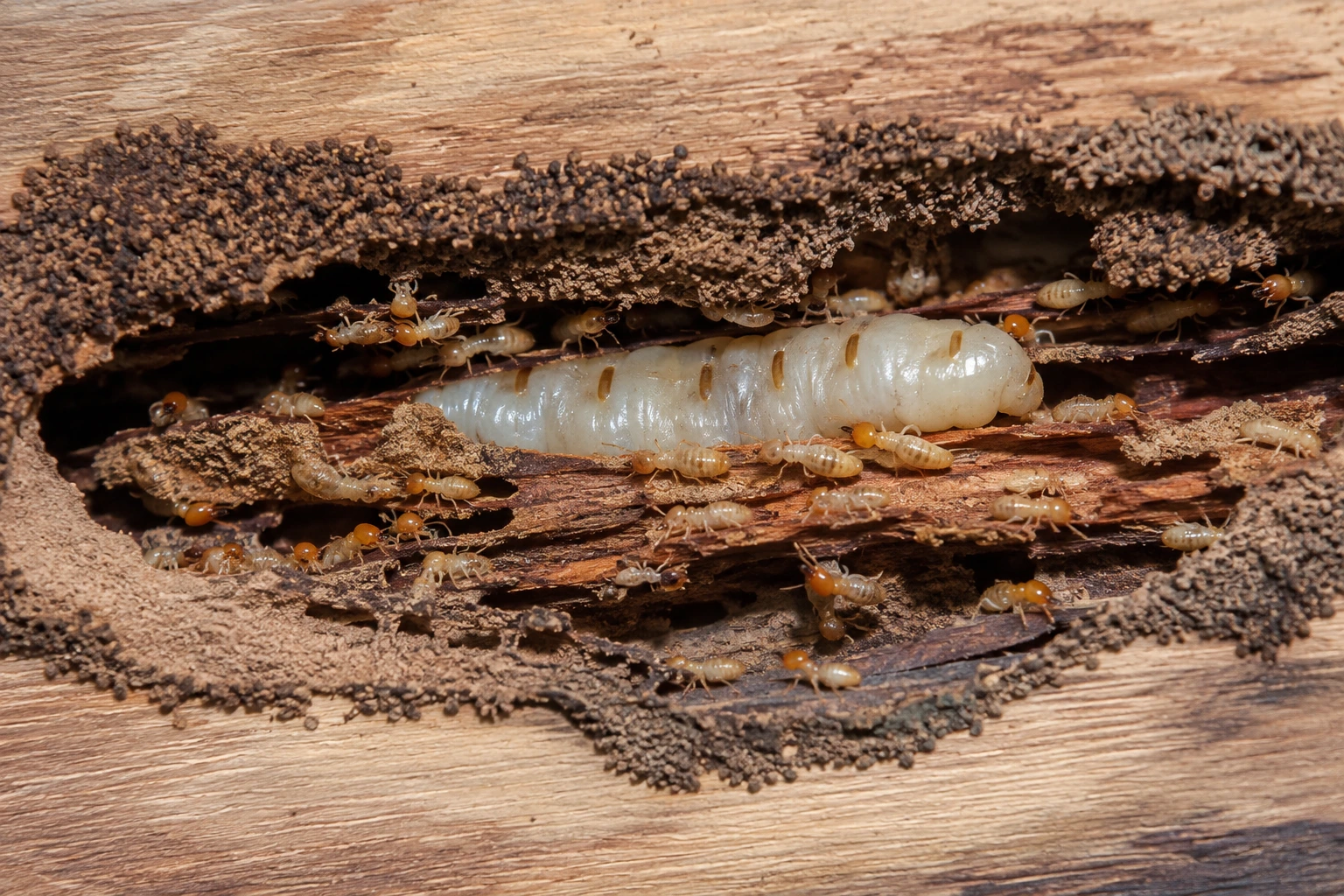
Termites are among the most destructive wood-damaging pests because they can remain hidden inside walls, floors, foundations, and wooden structures for long periods. By the time visible damage appears, a colony may already be well established. Learning what are the first signs of termites? It can help you identify an infestation early and take appropriate action before structural damage becomes extensive.
Table of Contents
ToggleWhat are the Warning Signs of Termites?
- Small holes or damaged areas in wood
- Hollow-sounding wooden surfaces
- Mud tubes along foundations or walls
- Discarded wings near windows and doors
- Termite droppings or frass
- Bubbling or cracked paint
- Doors and windows becoming difficult to open
- Sagging or damaged wood
- Visible termites or swarmers
During termite swarming, reproductive termites leave established colonies to create new ones. After landing, they shed their wings, which can accumulate near windows, doors, light fixtures, or other areas.
How Mud Tubes Can Indicate Termite Activity?
Subterranean termites often construct mud tubes to travel between their colony and a food source while maintaining protection from drying conditions and predators.
- Along foundation walls
- Around cracks
- Under flooring
- Near plumbing penetrations
- Along basement walls
- Around crawl spaces
- Near wooden structures
If you discover a mud tube, do not simply remove it and assume the problem is solved. The colony may remain active elsewhere.
How to Check Termites in House?
If you are wondering how to check termites in house, you must start with a careful visual inspection of areas where termites are most likely to find moisture or wood.
Inspect Wooden Structures
Look closely at exposed beams, baseboards, door frames, window frames, cabinets, and other wooden components.
Wood damaged internally by termites may sound hollow compared with solid wood.
Look for Mud Tubes
Inspect foundation walls, crawl spaces, basements, and areas where soil comes into contact with the building.
Check for Swarmers and Wings
Look around windowsills, doors, and other light-accessible areas for dead insects or piles of discarded wings.
Examine Moisture-Prone Areas
Check locations around plumbing, bathrooms, kitchens, gutters, downspouts, and poorly ventilated spaces. Excess moisture can create conditions that are attractive to termites.
Inspect the Exterior
Look for wood touching or positioned very close to soil, damaged tree stumps, fallen branches, mulch accumulation, and other potential termite entry points.
What Does Termite Damage Look Like?
Termite damage can vary depending on the species and location of the colony.
- Long galleries or tunnels
- Hollow sections
- Blistered surfaces
- Crumbling areas
- Weak structural components
- Small openings
- Discolored or damaged surfaces
Not all damaged wood is caused by termites. Moisture, fungal decay, carpenter ants, and other problems can create similar symptoms. Our professional identification is useful when the cause isn’t obvious.
What Kills Termites Immediately?
Some insecticides can kill individual termites quickly when they come into direct contact with the treatment. However, killing visible termites does not necessarily eliminate an infestation.
Termites live in colonies, often in locations that are difficult to access. Killing the termites you can see may only address a small portion of the problem.
Professional termite treatments may use carefully selected products and strategies designed to reach or affect the colony rather than simply eliminate visible insects.
Our pest professionals would recommend soil treatments, baiting systems, localized treatments, wood treatments, or a combination of approaches, depending on the situation.
The appropriate method depends on the termite species, infestation location, building construction, and extent of activity.
Can You Treat Termites at Home?
If you ask How can I treat termites at home? The first step is identifying whether termites are actually present and determining the extent of the infestation.
- Fixing plumbing and roof leaks
- Improving drainage
- Reducing excessive moisture
- Keeping gutters clean
- Removing dead wood near the home
- Keeping firewood away from exterior walls
- Reducing soil-to-wood contact
- Improving crawl-space ventilation
- Sealing unnecessary cracks and openings
Why DIY Termite Treatment May Not Be Enough
Termites can remain hidden for long periods. Spraying a visible area may eliminate some insects while leaving the main colony untouched.
Another concern is that you may not know whether the infestation is localized or widespread. Termites can move through concealed spaces, making surface-level inspection insufficient in some cases.
- The termite species
- Active areas
- Entry points
- Extent of damage
- Moisture sources
- Potentially vulnerable areas
- Appropriate treatment options
How to Prevent Future Termite Problems?
Prevention should be part of every termite-control strategy.
- Repair leaks and ensure water drains away from the foundation.
- Clogged gutters can contribute to moisture around the foundation and exterior walls.
- Tree stumps, branches, cardboard, and other cellulose-rich materials should not be allowed to accumulate near the home.
- Keep firewood elevated and away from the home’s exterior whenever possible.
- Annual inspections can help identify early evidence before damage becomes extensive.
- Avoid conditions that allow wooden building components to remain in direct contact with soil.
When Should You Call a Pest Control Professional?
Contact our pest control professional if you find multiple signs of termite activity, recurring mud tubes, discarded wings, visible termites, or noticeable structural damage. Moreover, early intervention can help limit damage and make treatment more manageable.
- The infestation appears widespread
- Structural wood is damaged
- Termites continue appearing after DIY treatment
- The colony location is unknown
- Your property has extensive moisture problems
- You suspect activity inside walls or flooring
Frequently Asked Questions
How to know the first signs of termites?
The first signs of termites can include discarded wings, mud tubes, hollow-sounding wood, small holes, termite droppings, bubbling paint, and doors or windows that suddenly become difficult to open.
What kills termites immediately?
Some insecticides can kill termites quickly when they come into direct contact with the treatment. A professional treatment may be needed to address hidden termite activity.
How to check termites in house?
You can check for termites by inspecting wooden structures, foundations, crawl spaces, basements, window areas, and moisture-prone locations.
How can I treat termites at home?
Start by reducing moisture, repairing leaks, removing wood debris, improving drainage, and keeping firewood away from the house. We recommend professional termite treatment.
Can termites cause serious damage to a home?
Termites can damage wooden structural components, flooring, walls, beams, and other cellulose-based materials. Early inspection and treatment can help prevent extensive damage.