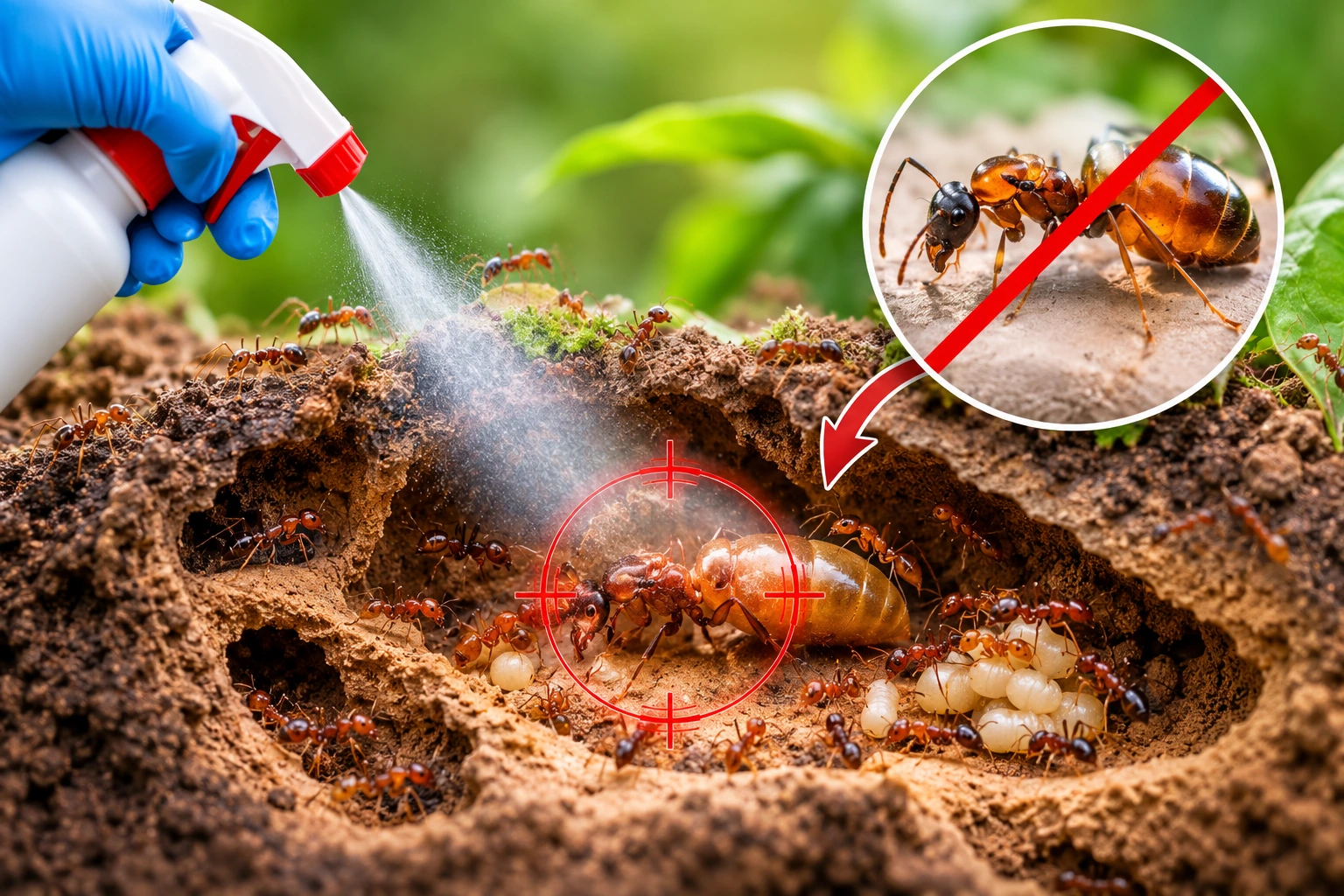
Argentine ants are among the most persistent household ant pests. Many of you wonder, what is the best bait to kill Argentine ant queens? The most effective approach includes using slow-acting ant baits that worker ants can collect and carry back to their colonies. This allows the bait to spread through the colony and reach queens that remain hidden inside nests.
Table of Contents
ToggleWhat are Argentine Ant Colonies and Their Queens?
Argentine ants are small, brown ants that commonly establish colonies near buildings, gardens, pavements, and other areas with access to food and moisture.
- One of their biggest challenges is their colony structure. Unlike many ant species that have a single queen, Argentine ant colonies can contain multiple reproductive queens.
- Several nests may also connect and function as part of a larger colony network.
- Worker ants travel along established trails to collect food and bring it back to their nests.
- Queens depend on worker ants for food, which makes baiting an important part of colony management.
- Simply killing visible worker ants may not solve the underlying problem because surviving queens can continue producing more ants.
What is the Best Bait to Kill Argentine Ant Queens?
The best bait for Argentine ants is a slow-acting, colony-targeting bait that worker ants readily accept. The active ingredient, bait formulation, and attractiveness to the colony all influence treatment success.
1. Liquid Ant Baits
Liquid baits are often attractive to Argentine ants because they contain sugary food sources. Worker ants consume the bait and transport food to other colony members, including queens.
Liquid formulations can be useful when ants are actively searching for sweet food sources.
2. Gel Ant Baits
Gel baits provide a convenient application method for targeted treatment areas. They can be placed in suitable locations along ant trails and near entry points, following the product label.
Their effectiveness depends on whether the colony accepts the formulation.
3. Protein-Based Baits
Argentine ants may change their food preferences depending on colony needs and seasonal conditions. Protein-based baits can sometimes attract ants when they are searching for protein-rich food sources.
4. Slow-Acting Bait Formulations
Slow-acting products are important because worker ants need sufficient time to transport bait back to the nest before dying. Products that kill too quickly may reduce the opportunity for colony-wide distribution.
How Does Ant Bait Reach Hidden Queens?
Baiting works through the natural feeding behaviour of worker ants.
The process generally follows these stages.
- Worker ants discover an attractive bait source.
- They consume the bait and collect food for the colony.
- The bait is transported back to nesting locations.
- Other workers and colony members receive the food through food-sharing behaviour.
- Queens may be exposed through this colony feeding process.
- Continued bait consumption can gradually reduce the colony population and reproductive capacity.
Are Argentine Ants Dangerous or Destructive to Homes in Dover?
A common concern among you is, Are Argentine ants dangerous or destructive to homes in Dover?
Argentine ants are not considered medically dangerous to humans. They do not typically sting, and their bites are uncommon. However, their presence can still create several household problems.
Food Contamination: Argentine ants frequently enter kitchens and pantries in search of sugary foods, crumbs, and other food sources. Their movement across different surfaces can contaminate exposed food.
Large Indoor Infestations: These ants can establish extensive trails through kitchens, bathrooms, basements, and wall openings. Their numbers can become difficult to manage without proper treatment.
Garden and Outdoor Problems: Argentine ants protect certain honeydew-producing insects, such as aphids and scale insects, because they feed on their sugary secretions. This relationship can contribute to plant health problems.
Persistent Nesting Activity: Their ability to establish multiple nests makes infestations difficult to eliminate through surface spraying alone.
How Much Does Argentine Ant Pest Control Cost in Dover DE?
How much does Argentine ant pest control cost in Dover DE? It depends on the size of the infestation, property layout, nesting locations, and treatment requirements.
There is no universal price because every property presents different pest control challenges.
- Infestation severity: Larger colonies and widespread ant trails may require additional treatment.
- Property size: Bigger homes and outdoor spaces may require more inspection and treatment coverage.
- Nest locations: Colonies inside wall voids, foundations, landscaping, or difficult-to-access areas may require specialised treatment.
- Treatment methods: Baiting, targeted applications, and exterior perimeter treatments have different costs.
- Follow-up visits: Persistent infestations may require additional inspections and treatment adjustments.
How Can You Prevent Argentine Ant Infestations?
Preventive measures can reduce the chances of Argentine ants returning after treatment.
- Store sugar, snacks, and other food products in airtight containers.
- Clean kitchen counters, floors, and dining areas regularly.
- Repair leaking taps and plumbing connections.
- Remove standing water around your property.
- Seal cracks around windows, doors, foundations, and utility openings.
- Trim plants and branches that touch exterior walls.
- Keep rubbish bins covered and clean.
- Remove fallen fruit and other food sources from outdoor areas.
Frequently Asked Questions
How long does it take to eliminate an Argentine ant colony using bait?
Eliminating an Argentine ant colony may take several days to a few weeks, depending on colony size, bait acceptance, and the number of nesting locations.
Why do Argentine ants keep returning after pest control treatment?
Argentine ants may return because multiple queens and interconnected nests can survive initial treatment. Unremoved food sources, moisture, and untreated entry points can also contribute to recurring infestations.
Do Argentine ants prefer sweet or protein-based bait?
Argentine ants commonly show a preference for sugary food sources, but their nutritional requirements can change. Offering an appropriate bait formulation based on their current feeding behaviour can improve treatment success.
Can I eliminate Argentine ants without professional pest control?
Small infestations may sometimes be managed using commercially available ant baits and preventive measures. However, extensive colonies with multiple nesting locations often require professional inspection and targeted treatment.
Where do Argentine ants usually build their nests around homes?
Argentine ants nest beneath stones, mulch, pavement, foundations, garden debris, and inside wall voids. They prefer moist environments and often establish nests close to reliable food and water sources.