
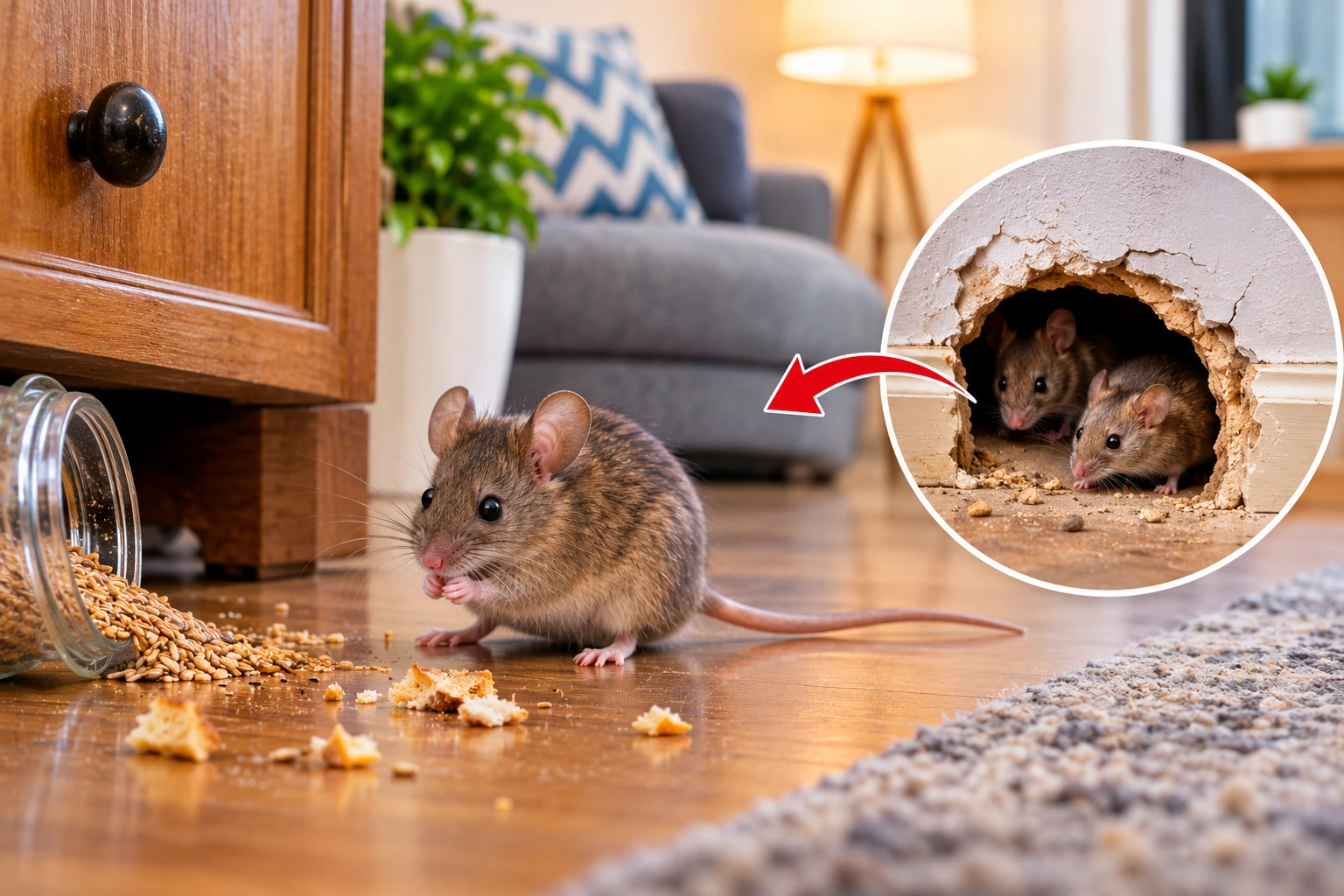
Finding mice inside your home every winter can be frustrating, especially when you have already cleaned the house, sealed a few gaps, and tried different ways to control them. If you are wondering, Why do I keep getting mice in my house every winter? It includes a combination of seasonal movement, easy access points, available food, and suitable nesting conditions. Understanding these causes can help you prevent recurring infestations and protect your home throughout the year.
Table of Contents
ToggleWhy Do Mice Enter Houses During Winter?
House mice are highly adaptable rodents that can survive in different environments. However, colder weather makes outdoor living more challenging. When temperatures decrease, mice often move closer to buildings in search of warmth and protection.
Searching for Warm Shelter
Cold temperatures, freezing conditions, and winter rainfall make outdoor nesting areas less comfortable. Mice look for protected spaces where they can stay warm and reproduce.
Wall cavities, basements, attics, garages, crawl spaces, and kitchen cabinets offer suitable shelter. Once mice find a comfortable hiding place, they may remain inside for extended periods.
Easy Access Through Small Openings
Mice can squeeze through surprisingly small openings. Gaps around doors, windows, plumbing pipes, utility lines, foundations, and roof edges provide convenient entry points.
Even a small crack that appears harmless can become an access route for rodents. Older houses are particularly vulnerable because building materials naturally deteriorate over time.
Availability of Food
During winter, outdoor food sources may become limited. Mice are attracted to homes where they can easily find grains, cereals, pet food, crumbs, and improperly stored groceries.
A few accessible food sources can encourage mice to establish nesting areas nearby.
Suitable Nesting Materials
Mice build nests using soft and easily available materials. Cardboard, paper, fabric, insulation, and stored household items provide excellent nesting materials.
Cluttered storage spaces, garages, and unused rooms can become ideal hiding and breeding areas.
What Attracts House Mice and How to Remove Those Triggers?
Understanding What attracts house mice and how to remove those triggers? It is essential for preventing repeated winter infestations. Simply removing visible mice will not solve the problem if your property continues providing food, shelter, and easy entry.
Remove Accessible Food Sources
Store grains, cereals, snacks, and other dry food in airtight containers. Avoid leaving food uncovered on kitchen counters or dining tables. Clean food crumbs regularly and dispose of waste in tightly covered bins.
Manage Pet Food Properly
Pet food can attract rodents, especially when bowls are left outside overnight. Store pet food in sealed containers and clean feeding areas after meals.
Reduce Indoor Clutter
Remove unnecessary cardboard boxes, old newspapers, unused fabrics, and piles of stored materials. Organize garages, basements, and attics to reduce potential nesting spaces.
Seal Entry Points
Inspect the exterior of your home for cracks, holes, and gaps around utility pipes. Seal openings using rodent-resistant materials such as metal mesh combined with appropriate sealants.
Install door sweeps and repair damaged window screens to prevent rodents from entering.
Maintain Outdoor Areas
Trim vegetation near the house, remove accumulated debris, and keep firewood stored away from exterior walls. Regularly clean areas around garbage bins and outdoor storage spaces.
These changes make your property less attractive to mice and reduce opportunities for future infestations.
Where Do Mice Usually Hide Inside a House?
Mice prefer quiet, dark, and undisturbed locations where they can build nests without being noticed.
- Kitchen cabinets: Food storage areas provide easy access to crumbs and packaged groceries.
- Attics: Insulation and stored belongings offer warmth and nesting materials.
- Basements: Dark corners and storage spaces provide protection.
- Wall cavities: Mice can move through gaps and openings inside walls.
- Garages: Cardboard boxes, furniture, and stored equipment create hiding opportunities.
- Crawl spaces: These areas often contain moisture, debris, and openings that allow rodents to enter.
Is It Possible to Completely Eradicate Mice From an Old House?
In many cases, an infestation can be eliminated, but older properties often require a more comprehensive approach.
Old houses may have structural gaps, damaged foundations, deteriorating weather stripping, and hidden openings around plumbing or electrical installations. These conditions make it easier for mice to enter repeatedly.
Professional Rodent Inspection
Our pest control professional will inspect the property to identify nesting areas, movement patterns, entry points, and the extent of the infestation.
Targeted Mouse Removal
Depending on the situation, professionals may recommend appropriate traps and other rodent control methods. Treatment should focus on areas where mice are active rather than relying on random placement.
Exclusion and Sealing
Closing access points is one of the most important parts of long-term mouse prevention. Particular attention should be given to foundation gaps, roof openings, utility penetrations, and damaged doors.
Cleaning and Sanitation
After eliminating the infestation, contaminated areas should be cleaned carefully. Mouse droppings and urine can carry harmful pathogens, so avoid sweeping or vacuuming dry droppings.
Follow-Up Monitoring
Regular inspections and monitoring help identify new rodent activity before another infestation develops.
When Should You Call Our Mouse Exterminator?
A professional pest control service may be necessary when you notice frequent droppings, scratching sounds inside walls, damaged food packaging, or repeated mouse sightings.
You should also consider professional assistance when DIY traps are not producing results or mice continue appearing despite preventive measures.
Experienced technicians can assess the infestation, recommend suitable treatment methods, identify structural vulnerabilities, and suggest preventive steps.
Frequently Asked Questions
Do mice become more active inside houses during winter?
Mice often move indoors during colder weather because houses provide warmth, food, and protected nesting spaces.
Can mice enter a house through small holes?
Mice can squeeze through openings approximately 1/4 inch wide, making even small gaps around pipes, doors, and foundations potential entry points.
Does keeping my house clean prevent mice completely?
Cleaning reduces food availability and nesting opportunities, but it does not guarantee prevention. Sealing entry points and monitoring rodent activity are also important.
How can I tell if mice are nesting inside my walls?
Scratching or scurrying noises, particularly at night, droppings near wall edges, and gnawing sounds may indicate mouse activity inside wall cavities.
When should I start winter mouse prevention?
Ideally, begin preventive measures during late summer or early autumn. Inspect your property, seal openings, organize storage spaces, and secure food before temperatures start dropping.