Mosquito control has changed as you and property managers look for safer, more targeted, and longer-lasting ways to reduce mosquito activity. Traditional approaches remain important, but modern pest management combines prevention, monitoring, habitat reduction, and targeted treatments. Understanding the latest trends in mosquito control techniques can help you choose practical ways to make outdoor areas less attractive to mosquitoes.
Table of Contents
ToggleWhy Mosquito Control Is Important?
Mosquitoes are more than an outdoor nuisance. Some species can transmit diseases, which makes prevention an important part of maintaining a comfortable and healthy environment.
- Mosquitoes need water to complete their breeding cycle.
- Even small amounts of standing water in containers, clogged gutters, plant saucers, buckets, toys, or other outdoor objects can provide suitable breeding locations.
- For this reason, modern mosquito control often begins with identifying and eliminating potential breeding areas around a property.
Which Season Will Mosquitoes Be More Active?
In many areas, mosquito activity increases during warmer months when temperatures and moisture create favorable conditions for breeding and development.
- However, mosquito activity varies according to local climate, rainfall, humidity, mosquito species, and available breeding sites.
- In regions with warm weather for much of the year, mosquitoes may remain active for extended periods.
- Rain can increase mosquito populations by creating new sources of standing water.
- At the same time, excessively dry conditions can reduce breeding opportunities for some species.
- You should therefore pay attention to local conditions rather than relying solely on a particular calendar season.
What is Integrated Mosquito Management?
One of the most important trends in mosquito control techniques is integrated mosquito management. Instead of relying exclusively on chemical treatments, this approach combines several control methods.
- Removing standing water
- Improving drainage
- Managing vegetation
- Monitoring mosquito activity
- Using appropriate larval control
- Applying targeted treatments when necessary
- Using personal repellents
- Maintaining screens and barriers
How to Eliminate Standing Water?
Source reduction remains one of the simplest and most useful mosquito-control techniques. You should regularly inspect outdoor areas for containers or locations where water can collect.
- Birdbaths
- Flowerpot saucers
- Buckets
- Children’s toys
- Unused containers
- Gutters
- Drainage areas
- Pool covers
- Wheelbarrows
- Outdoor furniture
Water-holding objects should be emptied, covered, cleaned, or stored appropriately. Gutters and drains should also be maintained so that water does not remain stagnant.
Do You Offer Mosquito Monitoring Technology?
Technology is becoming useful in pest management. Our professionals can use monitoring methods to identify mosquito activity and determine where control efforts should be concentrated.
Monitoring can help identify areas with higher mosquito populations, breeding conditions, or recurring activity. Instead of treating an entire property without assessment, targeted monitoring can support a more focused approach.
This can make mosquito management more efficient while reducing unnecessary applications.
What is Targeted Mosquito Treatment?
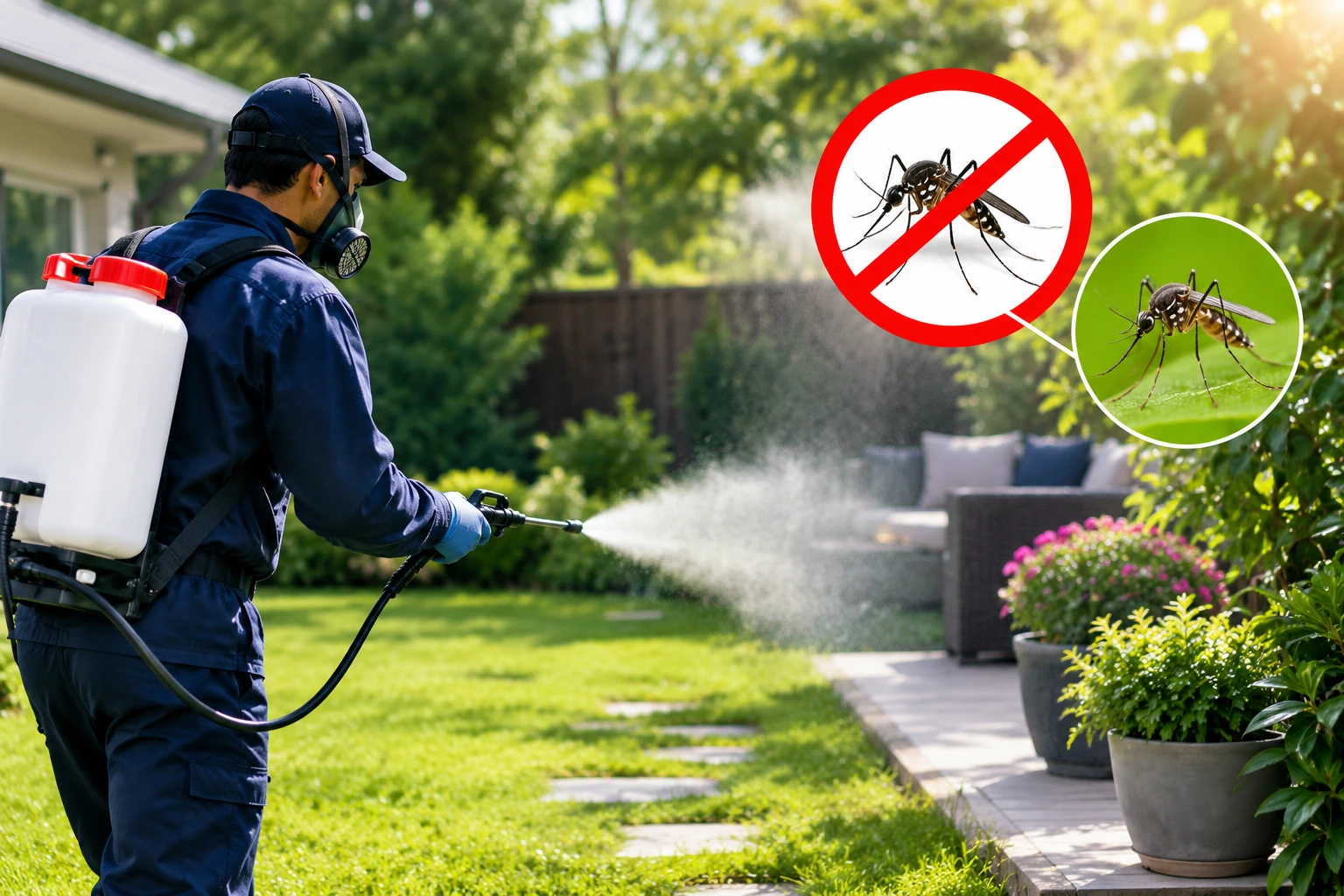
Another development in mosquito management is the use of targeted applications rather than treating every available surface indiscriminately.
Treatment areas may include shaded vegetation, resting locations, property boundaries, and other places where mosquitoes are likely to remain.
The exact treatment approach should depend on the mosquito species, property layout, environmental conditions, and applicable safety requirements.
Professionally applied treatments can be useful when mosquito activity remains high despite source reduction and other preventive measures.
How to Control Larval Mosquitoes?
Mosquitoes spend part of their life cycle in water. Controlling larvae can therefore be an important part of an integrated strategy.
- Where standing water cannot reasonably be removed, appropriate larval control methods may be considered.
- These methods target mosquitoes before they develop into flying adults.
- Treatment should always be selected and applied according to the specific water source and applicable product instructions.
- Water used for drinking or other sensitive purposes requires particular consideration.
Does It Improve Outdoor Protection?
Physical barriers remain valuable even as new control techniques emerge. Screens on windows and doors can prevent mosquitoes from entering homes, while properly maintained outdoor spaces can reduce opportunities for mosquitoes to rest and breed.
You can also consider wearing long sleeves and pants during periods of high mosquito activity and using an appropriate insect repellent when spending time outdoors.
Outdoor lighting and landscaping choices may also influence how comfortable a property feels, although they should not be considered substitutes for proper mosquito management.
What Is the Best Mosquito Repellent in 2026?
There is no single repellent that is ideal for every person or situation. Effectiveness depends on the active ingredient, concentration, duration of protection, application method, and individual circumstances.
Repellents containing active ingredients such as DEET, picaridin, IR3535, or oil of lemon eucalyptus/PMD can provide protection when used according to their labels. Different products are for different needs, so you should read directions carefully.
For children, pregnant individuals, people with sensitive skin, or anyone with specific concerns, product labels and professional healthcare guidance should be followed where appropriate.
Repellent is also only one part of mosquito prevention. Reducing breeding sites and using physical barriers can provide additional protection.
Seasonal Mosquito Prevention
Mosquito management should ideally begin before populations become a major nuisance. Property owners can inspect their yards at the beginning of warmer and wetter periods and continue checking for standing water throughout the season.
- Emptying water-holding containers.
- Cleaning gutters.
- Maintaining pools properly.
- Checking outdoor drains.
- Trimming dense vegetation.
- Repairing damaged screens.
- Using suitable repellents.
- Monitoring mosquito activity.
- Scheduling professional treatment when necessary.
Frequently Asked Questions
What attracts mosquitoes to a property?
Mosquitoes are attracted to areas with standing water, shade, humidity, vegetation, and suitable places to rest.
How can I reduce mosquitoes around my home naturally?
Start by removing standing water, cleaning gutters, improving drainage, trimming dense vegetation, and keeping outdoor areas maintained.
How often should mosquito control treatments be performed?
Treatment frequency depends on mosquito activity, local weather, property conditions, and the control method being used. Properties with persistent mosquito problems may require repeated treatments during periods of high activity.
Does eliminating standing water really help control mosquitoes?
Removing standing water can reduce breeding sites because mosquitoes require water for part of their life cycle. Regularly checking containers, gutters, plant saucers, and other water-holding areas can make a meaningful difference.
Can professional mosquito control be used with other prevention methods?
Our treatments can be combined with source reduction, landscaping maintenance, physical barriers, and personal repellents.