
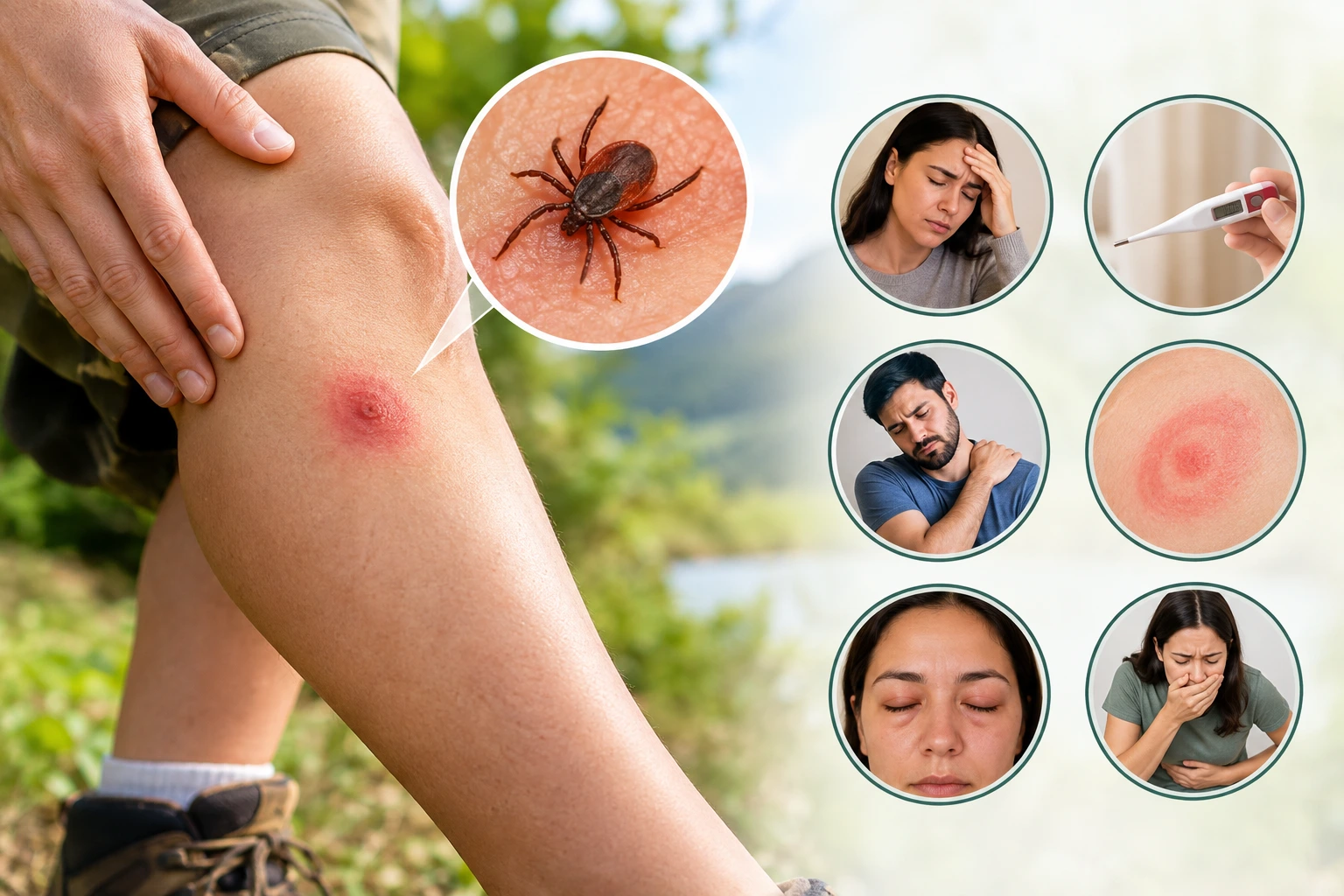
Ticks are small parasites that attach themselves to people and animals to feed on blood. Because some tick bites may be painless and the insects can be difficult to notice, people do not always realize they have been bitten. Understanding What are the first symptoms of a tick? can help you recognize a possible bite and take appropriate action.
Which Factors Show First Symptoms of a Tick?
One of the earliest signs of a tick bite is a small red spot or bump where the tick was attached. The area may feel slightly itchy, warm, or irritated. However, not every tick bite produces an obvious reaction.
- A small red bump around the bite
- Mild itching or irritation
- Localized swelling
- Skin tenderness
- A slight burning sensation
- A small area of redness
Sometimes the bite mark resembles a mosquito bite or another minor insect bite.
This makes it difficult to identify a tick bite based only on the appearance of the skin.
If the tick remains attached for an extended period, the bite area may become more irritated.
Checking your skin after spending time outdoors, around tall grass, wooded areas, gardens, and areas where pets spend time.
It can help you notice ticks before they remain attached for long.
What are the Symptoms That May Appear Later?
The initial skin reaction is not the only symptom worth watching. Certain tick-borne infections can produce flu-like symptoms several days or even weeks after a bite.
- Fever or chills
- Headache
- Fatigue
- Muscle aches
- Joint pain
- Swollen lymph nodes
- Weakness
- Nausea
- Skin rashes
A spreading rash can be important when evaluating a possible tick-borne infection, although not everyone develops one. Symptoms can depend on the type of tick, the infection involved, and the individual’s response.
Because several illnesses can cause similar symptoms, a healthcare professional should evaluate concerning symptoms rather than relying on the appearance of the bite alone.
How to Treat Tick Symptoms?
It is essential to understand how to treat tick symptoms? It starts with proper tick removal and observation.
If you find an attached tick, use fine-tipped tweezers to grasp it as close to the skin as possible.
- Pull upward steadily without twisting or crushing the tick.
- After removal, clean the bite area and your hands with soap and water.
- Avoid methods such as burning the tick or applying irritating substances to force it out, as these approaches can cause additional skin injury.
- For a minor local reaction, keeping the area clean and avoiding excessive scratching may help reduce irritation.
- A healthcare professional or pharmacist can advise whether an appropriate over-the-counter treatment is suitable for itching or discomfort.
- If you develop fever, unusual fatigue, spreading redness, significant swelling, muscle or joint pain, or other concerning symptoms after a tick bite, seek medical advice.
- Prompt evaluation can help determine whether testing or treatment is appropriate.
What are Tick Bites and Tick Bite Diseases?
Tick bites and tick bite diseases are an important concern because certain ticks can transmit bacteria, viruses, or other organisms. Not every tick carries disease, and a tick bite does not automatically mean that an infection will develop.
- The diseases associated with ticks vary by geographical region and tick species.
- Some can cause fever, headaches, fatigue, muscle aches, joint discomfort, or rashes.
- In some cases, symptoms can become more serious if an infection is not appropriately recognized and treated.
- If you know that a tick was attached to your skin, make a note of when you discovered it and monitor yourself for changes.
- If possible, remembering where you may have encountered the tick can also provide useful information for a healthcare professional.
- Pets should also be checked regularly, especially after outdoor activities. Ticks can attach around the ears, neck, legs, and other areas that may be difficult to inspect.
How to Reduce Tick Exposure Around Your Property?
Preventing tick encounters includes reducing areas where ticks and their hosts may thrive.
- Keep grass trimmed and remove unnecessary vegetation, leaves, and accumulated yard debris.
- Maintain a clear boundary between lawns and dense vegetation where practical.
- Regularly inspect outdoor areas where children and pets play.
- Keep outdoor spaces clean and avoid allowing piles of leaves or brush to remain undisturbed for long periods.
- Pets can also bring ticks indoors after spending time outside.
- Regular grooming and tick checks can help identify attached ticks before they spread to other areas of the home.
- If you repeatedly find ticks around your property, our pest control may be useful for identifying conditions that encourage tick activity and developing an appropriate management plan.
When Should You Seek Medical Attention?
A tick bite should receive medical attention when symptoms become unusual, severe, or persistent.
- Moreover, seek professional medical advice if you develop a fever, rash, severe headache, breathing difficulties, weakness, intense swelling, or other concerning symptoms following a suspected tick bite.
- It is also important to remember that symptoms alone cannot reliably identify a particular tick-borne disease.
- Medical evaluation is the safest way to determine whether further testing or treatment is needed.
Frequently Asked Questions
How long does a tick need to be attached to cause problems?
The risk depends on the tick species and the infection involved. Some diseases can be transmitted relatively quickly, while others require longer attachment.
Can a tick bite heal on its own?
However, you should monitor the area and your health for several days or weeks. Persistent redness, fever, rash, unusual fatigue, or other symptoms should be discussed with a healthcare professional.
How can I tell if a tick is still attached to my skin?
An attached tick may look like a small dark or brown spot firmly connected to the skin. Carefully inspect areas such as the scalp, behind the ears, underarms, waist, and behind the knees after outdoor activities.
Can ticks get inside my house?
Ticks can enter homes on pets, clothing, shoes, or outdoor equipment. Regularly checking pets and clothing after outdoor exposure can reduce the chance of bringing ticks indoors.
How can I prevent ticks from becoming a recurring problem?
Keep grass and vegetation trimmed, remove piles of leaves and yard debris, limit dense vegetation near frequently used areas, and check pets after outdoor activities.