
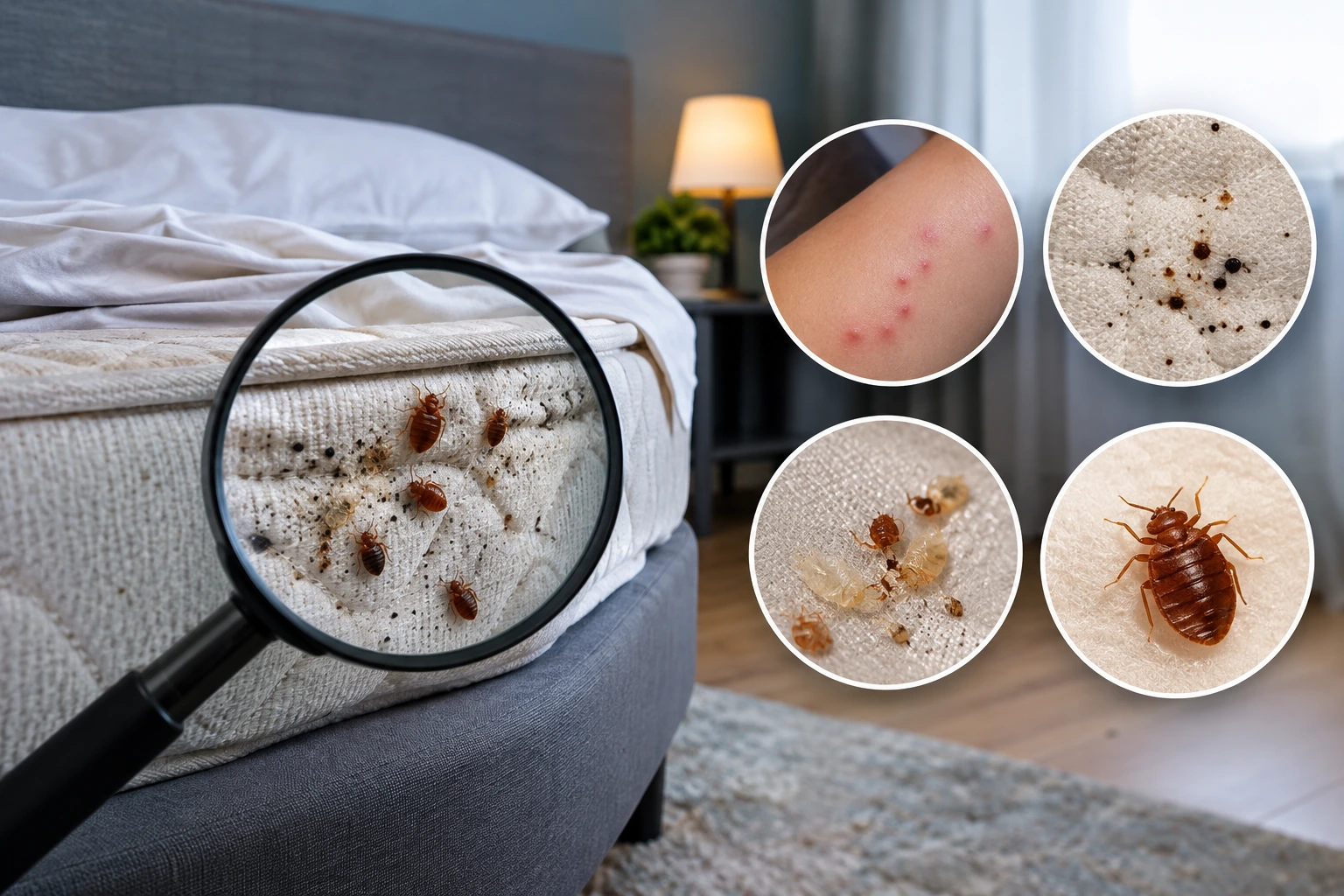
Bed bugs are small insects that can hide in mattresses, bed frames, furniture, cracks, and other protected areas around a home. Because they are mostly active at night and can remain hidden during the day, an infestation may grow before it becomes obvious. Learning the early signs of bed bugs can help you identify a problem sooner and take appropriate action.
Table of Contents
ToggleWhich are the Early Signs of Bed Bugs?
Recognizing the first indications of an infestation can make treatment easier. Some signs are visible on bedding, while others may be found around furniture and sleeping areas.
Small Rust-Colored or Dark Spots
Tiny dark marks on sheets, mattresses, pillowcases, and nearby surfaces can be a sign of bed bug activity. These marks may result from bed bug droppings or small amounts of blood.
Small Bloodstains
Small reddish or brownish stains on bedding can occur when bed bugs are accidentally crushed while a person is sleeping. A few spots do not confirm an infestation, but repeated unexplained stains should be investigated.
Shed Skins
As bed bugs grow, they shed their outer skins. These pale, translucent skins may be found near mattresses, bed frames, furniture joints, or other hiding areas.
Live Bed Bugs
Adult bed bugs are small, flat insects with oval-shaped bodies. Younger bed bugs are smaller and lighter in color. Finding a live insect is one of the stronger indicators of an infestation, although proper identification is important because other insects can look similar.
Eggs and Eggshells
Bed bug eggs are very small and may be difficult to see without close inspection. They can occur in cracks, seams, furniture joints, and other protected locations.
Unexplained Bites
Some people develop itchy red marks after being bitten by bed bugs. However, bites alone cannot confirm an infestation because skin reactions can resemble those caused by mosquitoes, fleas, or other insects.
For this reason, physical evidence around the sleeping area is important when investigating the early signs of bed bugs.
Where Do Bed Bugs Hide?
Bed bugs tend to stay close to areas where people rest or sleep. Thus, during an inspection, focus on dark, narrow spaces that provide protection.
- Mattress seams
- Box springs
- Bed frames
- Headboards
- Bedroom furniture
- Sofa seams
- Cracks in walls
- Floor and baseboard gaps
- Behind loose wallpaper
- Around electrical fixtures
Bed bugs can also spread beyond the bedroom. If an infestation becomes established, insects may move into nearby furniture and rooms.
What Kills Bed Bugs 100%?
Many of you ask, What kills bed bugs 100%? There is no single household product or simple technique that can guarantee complete elimination in every infestation.
Successful bed bug control usually requires a method appropriate for the severity of the infestation and the affected environment. Our pest control treatments may combine inspection, targeted treatment, heat-based methods where suitable, physical removal, and follow-up inspections.
Washing and drying bedding can help manage bed bugs and eggs present on washable items, but laundering alone may not eliminate insects hiding inside furniture, cracks, walls, or other inaccessible locations.
How Can I Stop Bed Bugs?
If you discover signs of bed bugs, there are several practical steps you can take. So, how can I stop bed bugs?
- Start by avoiding unnecessary movement of potentially infested belongings.
- Do not move bedding, furniture, or clothing from an affected room to another part of the home without taking precautions.
- Wash washable bedding and clothing using appropriate hot-water and drying settings suitable for the fabric.
- Items that cannot be washed may require another suitable treatment method.
- Vacuuming mattress seams, furniture edges, and floor areas can help remove some insects and debris.
- Dispose of vacuum contents carefully so that insects are not reintroduced into the home.
- You should also inspect nearby sleeping and resting areas rather than focusing only on the mattress.
Can Bed Bugs Be Prevented?
Complete prevention can be difficult, but several habits can reduce the chance of introducing bed bugs.
- When traveling, inspect hotel sleeping areas and keep luggage away from beds when practical.
- After returning home, inspect luggage and clothing rather than immediately placing everything near sleeping areas.
- When purchasing used furniture, carefully inspect seams, joints, undersides, and hidden sections before bringing the item indoors.
- Regularly inspecting mattresses and bedroom furniture can also help identify problems at an earlier stage.
What Kills Bedbugs Permanently?
Another common question is, what kills bedbugs permanently? Permanent control depends on eliminating the active infestation and preventing surviving insects from reproducing.
- A successful treatment needs to reach hiding areas rather than simply killing insects that are visible.
- Bed bugs can hide in tiny cracks and protected spaces, which makes incomplete treatment a common reason infestations return.
- Our treatment may include a detailed inspection followed by targeted applications or other suitable control techniques.
- Follow-up inspections are also important because newly emerged bugs or missed hiding areas may require additional attention.
- No treatment should be described as permanently effective without considering the infestation, property conditions, treatment method, and possibility of reintroduction.
Frequently Asked Questions
What are the first signs that you may have bed bugs?
Common signs include small dark spots on bedding, tiny bloodstains, shed skins, eggs or eggshells, live insects, and unexplained itchy marks.
Can bed bugs live outside the bedroom?
Although bed bugs often stay close to sleeping areas, they can spread to sofas, furniture, cracks, baseboards, and other nearby locations when an infestation grows.
Can washing clothes get rid of bed bugs?
Washing and thoroughly drying suitable clothing and bedding can help eliminate bed bugs and eggs on those items. However, it does not address insects hiding in mattresses, furniture, walls, or cracks.
How quickly should bed bugs be treated after they are discovered?
Treatment should begin as soon as an infestation is confirmed or strongly suspected. Early action can help prevent bed bugs from spreading to additional rooms and hiding places.
Can bed bugs return after professional treatment?
They can return if some insects or eggs survive treatment or if new bed bugs are introduced later. Follow-up inspections and recommended measures can help reduce the chance of recurrence.