
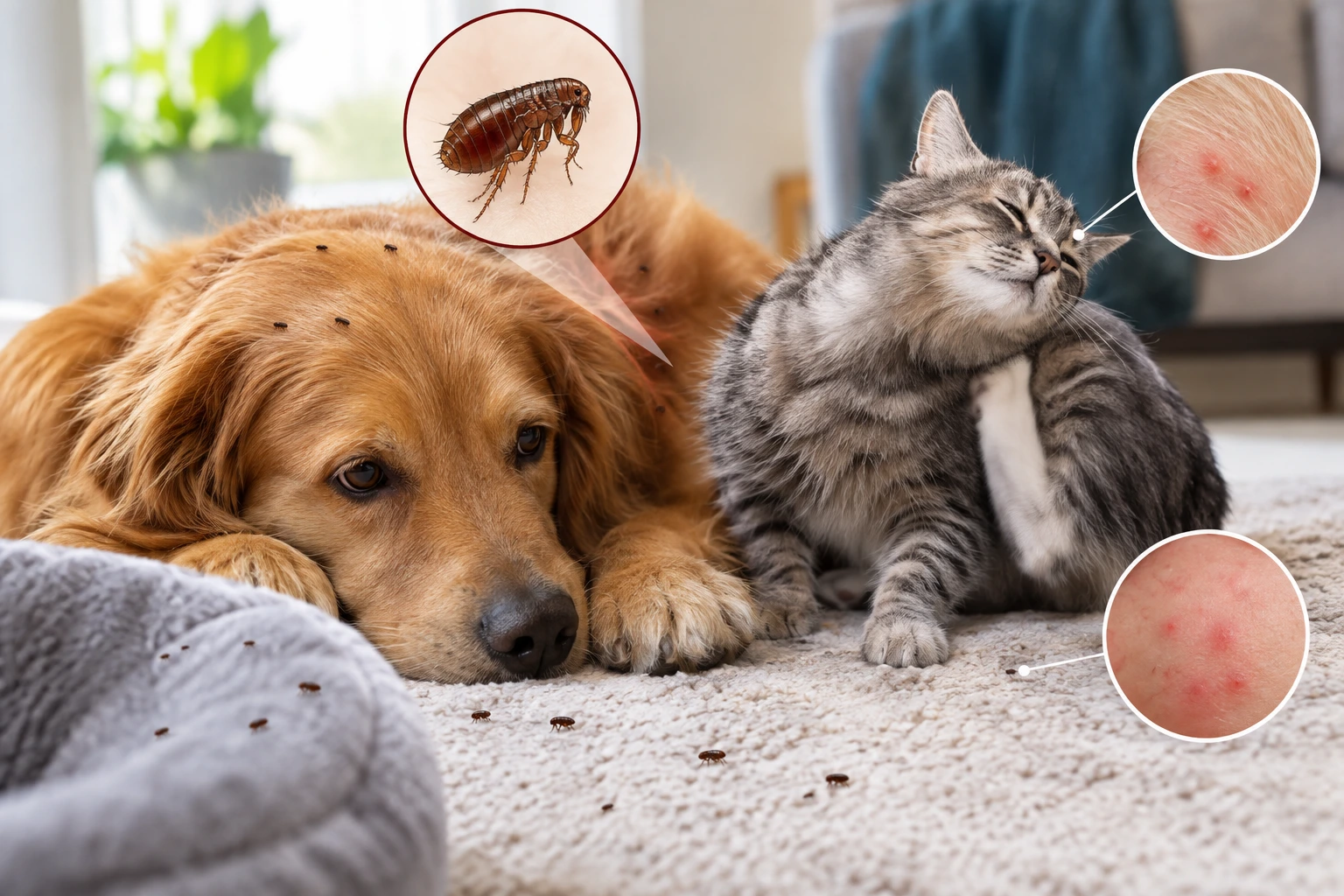
Fleas are tiny insects that can become a persistent household pest, particularly in homes with pets. Although fleas are small and difficult to spot, an infestation can produce several noticeable signs. So, What are the Signs of a Flea Infestation? Common indicators include frequent scratching or biting by pets, flea dirt on bedding or fur, small jumping insects, unexplained itchy bites, and evidence of fleas in carpets, furniture, or other areas where pets spend time.
Table of Contents
ToggleWhat Are Fleas?
Fleas are small, wingless insects that survive by feeding on the blood of animals. Adult fleas can move quickly and jump considerable distances relative to their body size.
Dogs, cats, and other animals can introduce fleas into a home, but fleas can also persist in carpets, upholstery, bedding, cracks, and other sheltered areas.
A flea infestation is not always immediately obvious. Adult fleas may be difficult to see, while immature stages remain hidden in the environment.
What are the Signs of a Possible Flea Infestation in Your Home?
There are several signs of a possible flea infestation in your home that you should watch for.
Excessive Scratching by Pets
One of the most noticeable signs is a pet that suddenly scratches, bites, or licks its skin more frequently than usual. Flea bites can irritate animals, causing repeated scratching.
Flea Dirt
Flea dirt is one of the more useful clues when looking for an infestation. It appears as tiny dark or black specks and may be found in pet fur, bedding, carpets, or areas where animals rest.
Visible Fleas
Adult fleas are small and move rapidly. They may be noticed jumping from carpets, pet bedding, furniture, or an animal’s fur.
Small Itchy Bites
Flea bites may appear as small, itchy red spots, sometimes occurring in groups or clusters. Bites are noticed around the lower legs and ankles, although fleas can bite other exposed areas.
Increased Pet Grooming
A pet that suddenly spends more time licking, chewing, or grooming its coat may be responding to flea irritation. Excessive grooming can sometimes make fleas harder to spot because the animal may remove them while grooming.
Fleas Around Pet Resting Areas
Fleas and flea debris may be more likely to occur around areas where pets spend significant amounts of time. Check bedding, rugs, carpets, furniture, and other frequently used resting places.
Where Do Fleas Hide?
Fleas can be present in multiple areas of a home. Adult fleas remain on animals, while eggs and other immature stages can be present in the surrounding environment.
- Carpets and rugs
- Pet bedding
- Upholstered furniture
- Cracks and crevices
- Under furniture
- Areas where pets regularly rest
- Floor edges
- Vehicle upholstery
What to Do If You Suspect Fleas?
If you notice signs of a possible flea infestation in your home, start by examining pets and their sleeping areas.
- A veterinarian can help determine whether a pet has fleas and recommend appropriate veterinary flea-control products.
- You should also clean pet bedding according to the manufacturer’s instructions and regularly vacuum carpets, rugs, furniture, and other areas where pets spend time.
- Emptying or disposing of vacuum contents appropriately is also important because flea life stages may be collected during vacuuming.
- If flea activity continues despite cleaning and appropriate pet care, professional pest control may be useful.
What is Professional Flea Extermination?
- Professional flea treatment includes assessing the property, identifying areas of activity, determining the extent of the infestation, and selecting an appropriate treatment approach.
- Treatment may focus on areas where pets rest and locations where flea development is likely to occur.
- Moreover, depending on the situation, follow-up treatment may be recommended because some flea life stages can survive an initial application.
- You should follow all preparation and re-entry instructions provided by the pest control professional.
What to Expect After Flea Extermination?
Many of you ask, what to expect after flea extermination? Flea activity may not disappear instantly after treatment.
- Some fleas can continue to emerge from protected stages in the environment for a period of time.
- You may occasionally notice flea activity after treatment, during the early stages of the control process. This does not automatically mean that the treatment has failed.
- Follow-up recommendations should be followed carefully.
- Vacuuming, laundering appropriate bedding, and maintaining the recommended pet-control program can support the overall treatment process.
- If flea activity remains high or continues for an extended period, contact the pest control professional who performed the treatment.
How to Prevent Future Flea Problems?
Prevention is especially important in homes with pets. Several measures can help reduce the risk of future flea activity.
- Follow veterinary guidance regarding appropriate flea prevention for dogs and cats.
- Different products are for different animals and age groups, so products should be used according to their instructions.
- Wash suitable pet bedding regularly and clean resting areas where fleas or flea debris could accumulate.
- Regular vacuuming can help remove flea eggs, larvae, debris, and adult fleas from carpets and other surfaces.
- Regularly inspect pets for excessive scratching, flea dirt, or changes in grooming behavior.
- The sooner unusual flea activity is identified, the sooner appropriate treatment can begin.
Frequently Asked Questions
Can fleas live in a home without pets?
Although pets are a common source of flea infestations, fleas can enter homes through people, wildlife, clothing, or previously infested environments.
How can I check my home for fleas?
Inspect pet bedding, carpets, rugs, upholstery, and areas where pets spend time. Look for small jumping insects, dark flea dirt, or increased scratching and grooming in pets.
Do flea infestations go away on their own?
An established flea infestation may persist without treatment because fleas can reproduce and immature stages can remain hidden in the environment.
Why am I still seeing fleas after treatment?
Flea eggs, larvae, and pupae can survive in protected areas and may develop after an initial treatment. Some continued activity can therefore occur temporarily.
How can I prevent fleas from returning?
Regularly clean pet bedding, vacuum carpets and furniture, monitor pets for flea activity, and follow veterinary recommendations for flea prevention.